
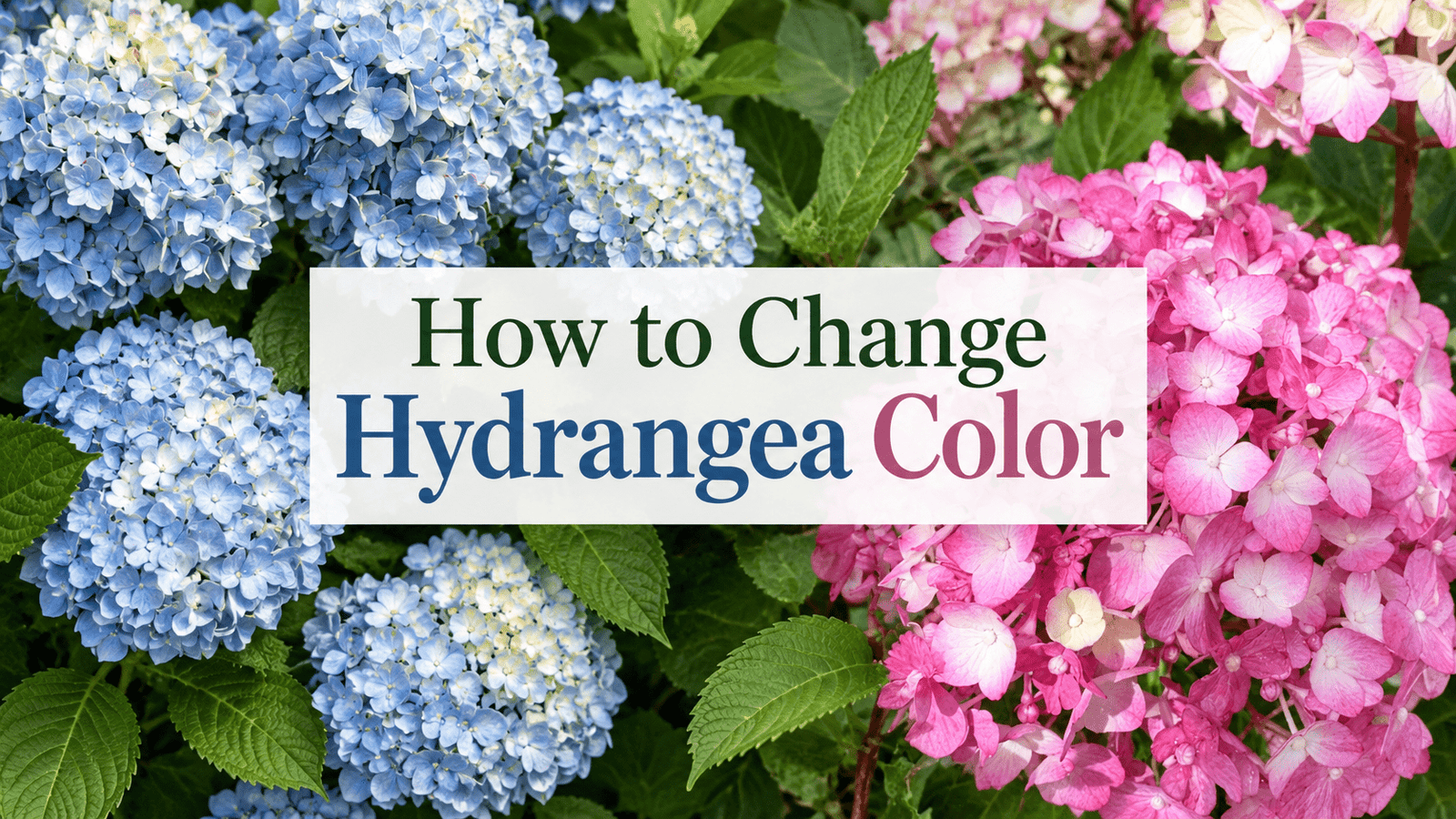
Few flowering shrubs create as much curiosity as a hydrangea covered in blue, pink, or purple blooms. Gardeners often hear that a handful of coffee grounds, rusty nails, or one quick soil treatment can change hydrangea color overnight.
The truth is a little more complicated.
You can change hydrangea color on certain varieties, but the results depend on the hydrangea type, soil pH, aluminum availability, root health, and how slowly you adjust the soil. Color changes usually take time, and forcing the process can damage the plant.
At Bobby & Lynn’s Plant Farm in Dallas, Georgia, we always recommend beginning with two steps: identify your hydrangea and test the soil. Once you know what you are growing and what is happening around its roots, you can make better decisions without guessing.
Quick Answer: How to Change Hydrangea Color
To change a suitable hydrangea’s bloom color:
- Confirm that it is a color-changing bigleaf or mountain hydrangea.
- Test the soil before adding amendments.
- Encourage blue flowers with acidic soil and available aluminum.
- Encourage pink flowers by raising the soil pH and reducing aluminum availability.
- Make changes gradually.
- Give the plant at least one bloom cycle to respond.
- Do not expect white hydrangeas or most panicle and smooth hydrangeas to turn blue.
Bigleaf hydrangeas generally produce bluer flowers in acidic soil and pinker flowers in more alkaline soil. Soil between those ranges may produce purple, lavender, or mixed blooms. UGA Extension notes that blue blooms are commonly associated with soil near pH 5.5 or below, while pink blooms are more likely around pH 6.5 or above. (UGA Extension)
About Bobby & Lynn

Can Every Hydrangea Change Color?
No. This is the first thing to understand before applying anything to the soil.
Color-changing ability is most common among:
- Bigleaf hydrangeas, Hydrangea macrophylla
- Mophead hydrangeas
- Lacecap hydrangeas
- Some mountain hydrangeas, Hydrangea serrata
These plants contain pigments that can react to aluminum absorbed through their roots.
Hydrangeas that generally do not change from pink to blue include:
- Panicle hydrangeas
- Smooth hydrangeas
- Oakleaf hydrangeas
- Most naturally white-flowering hydrangeas
A Limelight, Phantom, Annabelle, or white oakleaf hydrangea will not become blue because you added an acidifier. Those flowers may naturally age from white or green to pink, burgundy, tan, or brown, but that is different from a soil-driven blue-to-pink color change.
Before treating your plant, identify the hydrangea type. Our Hydrangea Care Guide can help you find care information for bigleaf, panicle, smooth, and other hydrangeas.
How Soil pH Changes Hydrangea Color
Soil pH affects how easily a hydrangea can absorb aluminum from the soil.
A lower pH means the soil is more acidic. Under acidic conditions, aluminum is generally more available to the roots. When a color-changing hydrangea absorbs enough aluminum, its flowers may become blue or blue-purple.
A higher pH means the soil is less acidic or more alkaline. Under those conditions, aluminum becomes less available. The same hydrangea may then produce pink or reddish-pink blooms.
Here is a general guide:
| Approximate soil pH | Likely bloom color |
|---|---|
| 5.5 or lower | Blue |
| 5.5 to 6.5 | Purple, lavender or mixed |
| 6.5 or higher | Pink |
These numbers are useful guidelines, not promises. Variety, aluminum availability, soil composition, water quality, weather, and plant health can all affect the final color. UGA Extension likewise recommends soil testing rather than relying only on the flower color as an indicator of pH. (UGA Extension)
Soil pH Is Not the Entire Story
Gardeners often hear that acidic soil creates blue flowers and alkaline soil creates pink flowers. That is broadly true, but it leaves out one important detail: the plant must also have access to aluminum.
A hydrangea growing in acidic soil may remain pink or purple when:
- Very little aluminum is present.
- Phosphorus levels interfere with aluminum uptake.
- The root system is stressed.
- The soil drains poorly.
- The plant is growing in a container with an aluminum-free mix.
- The variety naturally produces stronger pink pigments.
- The soil pH has not remained low long enough.
That is why lowering the soil pH alone does not always produce a strong blue flower.
Test the Soil Before You Change Hydrangea Color
A soil test is the safest place to begin.
Without one, you do not know:
- The current soil pH
- Whether lime is already present
- Whether nutrients are too high or too low
- Whether phosphorus may be excessive
- How much amendment may be appropriate
- Whether the soil needs treatment at all
Contact your county office through UGA Cooperative Extension for soil-testing information. A laboratory soil test is far more dependable than choosing an amendment based only on the current flower color.
How to collect a useful soil sample
Take several small samples from around the hydrangea’s root zone rather than collecting soil from only one spot.
Mix those samples in a clean container and follow the laboratory’s directions. Avoid sampling directly beside fertilizer granules, a concrete walkway, the foundation, or a recently treated area because those locations may not represent the entire root zone.
How to Change Hydrangea Color to Blue
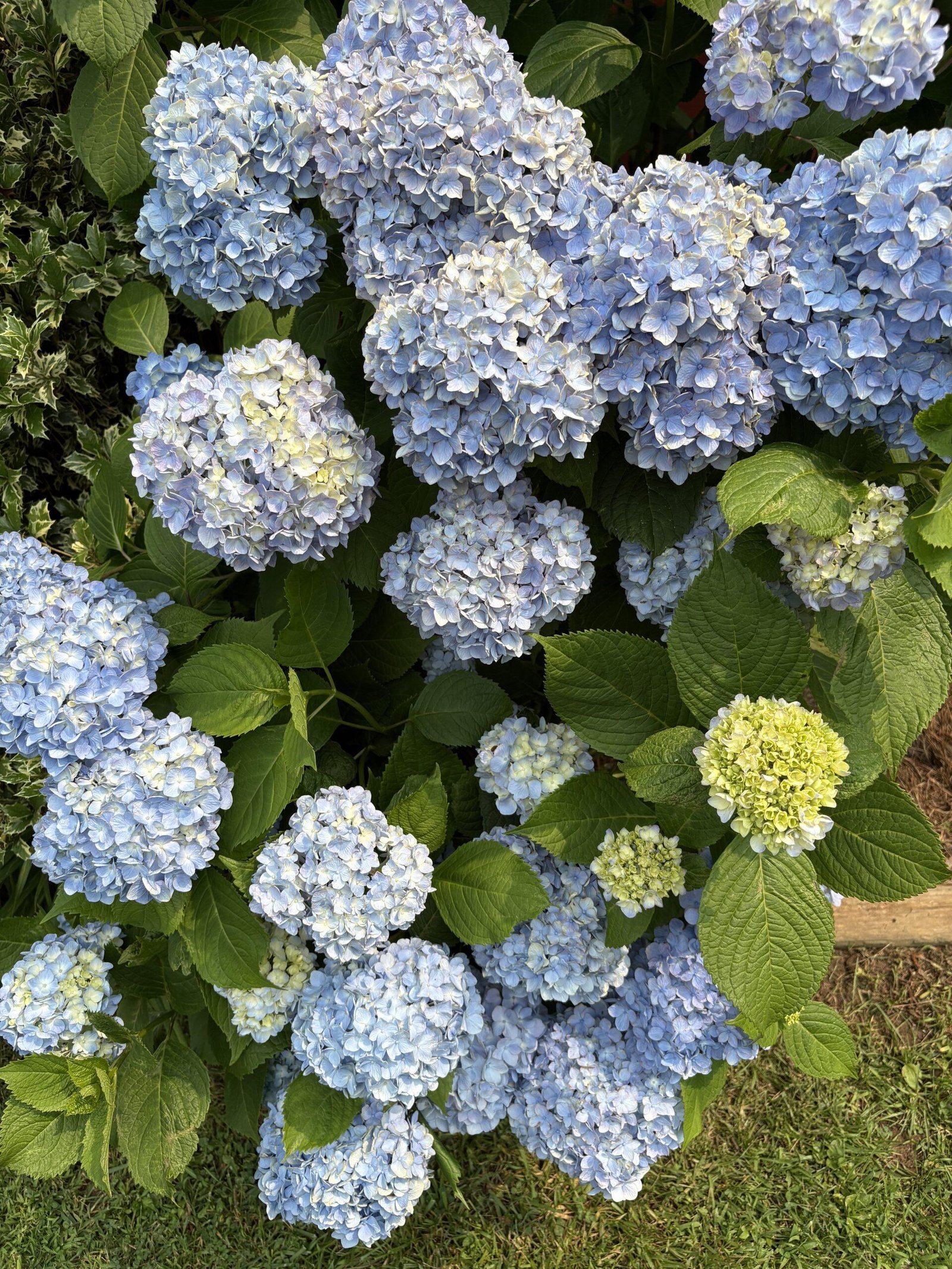
To encourage blue hydrangea flowers, the soil generally needs to be acidic enough for the plant to absorb aluminum.
Gardeners commonly use:
- Aluminum sulfate
- A labeled soil acidifier
- Elemental sulfur
- An acidic potting mix for container hydrangeas
Aluminum sulfate can supply aluminum while also lowering soil pH, but it must be used carefully. Too much can injure roots and create soil problems.
Elemental sulfur lowers pH more slowly and does not directly supply aluminum. Its effect depends on soil organisms, moisture, temperature, and time.
Steps for encouraging blue blooms
- Confirm that the hydrangea is a color-changing variety.
- Test the soil.
- Review the test recommendations.
- Select an amendment labeled for hydrangeas or acid-loving plants.
- Measure it carefully.
- Apply it evenly around the root zone.
- Keep the product away from the main stems.
- Water the area as directed on the label.
- Retest the soil before making repeated applications.
- Allow time for the next bloom cycle.
Do not try to make the soil extremely acidic
More is not better.
Driving the pH too low can interfere with nutrient availability, harm roots, and create unhealthy growing conditions. The goal is not to produce the lowest possible number. The goal is to create a suitable range for the plant.
How to Change Hydrangea Color to Pink
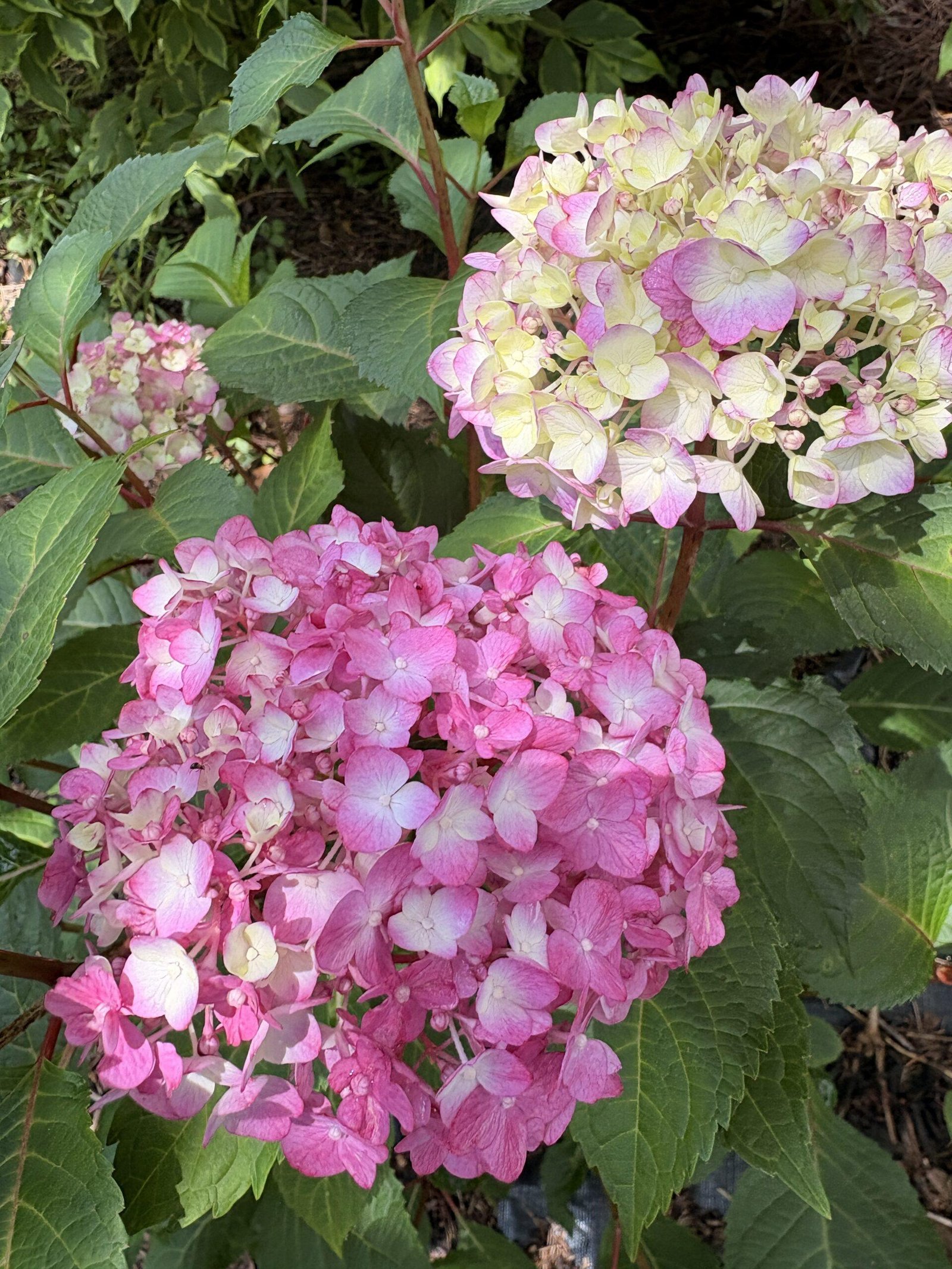
To encourage pink blooms, you generally need to raise the soil pH so aluminum becomes less available to the plant.
Garden lime is commonly used for this purpose. However, the proper amount depends on:
- The current soil pH
- The desired pH
- Soil texture
- The size of the planting area
- The product formulation
Georgia clay can require a different amount of lime than loose potting mix or sandy soil. This is another reason soil-testing recommendations matter.
Steps for encouraging pink blooms
- Confirm that the hydrangea can change color.
- Test the soil pH.
- Apply garden lime only when the test shows it is appropriate.
- Follow the product’s measured application rate.
- Spread it through the root zone rather than piling it near the stems.
- Water according to the label.
- Wait before applying more.
- Retest the soil later.
Raising the soil pH is usually gradual. Applying a large amount of lime at once will not safely create instant pink flowers.
How to Change Hydrangea Color to Purple
Purple hydrangeas often occur when the soil conditions fall between those that produce strong blue and strong pink blooms.
A soil pH between roughly 5.5 and 6.5 may produce:
- Lavender
- Violet
- Mauve
- Blue-purple
- Pink-purple
- Several colors on the same plant
UGA Extension explains that intermediate soil conditions commonly produce purple flowers rather than a clear blue or pink. (UGA Extension)
Purple is often the hardest color to control precisely because a slight difference in soil conditions can push the flowers toward blue or pink.
Rather than chasing one exact shade, maintain steady soil conditions and let the variety show its natural range.
Why One Hydrangea Has Blue, Pink, and Purple Flowers
A single plant may produce several flower colors at the same time.
This often happens because the soil is not identical throughout the root zone. One side may be more acidic, while another side is affected by:
- Concrete
- Mortar
- Limestone gravel
- Previous lime applications
- Decomposing organic matter
- Fertilizer
- Irrigation water
- Uneven drainage
Different flowers may also mature at different rates. A bloom can change in appearance as it ages, particularly when weather conditions are hot or the flower begins fading.
Mixed colors are not usually a sign that something is wrong. Many gardeners consider them one of the most attractive features of bigleaf hydrangeas.
Why a Blue Hydrangea Turned Pink
A formerly blue hydrangea may turn pink when soil conditions become less acidic or aluminum becomes less available.
Common causes include:
- Lime applied nearby
- Lawn treatments spreading into the root area
- Alkaline irrigation water
- Concrete or masonry affecting the soil
- Changes in the potting mix
- Natural shifts in soil chemistry
- Repeated use of certain fertilizers
The hydrangea is not necessarily unhealthy. Its flowers may simply be reflecting a change below the soil surface.
Test the soil before trying to reverse the color. Repeatedly adding acidifier without knowing the current pH can create more problems than it solves.
Why a Pink Hydrangea Stays Pink in Acidic Soil
A pink hydrangea may resist turning blue even when a home pH meter suggests the soil is acidic.
Possible reasons include:
- The variety has a naturally strong pink or red color.
- Aluminum is not available.
- The reading was inaccurate.
- The root zone has a different pH than the surface.
- Phosphorus levels are high.
- The soil was treated too recently.
- The plant is still using conditions from its nursery container.
- Only part of the root system has reached the amended soil.
Give the plant time and confirm the soil conditions with a professional test before increasing the treatment.
Do Coffee Grounds Turn Hydrangeas Blue?
Not reliably.
Used coffee grounds may contribute organic matter when composted properly, but they are not a precise or dependable way to change hydrangea color.
Coffee grounds do not provide the controlled pH adjustment or predictable aluminum availability needed to consistently turn pink blooms blue. Adding thick layers directly around the plant can also cause matting and moisture problems.
Use a soil test and a properly labeled amendment instead of relying on kitchen scraps as a color treatment.
Do Rusty Nails Change Hydrangea Color?
No reliable evidence supports burying rusty nails as a safe or effective way to turn hydrangeas blue.
Rusty iron is not the same as plant-available aluminum. Nails also do not provide a measurable method for adjusting soil pH.
This old garden tip may sound harmless, but it does not address the chemistry that controls bloom color. It can also leave sharp metal buried in the garden.
Does Epsom Salt Change Hydrangea Color?
Epsom salt contains magnesium sulfate. It does not provide aluminum and is not a dependable soil-pH treatment.
Applying Epsom salt without a documented magnesium deficiency may upset the balance of nutrients in the soil. It should not be used as a general hydrangea color changer.
Does Vinegar Turn Hydrangeas Blue?
Pouring household vinegar into the soil is not a good long-term strategy.
Vinegar may temporarily lower the pH of water or a very small area, but its effect is short-lived and difficult to control. A concentrated application can also injure roots and soil organisms.
Use products intended for soil amendment and follow soil-test recommendations.
Can You Change a White Hydrangea to Blue?
Usually, no.
Most white hydrangeas lack the flower pigments required to produce blue or pink blooms. Soil amendments may affect plant health, but they will not turn a naturally white panicle, smooth, or oakleaf hydrangea blue.
Some white flowers develop blush-pink, rose, green, or burgundy tones as they age. That change is controlled primarily by variety, flower maturity, temperature, and sunlight—not by the same process that changes bigleaf hydrangeas from pink to blue.
Changing Hydrangea Color in Containers
Containers give gardeners more control over the root environment, making bloom-color management easier in some situations.
You can select:
- An acidic potting mix for blue flowers
- A more neutral mix for pink flowers
- Water and fertilizer suited to the desired conditions
- Amendments measured for the container size
However, container conditions can also change quickly. Frequent watering may leach nutrients and amendments from the pot, while alkaline tap water can gradually raise the pH.
Tips for container hydrangeas
- Use a large container with drainage holes.
- Begin with fresh, high-quality potting mix.
- Test the mix rather than guessing.
- Use only products labeled for containers.
- Measure carefully because the soil volume is limited.
- Flush the container occasionally when salts accumulate.
- Recheck the pH during the growing season.
- Keep the root ball evenly moist but not waterlogged.
Hydrangeas in containers dry more quickly than those planted in the ground. Our guide to growing hydrangeas in containers can help you find additional container-care information through the Hydrangea Help page.
How Long Does It Take to Change Hydrangea Color?
Color change is usually not immediate.
You may need to wait:
- Several weeks for a soil amendment to begin working
- Until the next flush of flowers
- Until the next growing season
- More than one year when the soil needs gradual adjustment
Flowers that are already open may not change dramatically. The strongest results usually appear in blooms that develop after the roots have responded to the new soil conditions.
Weather and variety also influence the speed and intensity of the change.
When Is the Best Time to Adjust Hydrangea Color?
The best timing depends on the product, climate, and soil-test recommendation.
In general:
- Test the soil before the growing season when possible.
- Make gradual adjustments rather than one heavy application.
- Avoid applying strong amendments to drought-stressed plants.
- Do not treat frozen or waterlogged soil.
- Follow the product label regarding temperature and timing.
- Allow the plant time to respond before applying more.
A healthy root system matters more than forcing a particular flower color.
Will Fertilizer Change Hydrangea Color?
Fertilizer can indirectly affect bloom color, but ordinary fertilizer is not the main control.
Some fertilizers are formulated for acid-loving plants and may gradually influence soil conditions. However, fertilizer also affects leaf growth, root health, and flower production.
Too much nitrogen can create a large leafy hydrangea with fewer blooms. Excess phosphorus may also interfere with aluminum uptake, making blue flowers more difficult to achieve.
Do not select fertilizer based only on the color printed on the package. Test the soil and use a product that meets the plant’s actual nutritional needs.
How Water Can Affect Hydrangea Color
Water quality can gradually influence container soil and garden beds.
Water containing dissolved minerals may slowly raise the soil pH. This is particularly noticeable in containers because the root system is confined to a small amount of potting mix.
Rainwater is often less alkaline than treated tap water, although its characteristics vary by location.
You do not need to overhaul your watering method based on flower color alone. Just remember that repeated irrigation can influence soil chemistry over time.
For general watering help, visit our Hydrangea Care Guide for Better Blooms.
How Nearby Concrete Can Affect Hydrangea Color
Hydrangeas planted beside foundations, sidewalks, driveways, patios, or concrete edging may be exposed to more alkaline conditions.
Lime-containing materials can influence nearby soil, particularly during construction or where water drains across masonry before entering the bed.
You may notice that:
- One side of the plant has pinker flowers.
- Blue flowers gradually become purple or pink.
- Soil treatments seem to work unevenly.
- A hydrangea near the house behaves differently from one in an open bed.
Test several parts of the root zone before treating the entire area.
Common Mistakes When Changing Hydrangea Color
Applying amendments without testing
This is the biggest mistake. Adding lime to already alkaline soil or sulfur to very acidic soil can harm the plant.
Expecting instant results
Soil chemistry changes slowly. Existing flowers may keep their current color.
Using too much product
Heavy applications can burn roots, disrupt nutrients, and damage soil biology.
Treating the wrong hydrangea
Panicle, smooth, oakleaf, and most white hydrangeas will not turn blue through pH adjustment.
Ignoring plant health
A stressed hydrangea needs proper watering, drainage, sunlight, and root care before it needs color manipulation.
Repeating treatments too quickly
Allow time for the first application to work, then retest.
Relying on home remedies
Coffee grounds, vinegar, rusty nails, and Epsom salt do not offer the precision or reliability of soil testing and labeled amendments.
What We See at Our Plant Farm
At Bobby & Lynn’s Plant Farm, we see plenty of hydrangeas with beautiful colors that do not match the label exactly.
A variety shown as bright blue may become purple in one yard and pink in another. Even two plants of the same variety can look different when they are grown in separate beds.
Georgia soil can vary greatly from one property to another. Red clay, added topsoil, old garden beds, construction materials, fertilizer, and irrigation water can all affect the root zone.
We also see homeowners become frustrated because a newly purchased blue hydrangea turns pink after planting. That does not mean the plant was mislabeled or is unhealthy. It often means the nursery’s growing mix and the homeowner’s soil have different pH and aluminum conditions.
Our best advice is not to chase flower color too aggressively. First, help the hydrangea establish healthy roots. Then test the soil and make small, measured changes.
A Simple Hydrangea Color Checklist
Before applying anything, ask:
- Is this a bigleaf or mountain hydrangea?
- Can this variety naturally produce blue or pink flowers?
- Have I tested the soil?
- Is aluminum available to the plant?
- Is the hydrangea healthy and actively growing?
- Does the soil drain properly?
- Has lime or lawn fertilizer been used nearby?
- Is concrete affecting the planting area?
- Am I following a measured product rate?
- Have I given the previous treatment enough time?
If you cannot answer the first three questions, pause before treating the soil.
Final Thoughts on How to Change Hydrangea Color
Learning how to change hydrangea color begins with understanding the plant—not with reaching for a bag of soil amendment.
Only certain hydrangeas naturally shift between blue, purple, and pink. Soil pH helps control aluminum availability, but variety, root health, water, fertilizer, and local soil conditions also influence the result.
Test the soil first. Make gradual changes. Follow product instructions and give the hydrangea enough time to respond.
Most importantly, do not sacrifice a healthy plant just to force a particular shade. A vigorous hydrangea covered in purple or mixed flowers is far better than a stressed plant struggling in soil that has been overtreated.
For more help with planting, pruning, watering, bloom problems, and choosing the right variety, visit our complete Hydrangea Help page.
Discover more from Bobby and Lynn’s Plant Farm
Subscribe to get the latest posts sent to your email.