Quick Answer: The best low maintenance shrubs for your front yard are plants that fit your sunlight, soil, growing zone, and available space without needing constant pruning, watering, or spraying. Good choices include abelia, dwarf yaupon holly, spirea, panicle hydrangeas, weigela, gardenias, junipers, oakleaf hydrangeas, and several other dependable shrubs.
A good-looking front yard does not have to turn into a second job. The trick is choosing shrubs that naturally fit the space instead of planting something that needs constant trimming, watering, fertilizing, or fussing over.
At Bobby & Lynn’s Plant Farm in Dallas, Georgia, we appreciate plants that look good without somebody having to follow them around with pruning shears and a garden hose all summer.
The right low maintenance shrubs for your front yard can provide flowers, evergreen foliage, structure, and curb appeal while keeping routine care manageable. The best choice depends on whether the planting area gets full sun or shade, how large the shrub can become, and whether you want flowers, evergreen foliage, or a combination of both.
What We’ve Learned Growing Shrubs
One thing we’ve learned from growing flowering shrubs here in Georgia is that choosing the right plant matters more than trying to make the wrong plant behave. Our summers are hot, our soil can be heavy red clay, and afternoon sun can be rough on plants that would rather have some shade.
We grow shrubs such as panicle hydrangeas, weigela, gardenias, and other flowering plants at our farm, and mature size is something we pay close attention to. A shrub that looks small in a nursery pot can take up a lot more room a few years later. Giving it enough sun, drainage, and space from the beginning usually means less watering, less pruning, and fewer headaches later.
UGA Extension also recommends matching plants to the conditions of the site and considering their mature size before planting.
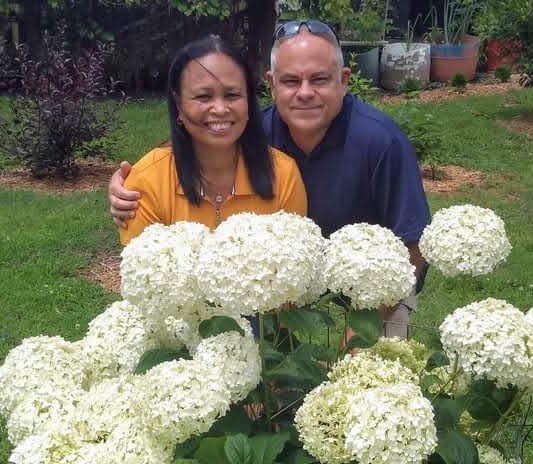
About Bobby & Lynn

What Makes a Shrub Low Maintenance?
A low maintenance shrub is not necessarily a plant you can completely forget about.
Almost every newly planted shrub needs regular watering while its root system becomes established. Some may need occasional pruning, mulching, or fertilizing too.
The difference is what happens after establishment.
A good low maintenance landscape shrub should:
- Grow well in the conditions where it is planted
- Stay reasonably close to its natural mature size
- Need little routine pruning
- Handle normal periods of heat or dry weather once established
- Have relatively few serious pest or disease problems
- Look attractive for much of the year
University of Georgia Extension emphasizes the importance of putting the right plant in the right place when creating a lower-maintenance landscape. Plants that naturally fit the site’s light, soil, and climate generally require fewer inputs and less work over time.

Low Maintenance Shrubs at a Glance
Light needs and evergreen performance can vary by cultivar and climate, so always check the plant tag before choosing a final location.
12 Low Maintenance Shrubs for the Front Yard
| Shrub | Best Light | Foliage | Why We Like It |
|---|---|---|---|
| Abelia | Sun to part shade | Semi-evergreen in warmer climates | Long bloom season |
| Dwarf Yaupon Holly | Sun to part shade | Evergreen | Naturally compact |
| Spirea | Full sun | Deciduous | Easy flowers and manageable size |
| Panicle Hydrangea | Full sun to part sun | Deciduous | Large summer blooms |
| Weigela | Full sun | Deciduous | Flowers plus colorful foliage |
| Gardenia | Morning sun to part shade | Evergreen | Fragrant white flowers |
| Dwarf Juniper | Full sun | Evergreen | Tough and drought tolerant once established |
| Oakleaf Hydrangea | Morning sun to part shade | Deciduous | Flowers, fall color, and textured foliage |
| Dwarf Loropetalum | Sun to part shade | Evergreen in warmer climates | Purple foliage and pink flowers |
| Inkberry Holly | Sun to part shade | Evergreen | Native evergreen structure |
| Dwarf Crape Myrtle | Full sun | Deciduous | Heat tolerance and summer flowers |
| Native Azalea | Part shade | Usually deciduous | Spring flowers and native value |
Abelia
Abelia is one of our favorite easy-care flowering shrubs because it provides a lot without asking for much in return.
Depending on the variety, abelia can produce pinkish-white flowers for months. The flowers also attract bees and other pollinators.
Many newer varieties stay fairly compact, which makes them useful around foundations, sidewalks, and mixed front-yard beds.
Best for: Sun to part shade
Why we like it: Long bloom season, attractive foliage, and relatively easy care
Dwarf Yaupon Holly
Dwarf yaupon holly is an excellent choice when you want neat evergreen foliage without constantly shaping the plant.
It naturally develops a dense, rounded form and can work well along foundations, walkways, and the front of planting beds.
It also handles heat well once established.
Best for: Sun to part shade
Why we like it: Evergreen, naturally compact, and little pruning needed
Spirea
Spirea can bring a surprising amount of color to the front yard for such an easy shrub.
Depending on the variety, flowers may be pink or white, and some cultivars also have colorful foliage.
Most spireas only need occasional pruning rather than constant shaping.
Best for: Full sun
Why we like it: Flowers freely and stays manageable

Panicle Hydrangea
Panicle hydrangeas are among the easiest hydrangeas to grow in sunny landscapes.
Varieties such as Limelight, Little Lime, and other compact selections produce large cone-shaped flower clusters on new growth.
They also tolerate more sun than bigleaf hydrangeas.
Panicle hydrangeas generally need pruning only once during late winter or early spring if you want to control their shape or size.
For more hydrangea help, see our complete hydrangea care guide.
The Moon Dance Hydrangea pictured above is one we grow here at our plant farm. We’ve found panicle hydrangeas to be some of the more forgiving hydrangeas in our Georgia heat, especially compared with bigleaf types. They still need regular water while getting established, but once settled in, they’re generally straightforward plants to care for.
Best for: Full sun to part sun
Why we like it: Big flowers and straightforward pruning
Weigela
Weigela is another flowering shrub that gives you plenty of color without a complicated care routine.
Many varieties produce pink or reddish flowers, and newer cultivars may also have burgundy, variegated, or colorful foliage.
Once established in the right spot, weigela generally requires little beyond occasional pruning and watering during extended dry periods.
Best for: Full sun
Why we like it: Flowers plus attractive foliage
Gardenia
Gardenias need a little more attention while establishing, but once happy in the right location they can become dependable evergreen shrubs.
Their glossy foliage gives the front yard year-round structure, while the fragrant white blooms are hard to beat.
Choosing the right variety is particularly important because gardenias range from compact selections to much larger shrubs.
Our gardenia varieties and care guide can help you compare different types.
Best for: Morning sun or bright filtered light
Why we like it: Evergreen foliage and wonderfully fragrant blooms
Dwarf Juniper
If flowers are not your priority, dwarf junipers can be extremely useful low-maintenance landscaping plants.
They offer evergreen foliage, handle sunny sites well, and many varieties tolerate dry conditions once established.
The biggest mistake is planting a variety that eventually grows larger than the available space. Always check the mature dimensions before planting.
Best for: Full sun
Why we like it: Evergreen and drought tolerant once established

Oakleaf Hydrangea
Oakleaf hydrangeas are especially useful for front yards with partial shade.
They produce white cone-shaped flowers, large textured leaves, attractive fall color, and exfoliating bark as the plants mature.
They also tend to need less fussing over bloom color than bigleaf hydrangeas.
Best for: Morning sun and afternoon shade
Why we like it: Multi-season interest
Dwarf Loropetalum
Compact loropetalum varieties bring rich purple or burgundy foliage to a front-yard planting even when they are not blooming.
Their bright pink fringe-like flowers provide another burst of color, usually during spring.
Look specifically for compact cultivars if the planting area is near a window or sidewalk because full-sized loropetalums can become surprisingly large.
Best for: Sun to part shade
Why we like it: Colorful foliage and spring flowers
Inkberry Holly
Inkberry holly is a native evergreen shrub that can be a useful alternative to traditional boxwood in some landscapes.
It has small dark-green leaves and a naturally tidy appearance.
Improved compact varieties can work particularly well in foundation beds where year-round structure is important.
Best for: Sun to part shade
Why we like it: Evergreen foliage and native value
Dwarf Crape Myrtle
Compact crape myrtles can work surprisingly well as flowering shrubs rather than small trees.
They love heat and sun and can flower for an extended period during summer.
Choose a true dwarf or compact cultivar rather than buying a standard crape myrtle and trying to keep it small through heavy pruning every year.
Best for: Full sun
Why we like it: Heat tolerance and long summer bloom
Native Azalea
Native azaleas are beautiful choices for front yards with partial shade, especially when you want a more natural woodland look.
They produce colorful spring flowers and can attract pollinators.
Once established in suitable acidic, well-drained soil, they can fit nicely into lower-maintenance landscapes.
Best for: Part shade
Why we like it: Spring flowers and natural Southern character
Low Maintenance Shrubs for the Front of the House
Shrubs planted directly along the front of a house need a little extra planning.
The most important thing is mature size.
A shrub that naturally grows 8 feet tall will not suddenly become a low maintenance shrub because you planted it underneath a 3-foot window. You’ll simply spend years trying to keep it from becoming what it was born to be.
For foundation planting, look for shrubs that mature slightly below the bottom of nearby windows and leave enough room between the plant and house for air circulation and maintenance.
Compact abelia, dwarf yaupon holly, smaller spireas, dwarf loropetalum, inkberry holly, and compact gardenias can all work well depending on your conditions.
UGA’s Landscape Plants for Georgia guide also notes that compact shrubs can be useful for edging beds and other smaller landscape spaces.
Low Maintenance Evergreen Shrubs for the Front of the House
Evergreen shrubs are helpful when you want the front yard to retain structure through winter.
Good options include:
- Dwarf yaupon holly
- Inkberry holly
- Gardenia
- Dwarf juniper
- Compact loropetalum in warmer areas
- Selected boxwoods
Evergreens can provide a permanent backdrop while flowering shrubs and perennials supply seasonal color.
If privacy is part of your goal too, see our guide to the best evergreen shrubs for privacy.
Low Maintenance Flowering Shrubs for the Front Yard
For color without excessive upkeep, some of our favorite choices are:
- Abelia
- Spirea
- Panicle hydrangea
- Weigela
- Gardenia
- Oakleaf hydrangea
- Dwarf crape myrtle
- Native azalea
Try combining shrubs with different flowering seasons instead of expecting one plant to bloom all year.
That can give the front yard changing color from spring through fall while keeping the overall planting fairly easy to maintain.
Best Low Maintenance Shrubs for Full Sun
Full-sun front yards can be tough during summer, especially in hotter climates.
Good choices include:
- Panicle hydrangea
- Spirea
- Abelia
- Dwarf crape myrtle
- Dwarf juniper
- Weigela
For especially hot or dry planting sites, our drought tolerant flowering shrubs guide has additional options.
Remember that drought tolerance comes after establishment. Even tough shrubs need regular watering while developing new roots.
Best Low Maintenance Shrubs for Shade
A front yard that receives morning sun and afternoon shade can actually support some beautiful easy-care shrubs.
Good possibilities include:
- Oakleaf hydrangea
- Native azalea
- Gardenia
- Inkberry holly
- Dwarf yaupon holly
Deep shade is different from part shade, so pay attention to how much actual sunlight the site receives before choosing a plant.
Drought Tolerant Low Maintenance Shrubs
If reducing watering is part of your goal, choose shrubs that naturally tolerate dry periods once established.
Possible choices include:
- Dwarf yaupon holly
- Juniper
- Abelia
- Dwarf crape myrtle
- Some spirea varieties
Mulching around shrubs can also help reduce moisture loss from the soil.
However, avoid piling mulch against the trunks or stems.
Avoid Turning a Low Maintenance Shrub Into a High Maintenance One
Many shrubs get labeled “high maintenance” because they were planted in the wrong place.
A few common mistakes can create years of unnecessary work.
Planting Too Close to the House
Always check mature width as well as mature height.
A shrub that grows 6 feet wide needs room to become a 6-foot-wide shrub.
Choosing the Wrong Sun Exposure
A shade-loving shrub planted against a hot west-facing wall may struggle no matter how much attention you give it.
Likewise, a sun-loving flowering shrub planted in deep shade may grow but produce very few flowers.
Buying a Large Shrub for a Small Space
This is one of the biggest maintenance traps.
If you repeatedly have to prune a shrub simply to prevent it from covering windows or walkways, the plant is probably too large for that location.
UGA Extension notes that some naturally dwarf shrubs require little or no pruning, which is one reason appropriately sized plants can be easier to maintain.
Overwatering Established Shrubs
New plants need consistent moisture.
Established plants are different.
Constantly wet soil can create root problems, especially in heavy clay or poorly drained areas.
Water deeply when needed rather than automatically giving every shrub a little water every day.
How to Choose the Right Shrub for Your Front Yard
Before buying anything, answer these questions:
- How many hours of direct sun does the spot receive?
- Does it get morning or afternoon sun?
- How tall can the shrub become without covering a window?
- How wide can it grow without blocking a walkway?
- Does the soil drain well?
- Do you want evergreen foliage?
- Are flowers important?
- How much pruning are you willing to do?
- What USDA growing zone are you in?
Choosing plants based on those answers will save far more work than choosing a shrub simply because it looks pretty at the garden center.
Our Approach to Easy-Care Landscaping
At Bobby & Lynn’s Plant Farm, we like flowering shrubs, but we also believe a landscape should be enjoyable.
There is nothing wrong with gardening being work sometimes. That’s part of it.
But there is also no prize for planting twelve shrubs that need trimming every other Saturday.
Choose plants that naturally fit your yard, give them a good start, and let them grow into the shape they were meant to have.
That’s usually the easiest path to a front yard that looks good without demanding all your free time.
Frequently Asked Questions
What are the easiest shrubs to maintain in a front yard?
Dwarf yaupon holly, abelia, spirea, compact junipers, panicle hydrangeas, and some dwarf crape myrtles are among the easier choices when planted in suitable conditions.
What shrubs need the least pruning?
Shrubs with naturally compact or dwarf growth habits generally require the least pruning. Dwarf yaupon holly, compact junipers, inkberry holly, and properly sized abelia varieties are good examples.
What are good low maintenance shrubs for the front of a house?
Choose shrubs that remain below nearby windows and fit the available width. Compact abelia, dwarf yaupon holly, gardenias, dwarf loropetalum, inkberry holly, and smaller spireas can work well depending on sunlight and climate.
Are hydrangeas low maintenance?
Some are easier than others. Panicle and oakleaf hydrangeas are often relatively straightforward when planted in suitable conditions. Bigleaf hydrangeas can require more attention to moisture, pruning timing, and winter bud protection.
Do low maintenance shrubs still need watering?
Yes. Nearly all newly planted shrubs need consistent watering while establishing roots. Low maintenance usually means the plant requires less routine care after it becomes established, not that it never needs attention.
What is the biggest mistake when choosing front-yard shrubs?
Choosing a shrub without considering its mature size. A plant that becomes much larger than the available space will require repeated pruning and quickly turns into a high-maintenance plant.
Final Thoughts
Low maintenance shrubs for your front yard work best when you match the plant to the location instead of trying to force the location to fit the plant.
Choose shrubs that fit the available sunlight, soil, mature space, and your climate. Then give them proper watering while they establish.
With the right mix of evergreen structure and flowering shrubs, you can create a front yard with plenty of curb appeal without turning landscape maintenance into a weekly chore.