Spring Gardening Guide
The Ultimate Spring Plant Care Guide for Healthier Shrubs
Spring plant care starts with checking for winter damage, pruning only the shrubs that should be pruned now, refreshing mulch, feeding when needed, watering deeply, and watching new growth for early pest or disease problems.
Spring Shrub Care at a Glance
A healthier growing season starts with a few simple jobs done at the right time.
Your Complete Spring Shrub Care Guide
Pick the job you need help with below. Each visual guide gives you an easy reference for one important spring task.

Pruning Panicle Hydrangeas
Learn when to prune, what stems to remove, where to make the cut, and how much growth to keep.
Open Pruning Guide →
Pruning Butterfly Bush
See when to prune butterfly bush, what to remove, and how far mature plants can be cut back.
Open Pruning Guide →
Pruning Crape Myrtles
Improve structure without topping the tree or turning a graceful crape myrtle into a row of stubs.
Open Pruning Guide →
Refresh Your Mulch for Spring
Learn the right mulch depth, how far to keep it from plant stems, and when old mulch needs attention.
Open Mulch Guide →
Winter Damage Check
Look for dead stems, split bark, broken branches, damaged buds, and signs that a stem is still alive.
Open Winter Damage Guide →
When and How to Fertilize Shrubs
Learn when spring feeding makes sense, how to apply fertilizer, and why more is not always better.
Open Fertilizer Guide →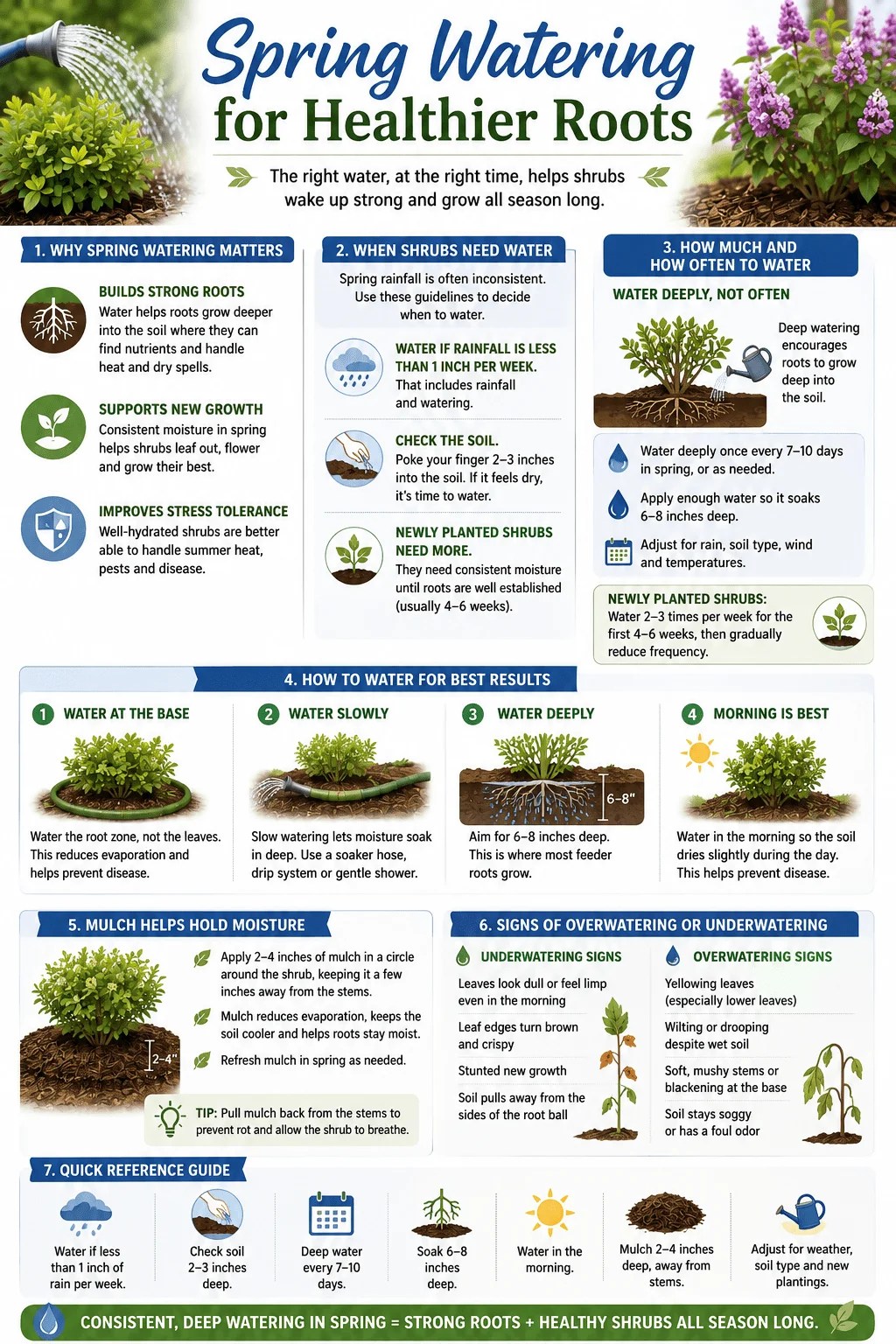
Spring Watering for Healthier Roots
Find out when shrubs need water, how deeply to soak the root zone, and what to avoid.
Open Watering Guide →
Early Spring Pest & Disease Check
Check stems, leaf undersides, new shoots, and the base of shrubs before small problems become big ones.
Open Pest & Disease Guide →
Don’t Prune These Shrubs in Early Spring
Azaleas, forsythia, many bigleaf hydrangeas, and other old wood bloomers may already be holding flower buds.
Open Pruning Warning →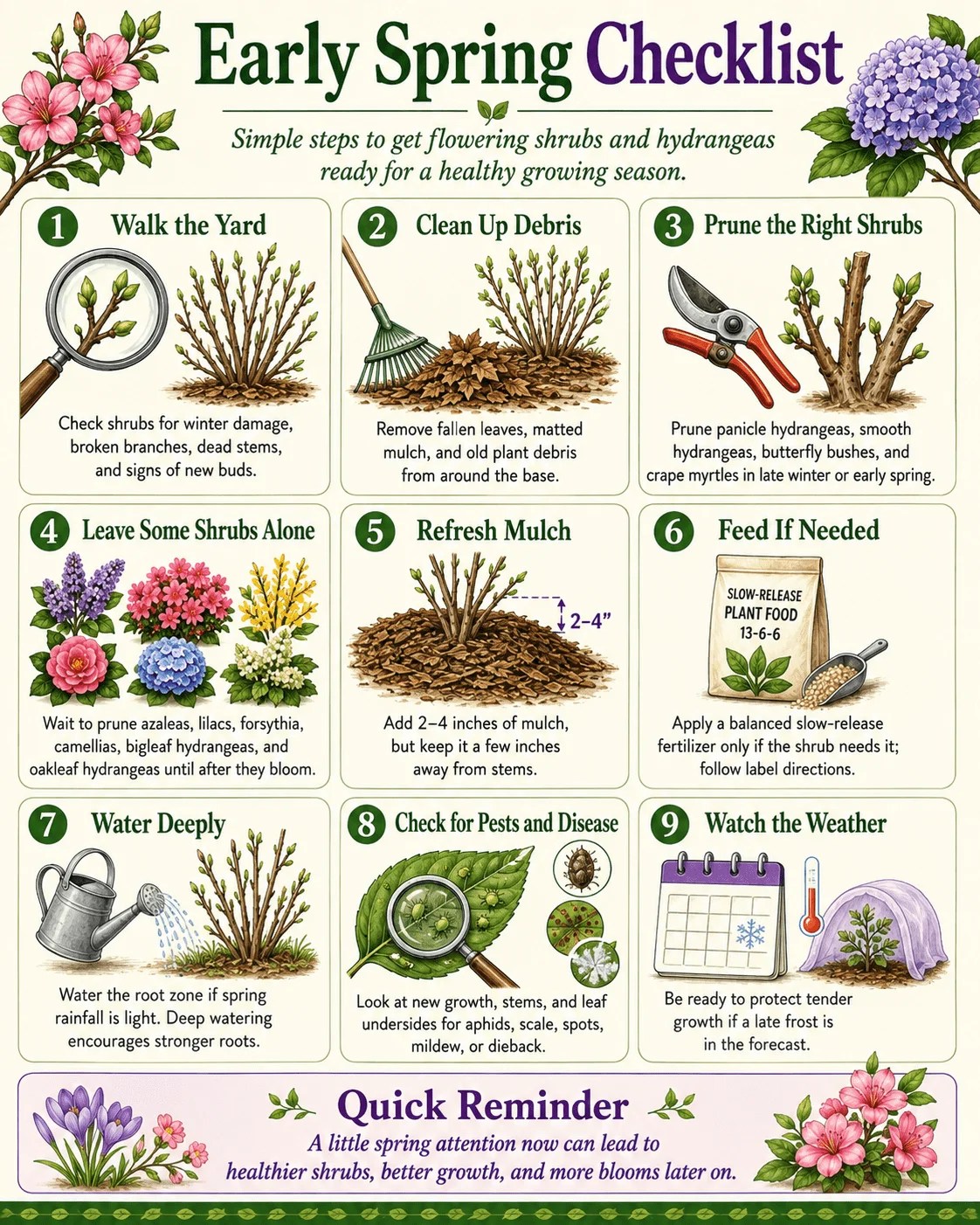
Early Spring Checklist
Walk the yard, clean up debris, prune carefully, refresh mulch, check water, and watch the weather.
Open Spring Checklist →
What Not to Do in Spring
Avoid pruning the wrong shrubs, overfeeding, piling mulch against stems, and watering without checking the soil.
Open Mistakes Guide →Your Spring Seasonal Roadmap
Spring doesn’t arrive all at once. Work with the weather and the plants instead of trying to finish every job in one weekend.
Late Winter
February to Early March- Walk the yard and inspect shrubs
- Check for winter damage
- Remove clearly broken branches
- Gather pruning tools
- Watch the forecast before major work
Early Spring
March to April- Prune new wood bloomers when appropriate
- Refresh mulch
- Feed shrubs that need it
- Begin checking soil moisture
- Inspect new growth for pests
Mid Spring
April to May- Watch new growth closely
- Water newly planted shrubs
- Keep weeds from taking over beds
- Check mulch depth
- Enjoy spring bloomers before pruning them
Late Spring
May to June- Prune spring bloomers after flowering when needed
- Adjust watering as temperatures climb
- Check for insects and leaf problems
- Protect newly planted root balls from drying out
- Enjoy the garden you just worked on
Don’t Prune Every Shrub in Spring
Spring bloomers such as azaleas, forsythia, and many old wood hydrangeas may already have this year’s flowers sitting on their branches. When in doubt, identify the shrub first.
See the Full ListGarden Tools We Use & Recommend
Clean cuts are easier with sharp bypass pruners, loppers, and the right tool for the size of the branch. You don’t need every gadget in the tool aisle. You need a few dependable tools that actually do their job.
See Our Garden ToolsA Tip From Our Farm
When you’re not sure whether a dormant looking branch is dead, wait for spring growth or do a light scratch test. A little patience beats cutting off next season’s blooms.
Start Here
Your Spring Plant Care Checklist
Check them off as you work around the yard.

From Our Plant Farm
Real Growing Experience. Simple Spring Advice.
We’re Bobby and Lynn from Bobby & Lynn’s Plant Farm in Dallas, Georgia. The spring advice we share comes from growing shrubs, watching plants recover from cold weather, dealing with Georgia clay, and seeing what happens when spring decides to warm up one day and change its mind the next.
Gardeners in other parts of the country should adjust timing for their own climate. The important part is watching the plant and your local weather instead of treating one calendar date like it works everywhere.
A Little Spring Care Now Goes a Long Way
Work through the important jobs, skip the ones your plants don’t need, and then go enjoy the garden. That’s supposed to be part of this too.