
Old Wood vs. New Wood Hydrangeas: Free Pruning Chart
Knowing whether your hydrangea blooms on old wood vs. new wood can save you from one of the most common pruning mistakes gardeners make.
A hydrangea may look healthy, grow plenty of green leaves, and still fail to bloom if its flower buds were removed at the wrong time. The tricky part is that different hydrangeas form their flowers on different kinds of growth.
Some hydrangeas form next year’s flower buds on stems that grew during the previous season. Others produce their flowers on fresh stems that grow during the current year.
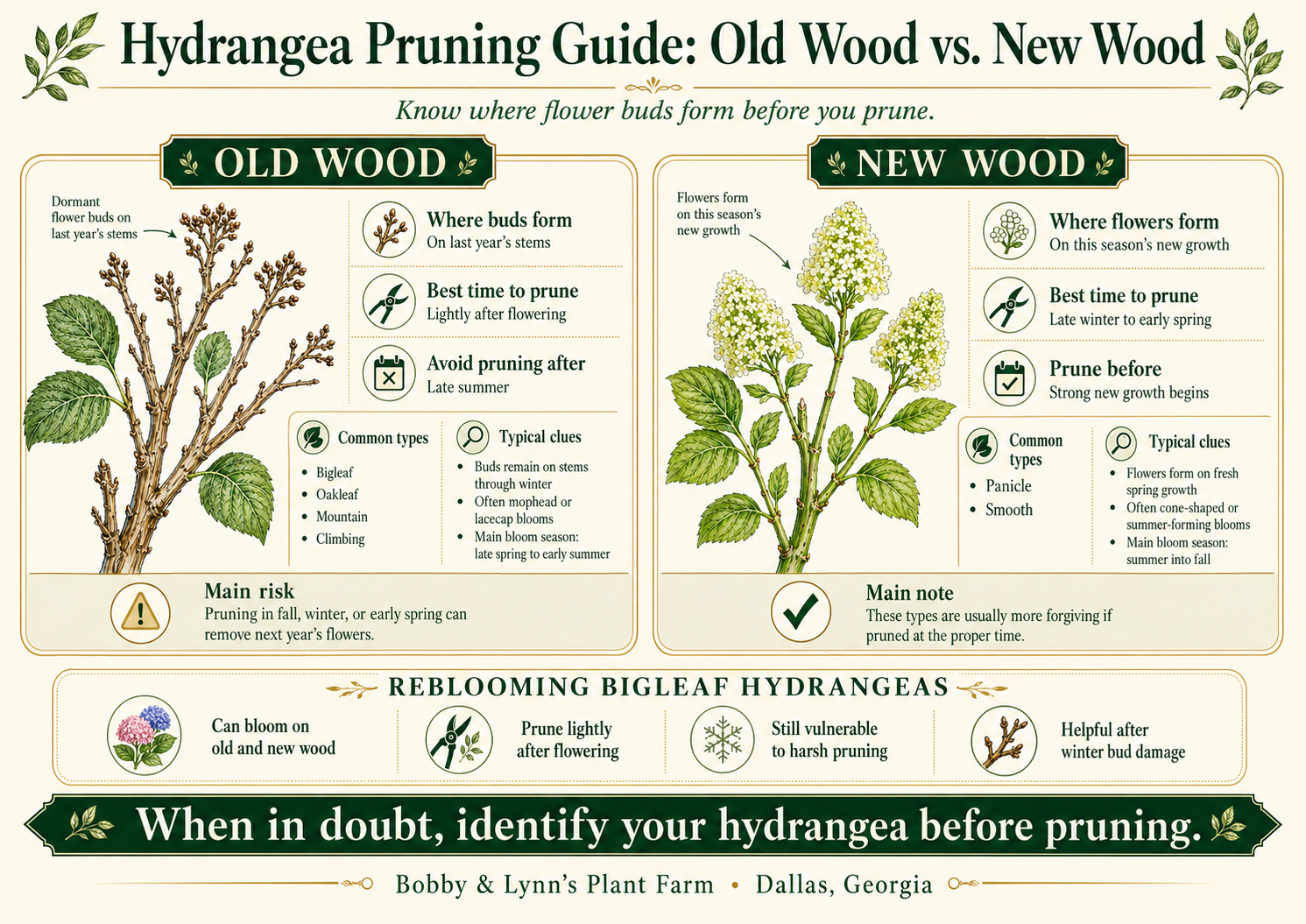
This free pruning chart makes that difference easier to understand.
- Old Wood vs. New Wood Hydrangeas
- What Does Old Wood Mean?
- What Does New Wood Mean?
- A Quick Comparison
- What About Reblooming Hydrangeas?
- Why Identifying Your Hydrangea Matters
- Signs Your Hydrangea May Bloom on Old Wood
- Signs Your Hydrangea May Bloom on New Wood
- The Safest Pruning Rule for Old Wood vs. New Wood
- What to Do When Your Hydrangea Isn’t Blooming
- Free Educational Use
- Download and Share the Chart
- More Hydrangea Help
Old Wood vs. New Wood Hydrangeas

Knowing whether your hydrangea blooms on old wood or new wood can help prevent pruning mistakes that remove next year’s flowers.
What Does Old Wood Mean?
Old wood refers to stems that grew during the previous growing season.
Hydrangeas that bloom on old wood often form their flower buds months before the flowers open. Those buds may already be sitting on the stems through fall and winter.
If the shrub is cut back heavily during fall, winter, or early spring, the flower buds may be removed before they ever get a chance to bloom.
Hydrangeas that commonly bloom on old wood include:
- Bigleaf hydrangeas
- Mophead hydrangeas
- Lacecap hydrangeas
- Oakleaf hydrangeas
- Mountain hydrangeas
These hydrangeas should generally be pruned lightly after they finish flowering.
That doesn’t mean every branch must be cut. In many cases, all that’s needed is the removal of dead, broken, or damaged stems and a little light shaping when necessary.
For more detailed guidance, read our simple guide to pruning every type of hydrangea.
What Does New Wood Mean?
New wood refers to fresh stems produced during the current growing season.
Hydrangeas that bloom on new wood develop their flower buds on that new growth. Because the flowers haven’t already formed on last year’s stems, these hydrangeas are generally more forgiving about late-winter or early-spring pruning.
Hydrangeas that commonly bloom on new wood include:
- Panicle hydrangeas
- Smooth hydrangeas
These types can usually be pruned during late winter or early spring before strong new growth begins.
They may still bloom even when the previous year’s stems were damaged by winter weather because the plant produces its flowers on new growth.
A Quick Comparison
| Hydrangea group | Where flowers form | Common types | General pruning time |
|---|---|---|---|
| Old wood | Stems grown during the previous season | Bigleaf, mophead, lacecap, oakleaf, mountain | Lightly after flowering |
| New wood | Fresh growth produced during the current season | Panicle and smooth | Late winter or early spring |
| Old and new wood | Previous-season stems and current-season growth | Some reblooming bigleaf varieties | Prune cautiously after flowering |
What About Reblooming Hydrangeas?
Some newer bigleaf hydrangeas can bloom on both old and new wood.
These are often called reblooming hydrangeas. They may produce an early round of flowers from old wood and another round from new growth later in the season.
That can make them more dependable after a difficult winter, but they still aren’t completely safe from pruning mistakes.
Heavy pruning may remove the early flower buds and delay blooming. For the safest approach, prune reblooming hydrangeas lightly after flowering unless you’re removing dead or damaged stems.
Why Identifying Your Hydrangea Matters
Hydrangeas don’t all follow the same pruning schedule.
Cutting a panicle hydrangea back in late winter is usually fine. Making that same cut on a bigleaf hydrangea may remove most or all of the coming season’s flower buds.
Before pruning, try to identify:
- The type of hydrangea you’re growing
- Whether it blooms on old wood, new wood, or both
- Whether the stems are alive or damaged
- When the shrub last flowered
- Whether winter weather may have injured the buds
When you aren’t sure what type you have, it’s usually safer to wait and avoid heavy pruning.
Signs Your Hydrangea May Bloom on Old Wood
Your hydrangea may be an old-wood type if:
- It has rounded mophead or lacecap flowers
- The blooms are often blue, pink, or purple
- It flowers mainly in late spring or early summer
- You can see buds along older stems
- It produced leaves but no flowers after being cut back
- Lower protected stems bloomed while exposed upper stems didn’t
Cold damage and incorrect pruning are two of the most common reasons old-wood hydrangeas fail to flower.
Signs Your Hydrangea May Bloom on New Wood
Your hydrangea may be a new-wood type if it:
- Produces cone-shaped flower clusters
- The blooms are often white, green, or pink
- Flowers from summer into fall
- Grows vigorously from the base each spring
- Still flowers after late-winter pruning
- A panicle or smooth hydrangea
Panicle hydrangeas such as Limelight, Phantom, Pink Diamond, and Pee Gee bloom on new growth.
Smooth hydrangeas such as Annabelle also bloom on new wood.
The Safest Pruning Rule for Old Wood vs. New Wood
When you don’t know which hydrangea you have, don’t cut the entire shrub to the ground.
Wait until the plant begins growing and flowering so you can gather more clues. Dead, broken, or diseased stems may be removed as needed, but deeper pruning should wait until the hydrangea has been identified.
A good rule to remember is:
Identify your hydrangea before pruning.
That one step can save an entire season of flowers.
What to Do When Your Hydrangea Isn’t Blooming
Pruning is only one possible cause of missing flowers.
A hydrangea may also fail to bloom because of:
- Winter or late-freeze damage
- Too much shade
- Excess nitrogen fertilizer
- Drought or root stress
- Poor drainage
- Planting too deeply
- Being newly planted or recently moved
Our guide Why Is My Hydrangea Not Blooming? 7 Common Causes can help you work through each possibility.
You can also visit our complete Hydrangea Care Guide for practical help with sunlight, watering, pruning, fertilizer, and common hydrangea problems.
Free Educational Use
Garden clubs, schools, libraries, Master Gardener groups, and gardening organizations are welcome to share this chart for educational purposes.
Please credit Bobby & Lynn’s Plant Farm and link back to this page when sharing the chart online.
The chart may not be altered, repackaged, sold, or used to promote another business without permission.
Suggested credit:
Source: Bobby & Lynn’s Plant Farm in Dallas, Georgia.
Download and Share the Chart
More Hydrangea Help
For more practical hydrangea information, explore these resources:
- How to Prune Hydrangeas by Type
- Why Hydrangeas Aren’t Blooming
- How to Grow Hydrangeas in Georgia
- Complete Hydrangea Care Guide
- Free All About Hydrangeas eBook
At Bobby & Lynn’s Plant Farm, we grow hydrangeas and flowering shrubs right here in Dallas, Georgia. We enjoy helping Southern gardeners understand their plants and avoid the common mistakes that can cost them a season of blooms.