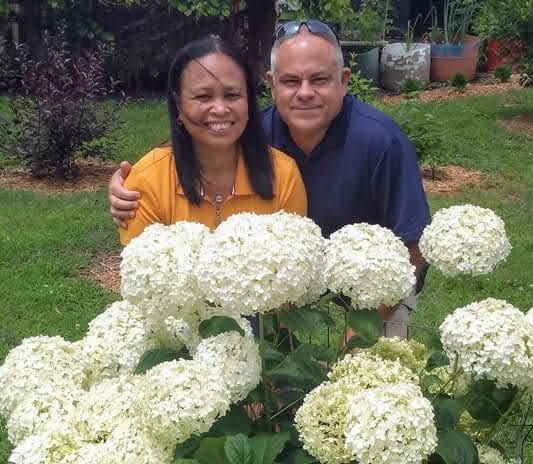
If your panicle hydrangea won’t turn pink, the plant may be perfectly healthy. In hot climates, especially across Georgia and the South, warm nighttime temperatures can keep the blooms white, pale green, or only lightly blushed instead of developing the deeper pink and red shades shown on the plant tag. Panicle hydrangeas are often chosen for their beautiful color-changing flowers. Many varieties open white or lime green before gradually developing shades of blush, rose, deep pink, or burgundy as the blooms mature.
What We’ve Seen
At Bobby & Lynn’s Plant Farm, we grow several panicle hydrangeas here in Georgia, and their late season color can vary quite a bit from one year to the next.
During long, hot summers, we’ve seen blooms stay white or only develop a light blush before they begin fading. That doesn’t automatically mean anything is wrong with the plant. Our warm nights can simply delay or weaken the deeper pink and red coloring people sometimes expect from the photos on the plant tag.
We look at the health of the whole plant instead of judging it only by flower color. If the leaves look healthy, the plant is growing well, and it’s producing plenty of blooms, we usually consider the color difference part of growing panicle hydrangeas in our climate.
Quick Answer
Panicle hydrangeas usually develop their strongest pink and red coloring when their flowers mature during warm days followed by cooler nights.
In hotter climates, nighttime temperatures may remain too warm for the blooms to develop their deepest color. Instead of turning dark pink or red, the flowers may remain creamy white, pale green, lightly blushed, or eventually fade to tan or brown.
The amount of pink also depends on the hydrangea variety, bloom timing, sunlight, plant maturity, and the weather during the weeks when the flowers are aging.
About Bobby & Lynn


Panicle Hydrangeas Change Color as Their Flowers Age
Unlike bigleaf hydrangeas, panicle hydrangeas do not change from blue to pink based on soil pH.
Panicle hydrangea flowers naturally change color as they mature. Depending on the variety, the blooms may progress through several stages:
- Lime green or creamy white
- Bright white
- Soft blush or light pink
- Rose, raspberry, or burgundy
- Tan or brown as the flowers dry
The exact progression varies from one variety to another. Some panicle hydrangeas are bred to develop dramatic red and pink shades, while others finish with only a gentle blush.
You can explore more information about growing and caring for these shrubs in our Hydrangea Hub.
Hot Nights Can Limit Pink Flower Color
Warm days are not necessarily the problem. Panicle hydrangeas tolerate summer heat better than many other hydrangea species.
The bigger challenge is warm nighttime temperatures.
When nights begin cooling toward the end of summer, the flowers often mature more slowly and have a better opportunity to develop pink, rose, and red pigments. In northern climates, this cooling period may begin while the flowers are still fresh and colorful.
Here in Georgia, daytime heat can continue well into September, and overnight temperatures may remain warm for weeks. By the time consistently cooler nights arrive, some hydrangea blooms have already begun drying or turning brown.
Clemson Cooperative Extension discusses this difference in its article In the Limelight: Hydrangea paniculata, explaining that warmer nighttime temperatures can shorten or weaken the pink stage on panicle hydrangeas grown in the South.
The photograph on a panicle hydrangea tag may show flowers that are deep pink, raspberry, or nearly red. Those photographs may be completely accurate, but they represent the plant growing under particular conditions.
The same variety can look different depending on:
- Regional climate
- Nighttime temperatures
- Amount of sunlight
- Blooming time
- Plant age
- Weather during late summer
- How quickly the flowers mature
A variety photographed in Michigan, Minnesota, or another cooler climate may develop much stronger fall color than the same plant growing in Georgia.
The plant tag shows what the variety is capable of producing—not necessarily the exact color it will display in every garden or every year.
Your Panicle Hydrangea May Look Different Each Year
The amount of pink can change from one growing season to the next.
A summer followed by cooler August and September nights may produce beautiful rose-colored flowers. During another year, prolonged heat and warm nights may cause the same shrub to remain mostly white before fading to tan.
Rainfall, cloud cover, extreme heat, and the timing of the first cooler weather can all influence the final appearance of the blooms.
This yearly variation is normal and does not mean the plant has reverted or changed varieties.
Some Varieties Turn Pink More Reliably Than Others
Genetics still matter. Some panicle hydrangeas are naturally better at producing strong pink or red coloring.
Varieties commonly grown for noticeable color changes include:
- Fire Light®
- Fire Light Tidbit®
- Quick Fire®
- Quick Fire Fab®
- Pinky Winky®
- Vanilla Strawberry™
- Strawberry Sundae®
- Berry White®
- Zinfin Doll®
- Limelight Prime®
Even these varieties may not become as deeply colored in a hot Southern garden as they would in a cooler region.
Other varieties, including Limelight®, Little Lime®, Bobo®, and some older panicle hydrangeas, may finish with softer blush tones, muted pink, green, or cream.
When choosing a variety, look beyond the most dramatic photograph. Read the full description and consider how the plant performs in your climate.
Does Sunlight Help Panicle Hydrangeas Turn Pink?
Sunlight can influence flower production and color, but more sun does not always guarantee darker pink blooms.
Panicle hydrangeas generally need several hours of sunlight to flower well. Plants growing in heavy shade may produce fewer flowers, weaker stems, or less noticeable color changes.
However, intense afternoon sun in a hot climate can also cause blooms to dry, scorch, or turn brown before they have time to develop rich pink coloring.
In the South, a location with morning sun and some protection from the strongest afternoon heat is often a good balance. The plant still receives enough light to flower while gaining some relief during the hottest part of the day.
Could the Flowers Simply Be Too Young?
Many panicle hydrangeas remain white or green for much of their bloom season. Their pink coloring appears only as the flowers age.
An early-blooming variety such as Quick Fire® has more time to change color before fall. A later-blooming variety may not begin aging until the hottest part of summer, making its color transition less dramatic in warmer climates.
Young plants may also produce flowers that look slightly different from those on a mature, established shrub. As the plant becomes larger and stronger, its flower display may become fuller and more representative of the variety.
Can Soil pH Make a Panicle Hydrangea Pink?
No. Changing the soil pH will not turn a panicle hydrangea pink.
Soil pH affects the blue and pink coloring of certain bigleaf and mountain hydrangeas. Panicle hydrangeas follow a different color-changing process controlled primarily by genetics, flower maturity, and environmental conditions.
Do not apply aluminum sulfate, lime, or another soil amendment simply to change the flower color of a panicle hydrangea. These products will not create the desired pink coloring and could unnecessarily alter your soil.
Will Fertilizer Make the Flowers Pinker?
There is no special fertilizer that will force a panicle hydrangea to turn pink.
Excessive fertilizer—especially fertilizer containing high levels of nitrogen—can encourage leafy growth at the expense of flowers. A healthy panicle hydrangea planted in suitable soil usually needs only modest feeding.
Fertilizer can support healthy growth, but it cannot replace the cool late-season weather that helps produce stronger pink and red tones.
Why Did My Flowers Turn Brown Instead of Pink?
Flowers may turn brown before developing much pink when they experience:
- Prolonged summer heat
- Hot nighttime temperatures
- Intense afternoon sunlight
- Dry soil or inconsistent watering
- Hot, drying winds
- A late bloom period
- Natural flower aging
Keep the soil evenly moist during hot weather, especially while the plant is becoming established. Mulch can help conserve soil moisture and protect the roots from extreme temperature swings.
Avoid keeping the soil constantly soggy. Panicle hydrangeas need moisture, but they also require good drainage.
Is Something Wrong With My Hydrangea?
A panicle hydrangea that remains white can still be completely healthy.
Look at the entire plant rather than judging it only by flower color. Healthy green foliage, sturdy new growth, and a good number of blooms are signs that the plant is doing well.
Flower color alone is not a reliable measure of plant health.
However, if the leaves are wilting regularly, turning yellow, developing large brown areas, or dropping early, investigate watering, drainage, sunlight, and possible disease or insect problems.
What You Can Do
You cannot control the nighttime temperature, but you can give your panicle hydrangea conditions that help it perform its best:
- Choose a variety known for strong pink or red coloring.
- Provide enough sunlight for healthy flowering.
- Offer afternoon shade in especially hot Southern locations.
- Keep the soil evenly moist during prolonged heat.
- Add two to three inches of mulch around the root zone.
- Avoid excessive nitrogen fertilizer.
- Allow the flowers to remain on the shrub and mature naturally.
- Give a young plant time to become established.
Even with excellent care, the final flower color will still depend heavily on the weather.
Frequently Asked Questions
Why did my panicle hydrangea stay white?
Warm nighttime temperatures, the hydrangea variety, late bloom timing, and flower maturity can all cause blooms to remain mostly white. This is common in warmer climates.
Will my panicle hydrangea turn pink when the weather cools?
It may develop a light blush when cooler weather arrives. However, if the flowers have already begun drying or turning brown, they may not develop much additional pink.
Why is the same hydrangea pinker in northern gardens?
Northern climates often experience cooler late-summer nights while the flowers are still fresh. Those conditions can encourage stronger pink and red coloring.
Can I add something to the soil to make it pink?
No. Soil amendments used to change bigleaf hydrangea color will not make a panicle hydrangea turn pink.
Does afternoon shade prevent pink coloring?
Not necessarily. Some sunlight helps with flowering, but protection from intense Southern afternoon heat may keep the blooms fresh longer and give them more time to change color.
Is the plant tag inaccurate?
The photograph may accurately show what the variety can produce under ideal conditions. Climate and weather can keep the same variety from developing identical coloring in your garden.
Why didn’t my Limelight hydrangea turn pink?
Limelight hydrangeas often develop only a soft blush rather than a deep pink, especially in hot climates. Warm nighttime temperatures can cause the blooms to move from white or green toward tan before strong pink color has time to develop.
Why didn’t my Strawberry Sundae hydrangea turn pink?
Strawberry Sundae hydrangeas usually color best when late-summer nights begin to cool. In hotter regions, the flowers may stay creamy white, develop only light pink tips, or fade before reaching the deeper strawberry-pink color shown in nursery photographs.
Why didn’t my Vanilla Strawberry hydrangea turn pink?
Vanilla Strawberry hydrangeas can produce beautiful pink and red tones, but the final color depends heavily on the weather. If nights remain warm, the blooms may stay mostly white or blush lightly instead of developing the deep pink and red shades the variety is known for.
Why didn’t my Pinky Winky hydrangea turn pink?
Pinky Winky hydrangeas normally begin with white flowers that gradually turn pink from the bottom upward. Hot nights, intense afternoon sun, or flowers drying too quickly can weaken that color change and leave the blooms mostly white, pale pink, or tan.
The Bottom Line
If your panicle hydrangea didn’t turn pink, the plant probably isn’t sick and you probably didn’t do anything wrong.
Panicle hydrangeas develop their strongest pink and red colors when aging blooms experience favorable weather, particularly cooler late-summer nights. In Georgia and other hot climates, warm nights may continue until the flowers have already started drying. As a result, the blooms may stay white, turn pale green, develop only a light blush, or fade directly to brown.
Choose a variety known for strong color, provide good growing conditions, and remember that the display may change from year to year. Sometimes the weather cooperates and produces beautiful rose-colored flowers. Other years, your hydrangea may remain creamy white—and that can still be a healthy and beautiful flower display.