A gift hydrangea covered in oversized pink, blue, purple, or white flowers can be hard to resist. You may receive one for Easter, Mother’s Day, a birthday, or another special occasion. Once the flowers begin to fade, however, an important question comes up: Can this beautiful potted hydrangea really survive outdoors?
Quick Answer: Yes, many gift hydrangeas can survive outdoors and become permanent landscape shrubs, but success depends on your climate, the plant’s health, and how it is introduced to outdoor conditions. Wait until the danger of frost has passed, gradually acclimate the plant to outdoor light, and choose a spot with morning sun, afternoon shade, and moist, well-drained soil. Keep in mind that a gift hydrangea may survive outdoors even if winter cold prevents it from blooming the following year.
For Gardeners in Georgia
Here in Georgia, one of the biggest concerns with a gift hydrangea is moving it too quickly from protected indoor or greenhouse conditions into our heat and strong afternoon sun.
Don’t rush to plant it outside just because the flowers look good. Wait until the danger of frost has passed, then gradually introduce it to outdoor conditions. For most bigleaf hydrangeas in our area, we prefer a location with morning sun and afternoon shade.
If the plant tag doesn’t list the exact variety or hardiness information, remember that there are no guarantees. Give it good drainage, consistent moisture, and some protection while it gets established, then see how it responds through its first season outdoors.
About Bobby & Lynn

What Is a Gift Hydrangea?
Most plants sold as gift hydrangeas are bigleaf hydrangeas, botanically known as Hydrangea macrophylla. These are the familiar mophead or lacecap hydrangeas known for producing pink, blue, purple, or white flowers.
A gift hydrangea is not necessarily a houseplant. Bigleaf hydrangeas are woody shrubs that can grow outdoors when the climate and planting conditions are suitable.
According to UGA Cooperative Extension’s guide to growing bigleaf hydrangeas, bigleaf hydrangeas are sold as both florist plants and landscape plants, and gift plants can sometimes be transplanted outdoors for future blooms.
The difference is how the plant was raised.
A landscape hydrangea is normally grown outdoors or in nursery conditions that prepare it for life in the garden. A florist hydrangea is commonly grown in a greenhouse and managed to produce the largest, most attractive flowers possible by a particular sale date.
That beautiful display is real, but the plant may need time and careful treatment before it is ready for outdoor life.
Was Your Gift Hydrangea Forced to Bloom?
Your hydrangea may have been “forced,” which simply means growers controlled temperature, light, water, and other conditions to make it flower earlier than it naturally would outdoors.
This is why stores may have blooming hydrangeas available around Easter or Mother’s Day while the hydrangeas growing in nearby landscapes have barely begun producing leaves.
Forced blooming does not automatically harm the plant. It does, however, use a great deal of the plant’s stored energy.
Once the flowers fade, the hydrangea may look tired. It may lose a few leaves, stop growing temporarily, or take a while to recover. That does not necessarily mean it is dying.
The plant has simply moved from a protected greenhouse into a home with different light, humidity, and temperatures.
Can Every Gift Hydrangea Survive Outdoors?
Not every gift hydrangea will survive outdoors successfully.
Its chances depend on several factors:
- The exact hydrangea species and cultivar
- Its cold-hardiness rating
- Your local climate
- Winter temperatures
- Late spring freezes
- Summer heat
- Sunlight and soil conditions
- How gradually it is introduced to the outdoors
- The health of its root system
The greatest problem is that many gift hydrangeas have incomplete labels. The tag may say only “hydrangea” without identifying the cultivar or listing its USDA hardiness zones.
Without that information, you cannot be certain how much cold the plant can tolerate.
Bigleaf hydrangeas are generally better suited to moderate climates than extremely cold regions. Even when the roots survive winter, cold weather may damage the stems and flower buds.
In colder areas, gardeners may need to grow the plant in a container that can be moved into a protected location during winter. Others may choose to enjoy it as a temporary flowering plant rather than expecting it to become a dependable landscape shrub.
How to Tell Whether Your Gift Hydrangea Has a Chance
Start by examining the plant and its label.
Look for the botanical name Hydrangea macrophylla, a cultivar name, a USDA hardiness-zone range, or instructions for outdoor planting.
Your gift hydrangea has a better chance of surviving outdoors when:
- The stems are firm and healthy.
- Most of the leaves are green.
- The container has drainage holes.
- The roots are light-colored and firm rather than dark and mushy.
- The plant is hardy in your growing zone.
- You have a location with morning sun and afternoon shade.
- You can wait until frost danger has passed before planting.
Do not assume the plant is ruined just because the original flowers have faded. Fading flowers are part of the normal blooming cycle.
Pay closer attention to the condition of the stems, leaves, and roots.
Keep Your Gift Hydrangea Indoors Until Frost Has Passed
Do not plant a greenhouse-grown hydrangea outdoors while freezing weather is still possible.
The tender leaves and flowers have not been hardened by outdoor conditions. A light freeze that would not bother a dormant landscape hydrangea could severely damage a gift plant that is actively growing.
Keep it in a bright, cool room until your area is safely past its expected final frost.
Avoid placing it:
- Beside a heating vent
- Directly in front of an air conditioner
- Against cold window glass
- In a dark corner
- In intense afternoon sunlight through a window
Bright, indirect light is usually best while the plant is indoors.
Water when the upper portion of the potting mix begins to feel dry. Apply enough water to moisten the entire root ball, and let the excess drain completely.
Do not allow the decorative foil or outer container to hold water around the pot. Constantly wet soil can deprive the roots of oxygen and lead to root decline.
Help Your Gift Hydrangea Adjust to Outdoor Conditions
Moving a hydrangea directly from a house or greenhouse into strong outdoor sunlight can scorch its leaves.
Instead, gradually introduce the plant to outdoor conditions. This process is often called hardening off.
Begin by placing the hydrangea in a protected, shaded location for a few hours. Bring it inside if nights are still cold.
Over the next week or two, slowly increase the amount of time it spends outdoors. Allow it to receive a little gentle morning sunlight, but continue protecting it from strong afternoon sun and drying winds.
Watch the leaves closely.
A small amount of temporary wilting may occur while the plant adjusts. Severe wilting, bleached patches, or crispy brown areas may mean the change happened too quickly.
Where to Plant a Gift Hydrangea Outdoors
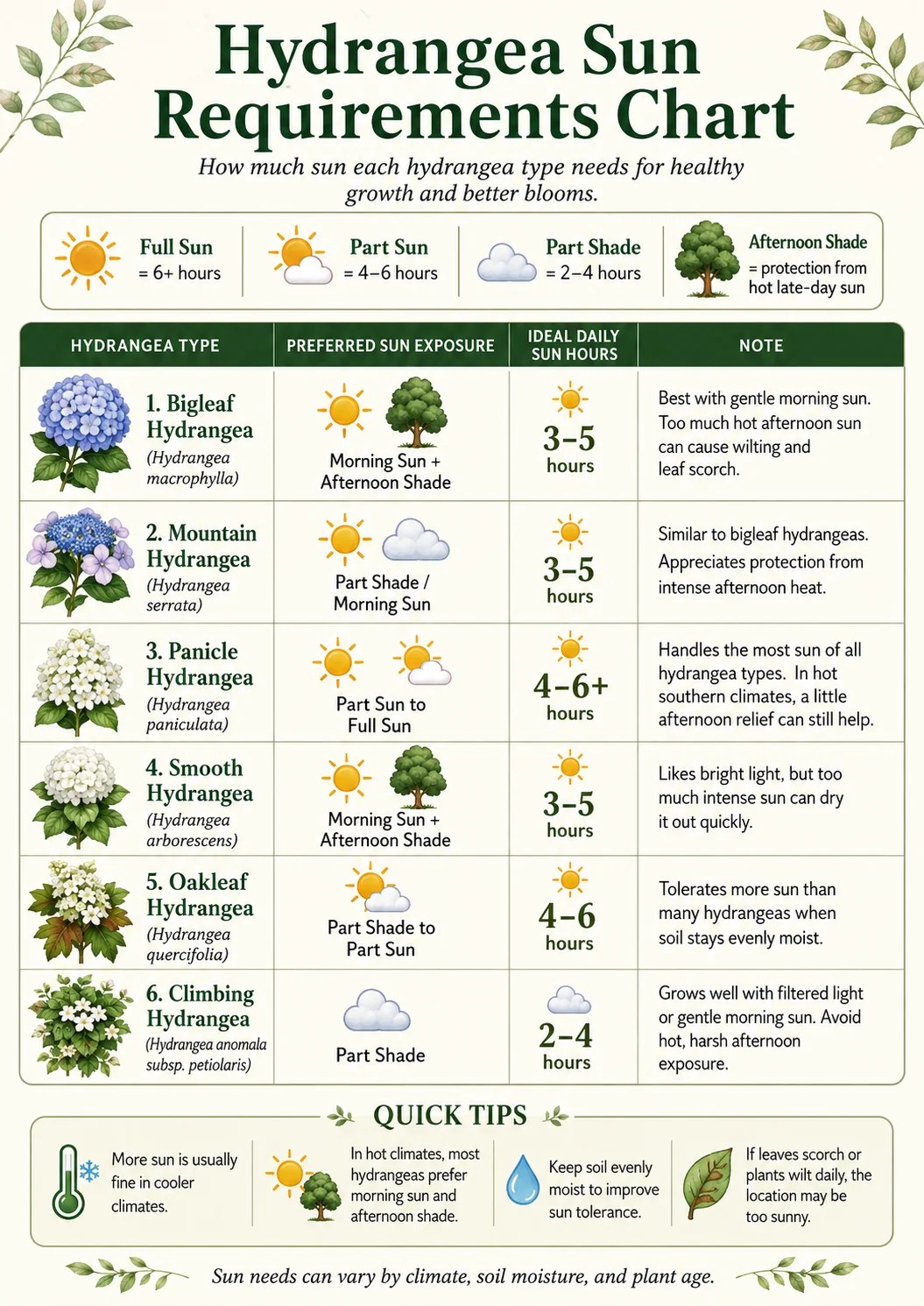
The best planting location depends on your climate, but most bigleaf gift hydrangeas perform well with morning sunlight and protection from intense afternoon heat.
UGA Extension recommends morning sun, afternoon shade, and moist, well-drained soil for bigleaf hydrangeas. Hot, dry, exposed locations should be avoided.
For more help with sunlight, watering, soil, and ongoing care, visit our complete Hydrangea Care Guide
Look for a spot with:
- Gentle morning sunlight
- Shade during the hottest part of the day
- Moist but well-drained soil
- Protection from strong winds
- Enough room for the shrub to grow
- Good air circulation
In cooler northern climates, a bigleaf hydrangea may tolerate more sunlight. In hot Southern areas, protection from afternoon sun becomes much more important.
Avoid planting it directly beneath a large, shallow-rooted tree. The tree may compete with the hydrangea for water and nutrients.
Areas beside hot pavement, driveways, brick walls, or reflected afternoon heat can also be difficult for a newly planted hydrangea.
If you’re growing a bigleaf hydrangea in a hot climate, our Hydrangea Sun Requirements guide explains how much sun hydrangeas need and why afternoon shade matters.

How to Plant Your Gift Hydrangea
Once frost danger has passed and the plant has adjusted to outdoor conditions, it can be moved into the landscape.
Dig a planting hole approximately two to three times wider than the root ball. The hole should be no deeper than the root ball itself.
Remove the hydrangea from its container and inspect the roots. If they are tightly circling the outside of the root ball, loosen them gently with your fingers.
Set the hydrangea in the hole with the top of the root ball level with or slightly above the surrounding ground. Planting it too deeply can limit oxygen around the roots and contribute to decline.
Fill around the root ball with the soil removed from the hole. Firm it gently, but do not pack it tightly.
Water the entire planting area slowly and deeply.
Finish by spreading two to three inches of mulch over the root zone. Keep the mulch several inches away from the stems instead of piling it against the base of the plant.
Expect Some Transplant Stress
Your gift hydrangea may not look perfect after it is planted.
It has already experienced several major changes:
- Greenhouse to store
- Store to home
- Indoor conditions to outdoor conditions
- Container to garden soil
Some wilting, flower fading, leaf spotting, or temporary leaf loss can occur while the roots become established.
Remove faded flower clusters if desired, but avoid cutting the entire plant back. Leave healthy green leaves and stems in place so they can continue producing energy for the roots.
Check the soil regularly during the first growing season. Newly planted hydrangeas cannot pull moisture from a wide area until their roots grow beyond the original root ball.
Water deeply when the soil begins to dry, but do not keep it constantly soggy. The weather, soil type, temperature, sunlight, and rainfall should determine how often you water.
Our guide to keeping newly planted shrubs alive in summer explains how to monitor moisture without relying on a rigid watering schedule.
Why Your Gift Hydrangea May Not Bloom Again Right Away
Even when a gift hydrangea survives outdoors, it may not flower the following year.
Most traditional bigleaf hydrangeas form next year’s flower buds on stems produced during the previous growing season. This is called blooming on old wood.
Cold temperatures, late freezes, deer, or pruning can remove or damage those buds. The plant may still produce plenty of healthy green leaves without producing flowers.
Penn State Extension notes that bigleaf hydrangeas may remain root-hardy while cold weather kills the stems or damages their flower buds. In that situation, the shrub can return without flowering normally.
A recently transplanted plant may also put more energy into developing roots than producing flowers.
Other reasons it may not bloom include:
- Too much shade
- Excess nitrogen fertilizer
- Pruning at the wrong time
- Winter bud damage
- Late spring freezes
- Repeated drought stress
- An unsuitable climate
- A damaged or crowded root system
When the plant is growing leaves but not flowering, do not immediately add more fertilizer. Too much nitrogen may produce even more foliage while reducing blooms.
Read Why Is My Hydrangea Not Blooming? before making major changes.
Will the Flowers Stay the Same Color?
Your gift hydrangea may bloom in a different color after it is planted outdoors.
The flower color of many pink, blue, and purple bigleaf hydrangeas is influenced by soil chemistry and the availability of aluminum. Acidic conditions with available aluminum generally encourage bluer flowers, while less acidic or alkaline conditions tend to produce pinker flowers.
White cultivars normally remain white because they do not produce the pigments responsible for pink or blue coloration.
The enormous greenhouse-grown flower clusters may also be smaller in later years. Outdoor weather, natural light, soil conditions, water, and nutrition are different from the carefully controlled environment in which the original flowers developed.
A different color or smaller flower does not necessarily mean anything is wrong with the plant.
Should You Grow the Gift Hydrangea in a Container?
Keeping the plant in a container may be a good option when:
- You do not know its cold-hardiness rating.
- Your winters may be too severe.
- You rent or expect to move.
- You do not have a suitable garden location.
- You want to move it away from extreme heat or cold.
- Your soil drains poorly.
Choose a container with drainage holes and enough room for root growth. Use a quality potting mix rather than soil dug from the yard.
Container-grown hydrangeas dry faster than those planted in the ground, so check the moisture regularly during warm weather.
The roots in a container are also more exposed to winter temperatures. A plant that survives winter in the ground may suffer root damage in an unprotected pot.
UGA notes that bigleaf hydrangeas can be grown in containers and moved to protection when cold weather threatens.
When It Is Okay to Let a Gift Hydrangea Go
Sometimes a gift hydrangea does not survive despite your best efforts.
The roots may have already been damaged by poor drainage. The plant may not be hardy in your climate. It may have been held in stressful indoor conditions for too long, or it may simply be too weak to recover after flowering.
That does not mean you failed.
A gift plant can still serve its original purpose by bringing beauty and meaning to a special occasion. Not every florist plant must become a permanent part of the landscape to have been worthwhile.
You can attempt to save it without feeling obligated to keep a severely declining plant alive indefinitely.
Can a Gift Hydrangea Really Survive Outdoors?
Yes, a gift hydrangea can survive outdoors when it is healthy, suited to the local climate, and introduced to outdoor conditions gradually.
Wait until frost danger has passed, provide morning sunlight and afternoon shade, plant it in well-drained soil, and keep the root area consistently moist while it becomes established.
Just remember that survival and flowering are not the same thing.
Your hydrangea may live and grow for years but bloom inconsistently if winter temperatures damage its old-wood flower buds. Its future flowers may also be smaller or a different color than the ones it had when it arrived.
Give the plant a reasonable chance, watch how it responds, and allow it time to adjust. That beautiful gift hydrangea may surprise you by becoming a permanent part of your garden.