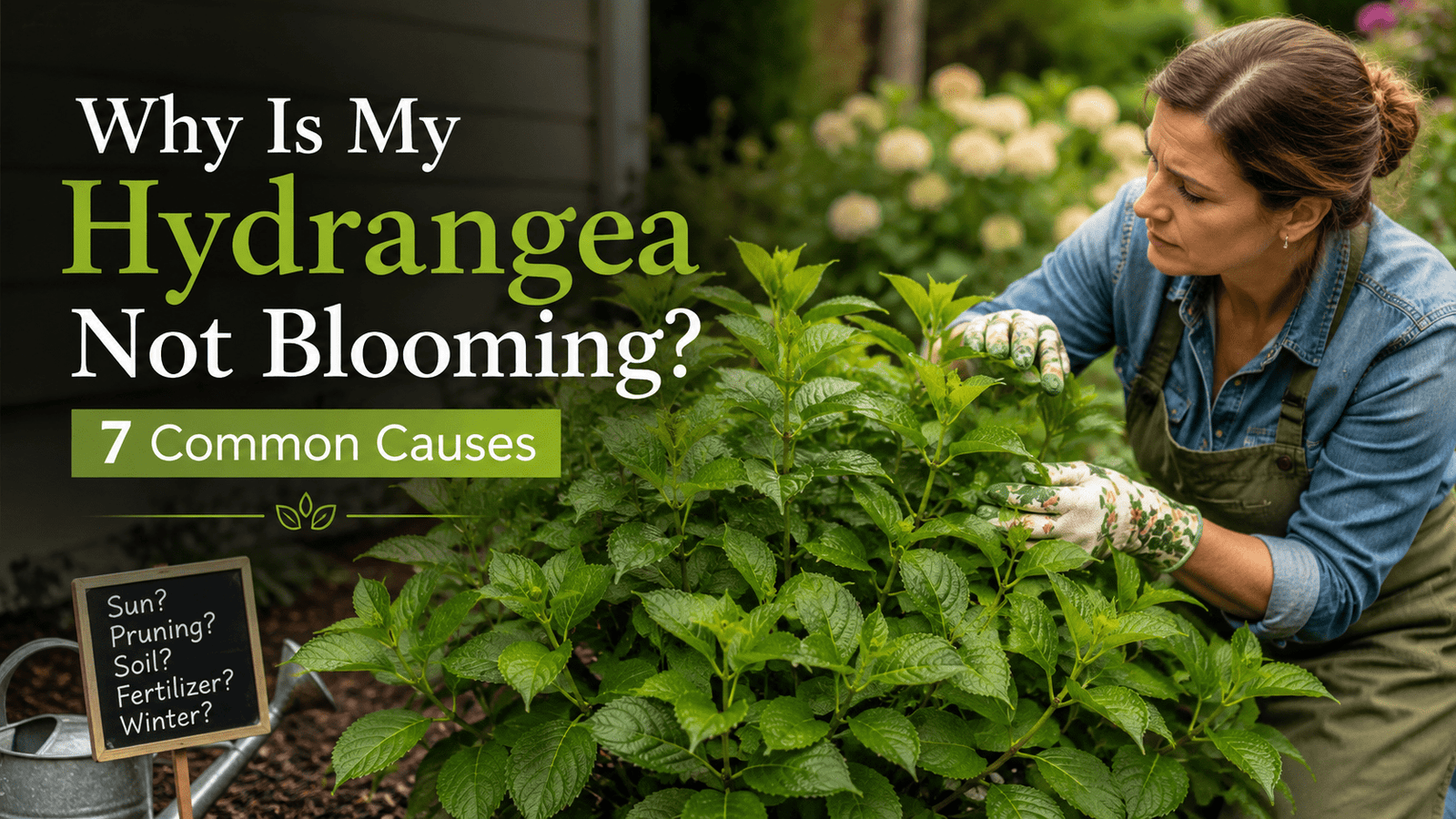
A healthy hydrangea covered in green leaves but missing those beautiful flowers can leave you wondering, “Why is my hydrangea not blooming?”
This is one of the most common hydrangea questions we hear. Most of the time, the plant isn’t sick or dying. Missing blooms are usually connected to pruning, cold damage, sunlight, fertilizer, plant age, root stress, or the type of hydrangea you’re growing.
Here at Bobby & Lynn’s Plant Farm in Dallas, Georgia, we see how warm winter days, sudden freezes, summer heat, and pruning mistakes can affect hydrangea blooms. The good news is that once you figure out the likely cause, you can usually help the plant bloom more successfully in the future.
Quick Answer: Why Is My Hydrangea Not Blooming?
Quick answer: A hydrangea usually fails to bloom because of incorrect pruning, cold-damaged flower buds, too little sunlight, excess nitrogen, establishment stress, root problems, or the type of hydrangea being grown.
The most common reasons a hydrangea doesn’t bloom are:
- It was pruned at the wrong time.
- Cold weather damaged the flower buds.
- The plant is receiving too much shade.
- Too much nitrogen encouraged leaves instead of flowers.
- The hydrangea is newly planted or still becoming established.
- Heat, drought, poor drainage, or root stress affected bud development.
- The hydrangea variety isn’t well suited to its location or climate.
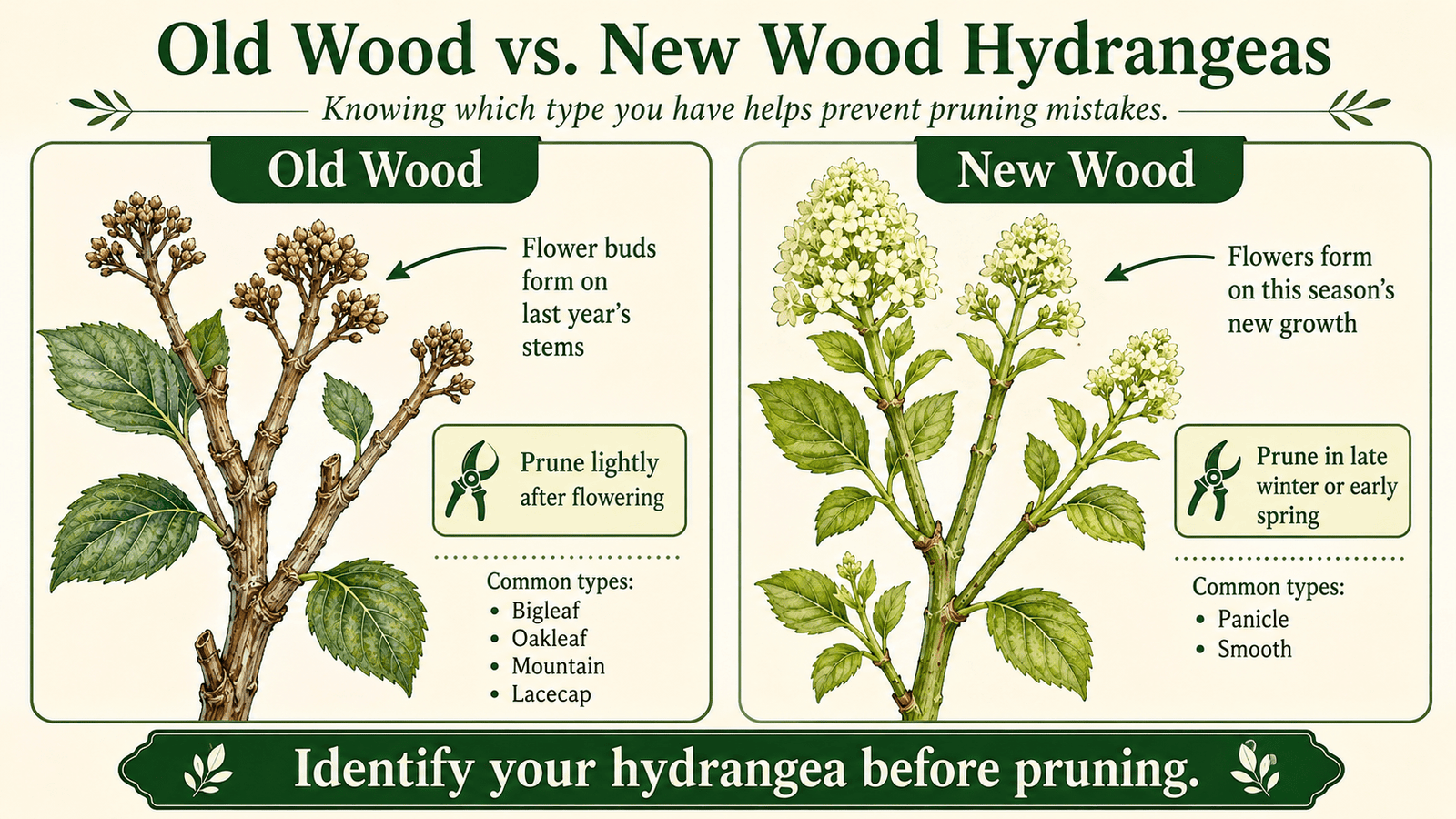
Start by identifying the type of hydrangea you have. Some hydrangeas bloom on stems that grew the previous year, while others produce flowers on new growth made during the current season.
That one difference can go a long way toward explaining why a hydrangea looks healthy but still doesn’t flower.
Which Hydrangea Problem Sounds Like Yours?
Use these clues to help narrow down the cause:
- Lots of healthy leaves but no flowers: Check pruning and fertilizer.
- New growth appears only near the ground: Look for winter or freeze damage.
- Long, weak stems lean toward a brighter area: The plant may need more sunlight.
- The plant is newly planted or recently moved: It may still be establishing roots.
- The leaves wilt, yellow, or develop brown edges: Check water, drainage, and planting depth.
- You aren’t sure what type of hydrangea you have: Begin by learning whether it blooms on old wood or new wood.
Why Is My Hydrangea Not Blooming? Quick Troubleshooting Guide
| What You Notice | Possible Cause | What You Should Do |
|---|---|---|
| Healthy green leaves but no flowers | Incorrect pruning or excess nitrogen | Review pruning time and reduce unnecessary fertilizer |
| New growth begins near the ground only | Winter or freeze damage | Allow the plant to recover and avoid heavy pruning |
| Long, weak stems with few buds | Too much shade | Provide more morning sunlight |
| Large leaves and rapid leafy growth | Too much nitrogen | Stop using high-nitrogen fertilizer |
| Recently planted hydrangea has no blooms | Plant is still establishing | Maintain steady care and give it more time |
| Flowers appear only on lower stems | Upper buds were damaged by cold | Protect the plant during late freezes when practical |
| Wilting continues even after watering | Root, drainage, or planting-depth problem | Check the soil and root area |
Pruning at the Wrong Time Can Stop Hydrangea Blooms
Incorrect pruning is one of the most common answers to the question, “Why is my hydrangea not blooming?”
This is most likely the cause if: Your hydrangea was cut back during fall, winter, or early spring and now has plenty of healthy leaves but no flowers.
Some hydrangeas develop next year’s flower buds on stems that grew during the previous season. This is called blooming on old wood.
If those stems are cut back during fall, winter, or early spring, you may remove the flower buds before they ever get a chance to open.
Hydrangeas that commonly bloom on old wood include:
- Bigleaf hydrangeas
- Mophead hydrangeas
- Lacecap hydrangeas
- Oakleaf hydrangeas
- Many mountain hydrangeas
Old-wood hydrangeas should generally be pruned lightly after they finish flowering. Pruning too late in the season can remove the buds that would have produced next year’s flowers.
If your hydrangea has healthy leaves but no flowers, our guide to why hydrangeas are not blooming covers pruning mistakes, cold damage, shade, fertilizer, and other common causes.
For detailed instructions, read our simple guide to pruning every type of hydrangea.
You can also review UGA Extension’s hydrangea pruning recommendations for additional Georgia-specific guidance.
What You Should Do
Don’t immediately cut back a hydrangea simply because it hasn’t bloomed.
First, identify the variety. If it blooms on old wood, wait until after flowering before doing any major shaping.
Dead, broken, or diseased stems can be removed as needed, but don’t cut every stem to the ground unless you know the hydrangea type and have a reason to do so.
If the flower buds were removed this year, the plant may need another full growing season before it blooms normally again.
Cold Damage May Be Why Your Hydrangea Isn’t Blooming
A hydrangea can form flower buds correctly and still fail to bloom because cold weather damaged those buds.
This is most likely the cause if: New growth appears near the base of the plant while the upper stems have dried buds, dead tips, or no flowers.
This problem is especially common with old-wood hydrangeas. Their flower buds may already be sitting on the stems during winter.
A hard freeze, sudden temperature drop, or late spring frost can kill the buds without killing the entire plant.
Georgia weather can make this especially frustrating. We may get a stretch of mild winter weather that encourages the buds to swell, followed by a sudden cold snap. When freezing temperatures return, those tender buds can be damaged.
The shrub may later produce plenty of healthy leaves, making it look as though nothing is wrong. Unfortunately, the flower buds may already be lost for that season.
Signs of Cold-Damaged Hydrangea Buds
Look for:
- Blackened or dried buds
- Dead stem tips
- New leaves growing mainly from the base
- Healthy lower growth with dead upper stems
- Flowers appearing only on stems protected by the house or nearby plants
What You Should Do
Wait until the plant begins growing in spring before deciding which stems are dead.
Don’t cut the entire plant down too early. Scratch a small area of bark with your fingernail. Green tissue beneath the bark usually means the stem is still alive.
When a late freeze is predicted, smaller hydrangeas may be covered overnight with frost cloth or another breathable covering. Remove the covering after temperatures rise the following morning.
Too Much Shade May Be Why Your Hydrangea Is Not Blooming
Hydrangeas are often described as shade-loving shrubs, but that description can be a little misleading.
This is most likely the cause if: The plant has long, weak stems, very few flower buds, or blooms mainly on the side receiving the most light.
Many hydrangeas perform best with morning sunlight and some protection from intense afternoon heat. Deep shade may produce attractive green leaves but very few flowers.
A plant may also become more shaded over time. Nearby trees get larger, branches spread, and surrounding shrubs begin blocking light.
A hydrangea that bloomed beautifully several years ago may now receive much less sunlight than it once did.
Signs Your Hydrangea Needs More Light
Look for:
- Long, thin stems leaning toward a brighter area
- Dense leaves with very few flower buds
- Blooms appearing mainly on the sunniest side
- A nearby tree or shrub blocking the morning sun
- Little or no direct sunlight reaching the plant
What You Should Do
Observe the area throughout the day before moving the hydrangea.
Many bigleaf and oakleaf hydrangeas do well with morning sun and afternoon shade. Panicle hydrangeas generally tolerate and often benefit from more sunlight.
Our guide to growing hydrangeas in Georgia explains sunlight, watering, soil, and pruning needs for our climate.
Don’t move an established hydrangea during extreme summer heat unless the plant is in serious danger. Late fall, winter dormancy, or early spring is usually much less stressful.
Too Much Fertilizer Can Cause Leaves Instead of Hydrangea Blooms
Fertilizer isn’t always the answer when a hydrangea refuses to flower.
This is most likely the cause if: The plant is unusually large, dark green, and leafy but produces very few or no flowers.
Too much nitrogen can produce an impressive shrub covered in leaves while reducing flowering. Nitrogen encourages leafy growth. When too much is available, the plant may put more energy into stems and foliage instead of blooms.
Extra nitrogen may come from:
- Lawn fertilizer spread near the hydrangea
- Frequent applications of high-nitrogen plant food
- Heavy use of manure
- Fertilizer applied without testing the soil
- Combination weed-and-feed products used nearby
Fertilizer spread across a lawn can reach hydrangea roots, especially when the shrub is planted close to the turf.
What You Should Do
Stop adding fertilizer until you have a better understanding of what is happening in the soil.
Don’t automatically reach for a bloom booster. A soil test is a better way to learn whether nutrients or soil pH actually need adjustment.
Visit UGA Cooperative Extension to find your county office and learn more about soil-testing resources.
When fertilizer is needed, follow the product label carefully. More fertilizer does not automatically mean more flowers.
A Newly Planted Hydrangea May Need More Time to Bloom
A young or recently transplanted hydrangea may not bloom heavily during its first season.
This is most likely the cause if: The plant was recently purchased, planted, or moved and otherwise appears healthy.
The hydrangea may be using its energy to establish roots and settle into its new surroundings. This is especially common when it was planted during warm weather, recently transplanted, or purchased as a small plant.
Some nursery-grown hydrangeas arrive with flowers produced under controlled growing conditions. Once planted in the landscape, the shrub may need time to adjust before returning to a normal flowering schedule.
What You Should Do
Focus on helping the plant establish a healthy root system.
- Water deeply when the soil begins to dry.
- Apply two to three inches of mulch.
- Keep mulch away from the main stems.
- Avoid heavy pruning.
- Don’t force growth with repeated fertilizer.
- Watch for drainage problems.
A newly planted hydrangea may need a full growing season before producing a strong display.
Our hydrangea care guide covers the basic care needed to help a new hydrangea get established.
Water and Root Stress Can Keep a Hydrangea From Blooming
Hydrangeas need consistent moisture, but they don’t grow well in constantly soggy soil.
This is most likely the cause if: The plant wilts frequently, develops yellow leaves, grows slowly, or sits in soil that remains wet for several days.
Extended drought can stress a plant while it is developing flower buds. Poor drainage can damage roots and prevent them from taking in water and nutrients.
Both conditions may reduce flowering.
A hydrangea planted too deeply can also struggle. The top of the root ball should generally sit level with or slightly above the surrounding soil, especially in heavy Georgia clay.
Signs of Water or Root Stress
Watch for:
- Frequent wilting
- Yellowing leaves
- Brown leaf edges
- Slow growth
- Stem dieback
- Soil that remains wet for several days
- Water collecting around the plant
- A root flare buried beneath soil or mulch
Afternoon drooping doesn’t always mean a hydrangea needs more water. Leaves may wilt temporarily during extreme heat and recover after the sun drops.
Before watering again, check the soil a few inches below the surface.
Our article Why Hydrangeas Wilt and How to Save Them Fast can help you tell the difference between temporary heat stress and a genuine watering problem.
What You Should Do
Water deeply rather than applying a small amount every day.
Let the soil condition guide your watering schedule. Newly planted hydrangeas need closer attention, while established shrubs may need water less often.
When the ground remains wet long after rain, investigate drainage before adding more water or fertilizer.
Your Hydrangea Type Can Affect How Reliably It Blooms
Not every hydrangea responds to pruning, cold weather, and growing conditions in the same way.
Understanding whether your plant blooms on old wood, new wood, or both is one of the most important steps in answering “Why is my hydrangea not blooming?”
Hydrangeas That Bloom on Old Wood
These hydrangeas form many of their flower buds on stems from the previous growing season:
- Bigleaf hydrangeas
- Mophead hydrangeas
- Lacecap hydrangeas
- Oakleaf hydrangeas
- Mountain hydrangeas
Their blooms are more vulnerable to incorrect pruning and winter damage.
Hydrangeas That Bloom on New Wood
These hydrangeas form flowers on growth produced during the current season:
- Panicle hydrangeas
- Smooth hydrangeas
They can usually be pruned during late winter or early spring before strong new growth begins.
Read UGA Extension’s comprehensive hydrangea pruning guide for a helpful comparison of the different hydrangea types.
Reblooming Hydrangeas
Some newer bigleaf cultivars can bloom on both old and new wood.
These plants may still produce flowers later in the season when early buds are damaged by cold.
Reblooming does not make a hydrangea completely immune to pruning mistakes, cold damage, poor light, or other stress. Still, it can improve the chance of seeing flowers after a difficult winter.
What We See Most Often at Our Plant Farm
At Bobby & Lynn’s Plant Farm, the two causes we see most often are incorrect pruning and changing Georgia weather.
Gardeners sometimes cut bigleaf hydrangeas back during fall cleanup or early spring. The shrub grows back with plenty of healthy leaves, but the stems that held the flower buds are gone.
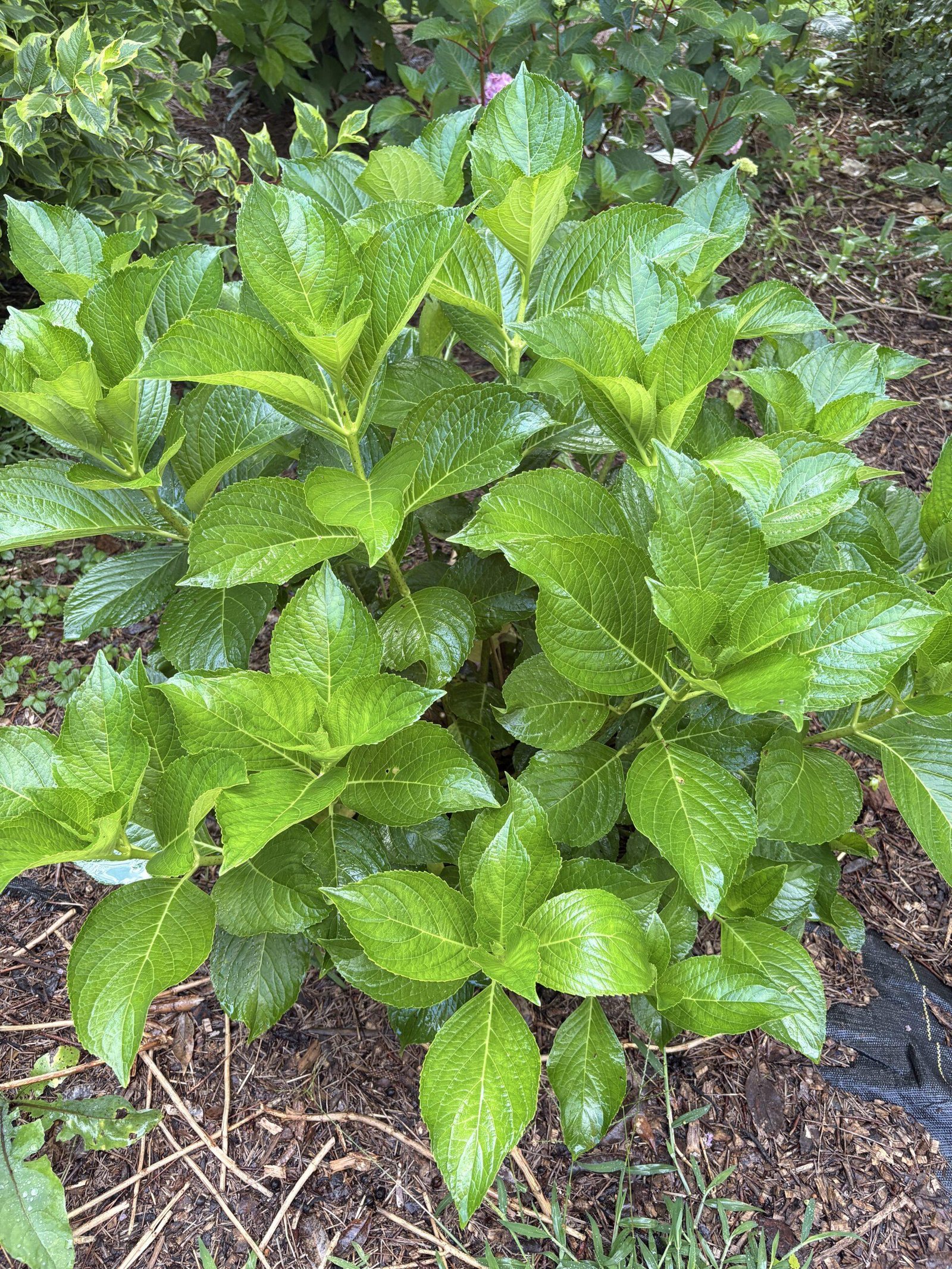
Weather creates another challenge. We may have mild winter days that encourage hydrangea buds to swell, followed by a sudden freeze. The plant survives and grows later in spring, but the flower buds may already be damaged.
We have also seen hydrangeas receive less sunlight as nearby trees mature. This change happens gradually, so it is easy to overlook. The plant may remain green and healthy while producing fewer flowers each year.
Before replacing a hydrangea, take a good look at its pruning history, sunlight, fertilizer, and exposure to cold weather. The plant may simply need a correction rather than a trip to the compost pile.
What to Do When Your Hydrangea Isn’t Blooming
Use this checklist before making any major changes:
- Identify the hydrangea variety.
- Determine whether it blooms on old wood or new wood.
- Review when it was last pruned.
- Look for dead tips or damaged flower buds.
- Measure how much direct sunlight the plant receives.
- Stop unnecessary fertilizer applications.
- Check whether lawn fertilizer reaches the root area.
- Examine soil moisture and drainage.
- Make sure the shrub isn’t planted too deeply.
- Give a newly planted hydrangea time to establish.
Change only one or two things at a time. Making several major changes all at once can create more stress and make it harder to figure out what actually helped.
What Not to Do When a Hydrangea Doesn’t Bloom
Avoid these common reactions:
- Don’t cut the entire shrub to the ground without identifying it.
- Don’t add more fertilizer simply because flowers are missing.
- Don’t water every day without checking the soil.
- Don’t assume every hydrangea needs deep shade.
- Don’t move the plant during extreme heat unless it is necessary.
- Don’t give up after one bloomless season.
Hydrangeas can be forgiving plants. Once the underlying problem is corrected, many return to normal flowering.
Your Next Step When a Hydrangea Is Not Blooming
Start with the two most common causes: identify your hydrangea type and think back to when it was last pruned.
Then check for dead buds, changing sunlight, excess fertilizer, and drainage problems.
For more help:
- Read our guide to pruning every type of hydrangea
- Visit our complete Hydrangea Care Guide
- See all of our Hydrangea Guides
Frequently Asked Questions About Hydrangeas Not Blooming
Why Is My Hydrangea Growing Leaves but Not Blooming?
Healthy leaves with no flowers often point to incorrect pruning, cold-damaged buds, too much shade, or excessive nitrogen.
Identify the hydrangea type first. Old-wood hydrangeas may lose an entire season of blooms when their stems are pruned too late or their buds are damaged by freezing temperatures.
Will a Hydrangea Bloom Again After Being Pruned Too Hard?
In many cases, yes.
A healthy plant should produce new stems and leaves. However, an old-wood hydrangea may not flower until those stems mature and develop buds for a future season.
Hydrangeas that bloom on new wood may recover and flower sooner.
Should I Fertilize a Hydrangea That Isn’t Blooming?
Not until you determine whether fertilizer is actually needed.
Excess nitrogen is a common cause of leafy growth with few flowers. A soil test is a much better place to start than guessing.
How Much Sun Does a Hydrangea Need to Bloom?
The answer depends on the variety.
Many bigleaf and oakleaf hydrangeas perform well with morning sunlight and afternoon shade. Panicle hydrangeas generally tolerate more sun.
Deep shade can reduce flowering for most hydrangea types.
Can a Late Freeze Stop Hydrangeas From Blooming?
Yes.
Late freezes can damage flower buds, especially on bigleaf and other old-wood hydrangeas. The plant may still produce leaves and healthy new growth even though the flowers were lost.
Why Does My Hydrangea Bloom Only Near the Bottom?
Lower buds may have been insulated by leaves, mulch, nearby plants, or warmth from the ground while exposed upper buds were damaged by cold.
The protected lower stems may bloom while the upper part produces only leaves.
Which Hydrangeas Bloom Most Reliably After Winter Damage?
Panicle and smooth hydrangeas often bloom reliably because they produce flowers on new growth.
Reblooming bigleaf hydrangeas may also produce later flowers from new wood when early buds are damaged, although results vary by variety and growing conditions.
Final Thoughts: Why Is My Hydrangea Not Blooming?
When you find yourself asking, “Why is my hydrangea not blooming?” start with the plant’s type, pruning history, and exposure to cold weather.
Need help while you’re standing in the yard? Use our free Garden Help app for quick help with hydrangea pruning, watering, sunlight, spacing, seasonal care, and more.
Pruning at the wrong time and damaged flower buds are two of the most common causes. Sunlight, excess nitrogen, plant age, drainage, and root stress can also reduce flowering.
Discover more from Bobby and Lynn’s Plant Farm
Subscribe to get the latest posts sent to your email.