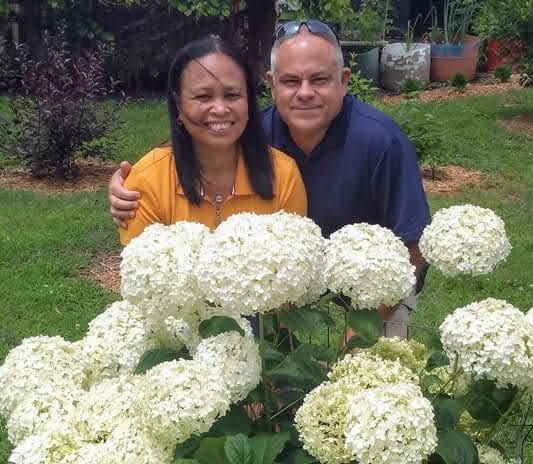
The right garden tools can make planting, pruning, and caring for flowering shrubs a whole lot easier. But after years of working with plants, we’ve also learned that you don’t need every tool hanging on the wall at the garden center.
At Bobby & Lynn’s Plant Farm in Dallas, Georgia, we use a fairly small group of tools over and over again. These are the ones we reach for when planting hydrangeas, pruning shrubs, taking cuttings, moving plants, and doing everyday work around the farm.
Quick Answer
The garden tools we use most are bypass pruners, loppers, a Hori Hori knife, a sturdy shovel, a cordless drill with a garden auger, a tape measure, a garden cart, and basic watering equipment.
We’d rather buy a dependable tool that lasts than keep replacing a cheap one every year. More tools don’t necessarily make gardening easier. Having the right tool for the job does.
About Bobby & Lynn


We Don’t Buy Every Garden Gadget
Walk through the gardening section of a big-box store and you can find a tool for almost everything.
Some are useful.
Some look useful.
And some will probably end up sitting in the shed until you forget why you bought them.
We try to keep things simpler.
Because we grow hydrangeas and flowering shrubs at our plant farm, most of our work falls into a few categories:
- Pruning
- Planting
- Propagation
- Watering
- Moving plants and supplies
- Measuring and spacing plants
- General bed cleanup
The tools below are the ones that regularly earn their place around here.
1. Bypass Pruners
If I could keep only a handful of garden tools, a good pair of bypass pruners would be near the top of the list.
We use them constantly.
They’re useful for:
- Removing dead stems
- Deadheading flowers
- Taking cuttings
- Pruning smaller branches
- Cleaning up damaged growth
- Cutting back perennials
- Making small corrective pruning cuts
We use Corona bypass pruners, and this is one place where I learned not to automatically buy the cheapest tool available.
I used to buy inexpensive pruners from the big-box stores. They worked for a while, but after doing much pruning, my hands knew I had been using them.
The Corona pruners have been much more comfortable for me. They’re easy to sharpen, they hold up well, and with a little care they can last for years.
Why Bypass Pruners?
Bypass pruners work more like scissors, with one blade passing by another.
For live stems, that usually produces a cleaner cut than crushing the branch.
The University of Georgia Cooperative Extension recommends scissor-action or bypass-style pruners for many smaller pruning jobs and notes that clean, properly placed cuts are important when pruning landscape plants.
Of course, having sharp pruners doesn’t help much if you prune at the wrong time.
Our guide to when to prune flowering shrubs explains why some shrubs can be cut in late winter while others need to wait until after flowering.
2. Loppers for Bigger Branches
Eventually you’re going to find a branch that’s too large for hand pruners.
That’s when we reach for loppers.
Loppers have longer handles, which give you more leverage for cutting thicker stems and branches.
We use them on:
- Larger shrub stems
- Older hydrangea canes
- Butterfly bushes
- Small tree branches
- Overgrown shrubs
- Dead or damaged wood
We also use Corona loppers.
One mistake I try to avoid is forcing hand pruners through a branch that’s too large. If you have to squeeze with everything you’ve got and twist the pruners back and forth, you probably need a bigger tool.
Use the tool that matches the branch.
Your hands—and probably the plant—will appreciate it.
3. Hori Hori Garden Knife
A Hori Hori knife is one of those tools you may not think you need until you start using one.
Then you wonder why you didn’t have one years ago.
We use ours for several jobs:
- Loosening roots
- Cutting through small roots
- Digging around plants
- Dividing perennials
- Removing weeds
- Opening bags
- Working soil around planting holes
- General garden cleanup
The blade is narrow enough to get into places where a shovel or trowel can feel clumsy.
When we’re working around shrubs, it’s especially handy when we need to loosen something without digging up half the flower bed.
It doesn’t replace a shovel, pruners, or a saw.
It fills the gap between them.
4. Cordless Drill and Garden Auger
This combination has saved us a lot of digging.
We plant more shrubs and plants than the average homeowner, so anything that can make repetitive planting easier gets our attention.
A garden auger attaches to a cordless drill and spins into the ground to loosen soil.
We use augers for:
- Smaller planting holes
- Perennials
- Annuals
- Bulbs
- Loosening soil
- Preparing larger holes before finishing them with a shovel
We’ve learned one important thing, though:
An auger doesn’t mean you should drill a narrow hole and drop a shrub into it.
Shrub planting holes usually need to be considerably wider than the root ball so the roots have loosened soil around them.
We use the auger to help break up the soil and make digging easier, then shape the planting hole properly.
You can see exactly how we use one in our guide to using a garden auger for easier planting.
We also used an auger while planting our Pinky Winky hydrangea hedge. That entire project, including spacing and planting, is shown in our guide to planting shrubs in fall.
A Word About Georgia Red Clay
Our soil here in Dallas, Georgia, is mostly red clay.
An auger can definitely make working that soil easier, but it can also create smooth sides in wet clay if you’re not careful.
We still use a shovel or garden knife to rough up the sides of the planting area and make sure we haven’t created a slick-sided hole.
That’s one reason we see garden tools as helpers—not replacements for understanding how a plant should actually be planted.
5. A Good Shovel
Not very exciting, is it?
But we probably use a shovel more than half the fancy garden tools being advertised online.
A sturdy shovel handles:
- Planting shrubs
- Moving soil
- Digging out old plants
- Dividing larger plants
- Edging beds
- Moving mulch
- Digging around roots
For larger shrubs, the shovel still does work that an auger simply can’t do.
The garden auger may loosen the soil, but the shovel lets us shape the hole, remove soil, and make sure the plant is sitting at the proper depth.
Our guide to planting flowering shrubs walks through the complete process we use when putting shrubs into the landscape.
6. Tape Measure
This one may sound almost too simple to include.
We use a tape measure all the time.
A young shrub sitting in a nursery pot can make six feet look like a mile.
Then three years later you’re wondering why the plants are sitting on top of each other.
When we planted our Pinky Winky hydrangea hedge, Lynn measured and marked the planting locations before we started digging.
That gave us consistent spacing and let us step back and look at the entire layout before putting plants in the ground.
We use a tape measure for:
- Shrub spacing
- Hedge layouts
- Bed dimensions
- Measuring mature plant locations
- Drip irrigation layouts
- Planning rows of nursery plants
Sometimes the simplest tool prevents the biggest headache.
7. Garden Cart
When you’re moving shrubs, bags of soil, tools, mulch, or anything else heavy, a garden cart earns its keep pretty quickly.
We use a Gorilla Cart around the farm.
It lets us move several plants or supplies at once instead of carrying everything back and forth by hand.
That becomes especially helpful during planting projects.
We can load plants, shovel, drill, auger, tape measure, and other supplies into one cart and move the whole operation to the planting area.
It doesn’t make for a glamorous gardening photo.
It does save a bunch of walking.
That counts for a lot around here.
8. Watering Tools
Watering equipment may not seem like a garden tool, but we use it more than almost anything else.
Newly planted shrubs depend on the root ball staying evenly moist while the roots begin growing into the surrounding soil.
That doesn’t mean keeping everything soaking wet.
It means checking the soil and watering when the plant actually needs it.
For hand watering, a dependable hose and watering wand can handle most jobs.
For larger beds, we’ve also started using drip irrigation.
We recently installed our own system for a bed of panicle hydrangeas. Instead of buying a prepackaged kit, we planned the layout first and purchased the tubing, emitters, fittings, timer, and other pieces we actually needed.
If you’re considering a similar setup, our complete drip irrigation for hydrangeas guide shows how we installed ours.
9. Gloves and Safety Glasses
These aren’t exciting, but I wouldn’t leave them off the list.
Gloves help when you’re handling:
- Rough branches
- Thorny plants
- Mulch
- Soil
- Roots
- Pruning debris
Safety glasses matter even more when you’re cutting branches, clearing brush, using an auger, or doing anything that can send debris toward your face.
A branch has an amazing ability to find your eye when you least expect it.
Protecting yourself is a whole lot easier than explaining afterward why you thought you didn’t need safety glasses.
You Don’t Need Every Tool at Once
If you’re just getting started, I wouldn’t run out and buy everything on this list.
Start with what matches the work you actually do.
For someone growing a few hydrangeas and flowering shrubs, I’d begin with:
- Good bypass pruners
- A sturdy shovel
- Gloves
- A hose or watering wand
- A Hori Hori knife or good hand tool
Then add tools as the need comes up.
If you start planting more shrubs, an auger becomes much more useful.
If your shrubs mature and develop larger branches, loppers become more important.
If you create a large planting bed, drip irrigation may save you a lot of time.
Buy tools because they solve a problem—not because somebody made a convincing video about them.
Take Care of the Tools You Already Own
Even a good tool won’t stay good if it spends the winter buried under wet leaves behind the shed.
A little maintenance goes a long way.
For pruning tools:
- Wipe dirt and sap from the blades
- Keep the cutting edge sharp
- Check bolts and moving parts
- Lubricate the pivot when necessary
- Store tools somewhere dry
Sharp pruning tools make gardening easier and usually make cleaner cuts.
We also clean pruning tools when moving between plants if disease may be involved.
Good tools cost money.
Taking a few minutes to care for them helps make that money go farther.
A Few Tools We Personally Use
This article isn’t meant to turn into a shopping catalog.
But if you’re looking for a couple of the tools we actually use, these are two we’ve had good experience with.
Corona Bypass Pruners – These are the hand pruners I use for everyday shrub pruning, deadheading, and cutting smaller stems.
Hori Hori Garden Knife – We use this for digging, loosening roots, cutting through smaller roots, working around plants, and quite a few jobs where a regular trowel isn’t quite enough.
These are affiliate links. If you purchase through one of these links, we may earn a small commission at no additional cost to you. We only recommend products we use or believe are useful for the job.
You can also browse more of the gardening supplies we use and recommend through our Garden Help app.
Our Biggest Advice About Garden Tools
Don’t judge a garden tool by how many features are printed on the package.
Judge it by whether you actually reach for it.
Some of our most-used tools are about as simple as gardening gets: pruners, a shovel, a tape measure, and a garden cart.
Others, such as the garden auger and drip irrigation tools, earn their place because they save us time on jobs we do repeatedly.
The best garden tools are the ones that make real work easier without making gardening more complicated.
That’s what we look for here at Bobby & Lynn’s Plant Farm.
If you’ve got a hydrangea or flowering-shrub question, come find us on Facebook. We’re always glad to talk plants.