
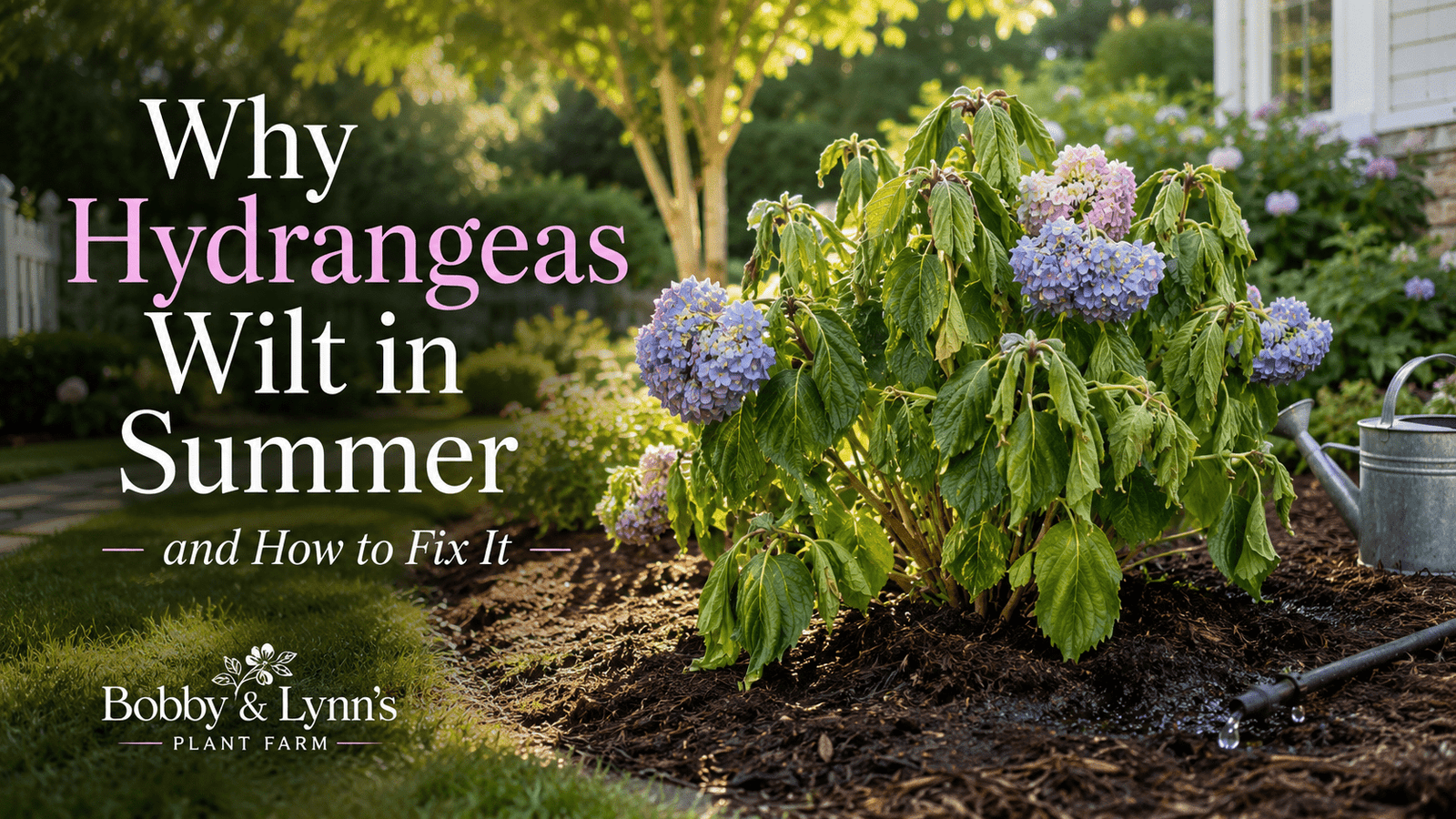
If your hydrangea is wilting, the first thing to check is whether the plant is reacting to heat or actually needs water. Few things worry a gardener faster than walking outside on a hot afternoon and finding a hydrangea drooping like it has given up on summer.
The leaves may hang down, the flowers can look tired, and the whole shrub may seem like it is begging for water. But before you grab the garden hose, check what is really happening.
Hydrangeas are known for being dramatic during hot weather. Afternoon wilting is common, especially during a Georgia summer. Sometimes the plant is simply reacting to heat. Other times, it may truly need water or could be struggling with poor drainage, root stress, too much sun, or a container that is drying out too quickly.
The key is learning how to tell the difference.
Quick Answer: Why Is My Hydrangea Wilting?
A hydrangea may wilt because of heat, dry soil, root stress, poor drainage, too much sun, or a container drying out too quickly. If the plant perks back up in the evening or looks normal the next morning, temporary heat stress is usually the cause.
If it is still wilted in the morning, check the soil before watering. A wilted hydrangea does not automatically mean the soil is dry.
- Quick Answer: Why Is My Hydrangea Wilting?
- Is Your Hydrangea Thirsty or Just Hot?
- Understand Why Hydrangeas Wilt in the Afternoon
- Check the Soil Before Watering
- Water Hydrangeas Slowly and Deeply
- Give Newly Planted Hydrangeas Extra Attention
- Add Mulch to Keep Hydrangea Roots Cooler
- Protect Hydrangeas From Harsh Afternoon Sun
- Know That Too Much Water Can Also Cause Wilting
- Watch for Other Causes of Hydrangea Wilting
- What We See at Our Plant Farm
- Quick Summer Hydrangea Checklist
- Frequently Asked Questions
- Get More Hydrangea Help
- Final Thoughts
Is Your Hydrangea Thirsty or Just Hot?
Use this quick comparison before turning on the hose.
| What You Notice | Most Likely Cause | What You Should Do |
|---|---|---|
| Wilts in the afternoon but recovers overnight | Temporary heat stress | Check the soil and wait before watering |
| Still wilted early in the morning | Dry soil or root stress | Check moisture 2 inches below the surface |
| Soil is dry and crumbly | Plant needs water | Water slowly and deeply |
| Soil is wet or muddy | Too much water or poor drainage | Stop watering and allow the soil to dry |
| Yellow leaves with wilting | Root stress or excess moisture | Inspect drainage and reduce watering |
| Brown, crispy leaf edges | Heat, dry soil, or harsh afternoon sun | Water deeply and provide afternoon shade |
| Dark spots on the leaves | Possible fungal leaf spot | Remove fallen leaves and inspect the plant |
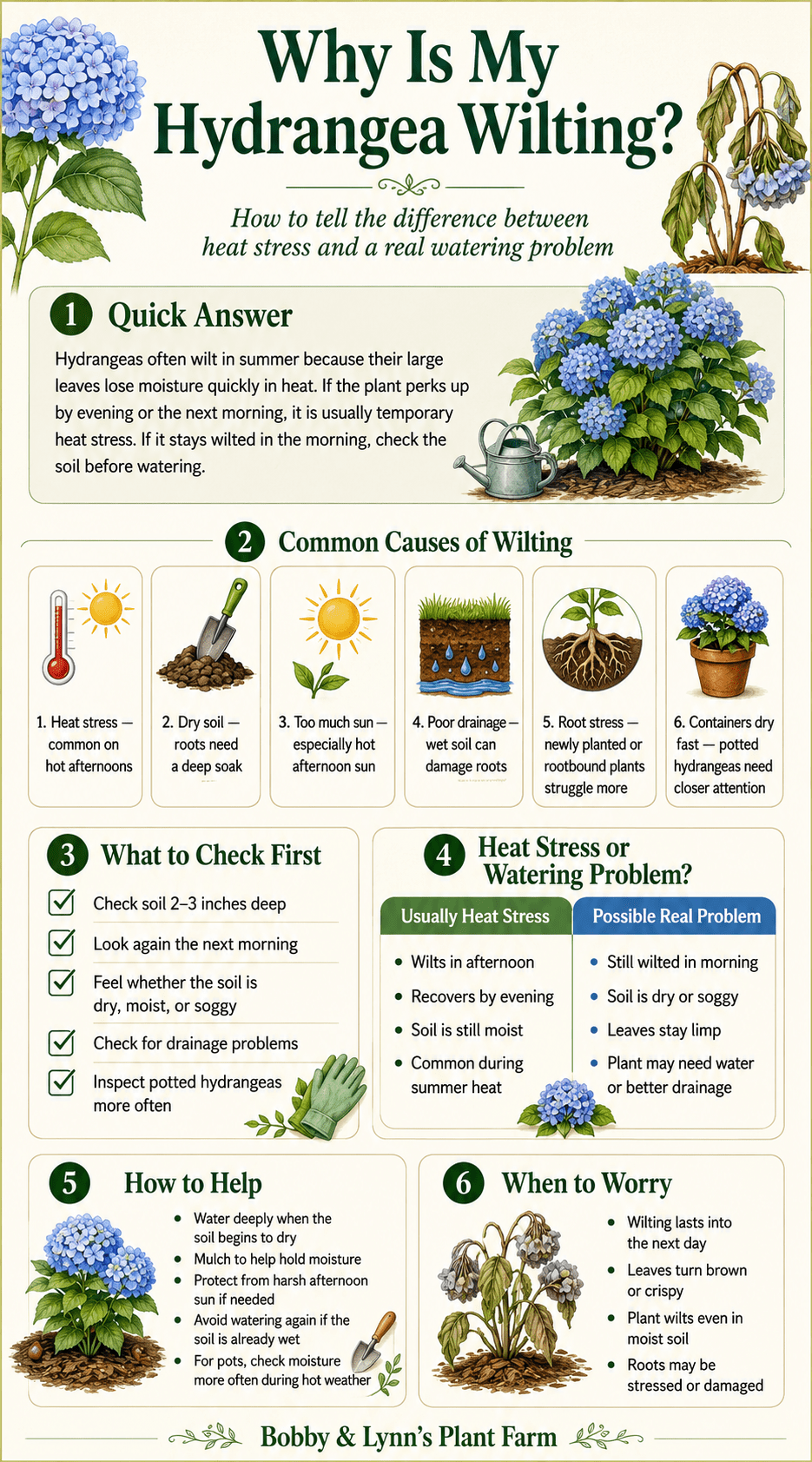
Understand Why Hydrangeas Wilt in the Afternoon
Hydrangeas have large, thin leaves that lose moisture quickly during hot weather.
Bigleaf hydrangeas, including Endless Summer and Nikko Blue, are especially likely to droop during the hottest part of the day. Strong afternoon sun can make the wilting look much worse.
Even when the soil is moist, the leaves may fold downward or curl slightly. This helps the plant reduce moisture loss.
It can look alarming, but it does not always mean the plant needs water.
According to UGA Extension’s guidance on watering plants, wilted leaves during the middle of the afternoon can be misleading. Hydrangeas lose water quickly because of their thin leaves, so gardeners should check the soil rather than relying only on the plant’s appearance.
A hydrangea that looks good in the morning but droops at 3 p.m. is probably responding to heat. If it remains wilted after a cooler night, it needs closer attention.
Check the Soil Before Watering
The easiest way to check soil moisture is with your finger.
Push your finger about 2 inches into the soil near the plant’s root zone. Do not check only the loose mulch or the very top layer of soil.
- If the soil feels dry at that depth, the hydrangea probably needs water.
- If the soil feels cool and moist, wait before watering.
- If it feels muddy or saturated, the plant may be getting too much water.
Checking the soil early in the morning gives you the most accurate picture. At that time, the plant has had several cooler hours to recover from the previous day’s heat.
Morning wilting is usually more concerning than afternoon wilting.
You can find more information about choosing the right location, sunlight, soil, and watering routine in our complete guide to growing hydrangeas in Georgia.
Water Hydrangeas Slowly and Deeply
When your hydrangea truly needs water, give it a slow, deep soaking around the root zone.
The goal is to moisten the soil several inches below the surface. A quick spray may make the ground look wet without delivering enough moisture to the roots.
Direct the water toward the soil beneath the branches rather than spraying only against the main stems. Hydrangea roots spread outward, so the entire root zone needs moisture. If my hydrangea is wilting even though the soil is moist, I start checking drainage and root stress before adding more water.
A soaker hose or drip system can work well because it delivers water slowly. It also keeps the foliage dry, which may help reduce leaf-spot problems.
Avoid shallow watering every day. Frequent light watering encourages roots to remain close to the soil surface, where they dry out faster.
Deep watering supports a stronger root system and helps the plant handle dry periods more successfully.
Give Newly Planted Hydrangeas Extra Attention
A newly planted hydrangea does not have the same root system as an established shrub.
Most of its roots are still contained within the original root ball. That small area can dry out even when the surrounding ground appears moist.
Check new plants regularly during their first summer. Plants installed during hot weather may need more frequent attention than hydrangeas planted during fall or early spring.
Container-grown hydrangeas also dry out faster than plants in the ground. During hot, windy weather, a container may need to be checked every day.
Do not follow a rigid watering schedule without checking the soil. Temperature, rainfall, container size, soil type, and sun exposure can all change how quickly a plant dries out.
Add Mulch to Keep Hydrangea Roots Cooler
Mulch can make a major difference during summer.
Spread approximately 2 to 3 inches of mulch over the root zone to:
- Hold moisture in the soil
- Keep roots cooler
- Reduce weeds
- Protect the soil from direct sun
- Reduce sudden changes between wet and dry conditions
Pine straw, shredded bark, wood chips, and chopped leaves can all work well.
Do not pile mulch tightly against the stems. Leave a small open space around the base of the plant so air can circulate.
Mulch piled against the stems can hold too much moisture and hide developing problems.
For more advice about routine care, visit How to Care for Hydrangeas the Easy Way.
Protect Hydrangeas From Harsh Afternoon Sun
Many hydrangeas perform best with morning sun and protection during the hottest part of the afternoon.
Bigleaf and smooth hydrangeas are especially likely to struggle in a location that receives intense western sun. A plant in the wrong location may wilt every afternoon, even when it is watered correctly.
Other signs of excessive sun may include:
- Brown or crispy leaf edges
- Faded flowers
- Scorched patches on the leaves
- Blooms that turn brown quickly
- Constant afternoon drooping
A newly planted or container-grown hydrangea may be moved to a more protected location. Established shrubs are more difficult to relocate during summer, so temporary shade cloth may help during an extreme heat wave.
Panicle hydrangeas, such as Limelight, Phantom, Bobo, and Pink Diamond, usually tolerate more direct sun than bigleaf hydrangeas. However, they still need enough moisture to support their leaves and flowers during prolonged heat.
Learn more about these sun-tolerant varieties in our Panicle Hydrangea Care Guide.
Know That Too Much Water Can Also Cause Wilting
A wilted hydrangea does not always need more water.
Roots need both moisture and oxygen. When soil remains saturated, the air spaces around the roots fill with water. The roots may begin to struggle, and the plant can wilt even though the ground is wet.
Signs of excess water or poor drainage may include:
- Yellowing leaves
- Soft or weak growth
- Leaves falling from the plant
- Constant wilting
- Muddy soil
- Water standing around the plant after rain
- A sour or unpleasant smell from the soil
If the soil is already wet, do not add more water. Allow it to dry and watch how quickly water drains after the next rainfall.
Heavy Georgia clay can remain wet beneath the surface long after the top appears dry. Checking several inches down is especially important in clay soil.
Hydrangeas enjoy consistent moisture, but they do not want to sit in a swamp.
Watch for Other Causes of Hydrangea Wilting
When soil moisture appears correct but the hydrangea remains wilted, inspect the entire plant.
Look for:
- Broken or damaged stems
- Black or brown leaf spots
- Yellow leaves
- Insect damage
- Recently disturbed roots
- Girdling or circling roots
- Soil piled too deeply around the stems
- Nearby tree roots competing for water
- Damage from lawn equipment or animals
Trees can be strong competitors for moisture. A hydrangea growing beneath a mature tree may dry out faster than another hydrangea in a nearby open bed.
Warm, humid weather may also encourage fungal leaf spots. Remove heavily spotted fallen leaves from around the shrub. Avoid allowing diseased debris to collect beneath the plant.
Our guide to black spots on hydrangea leaves explains how to recognize common leaf-spot symptoms and what you can do about them.
What We See at Our Plant Farm
At Bobby & Lynn’s Plant Farm, we often see hydrangeas wilt during the hottest part of a Georgia summer afternoon.
That does not always mean they need immediate watering.
We first check the soil around the root zone. When the soil still feels moist and the plant looked healthy that morning, we usually give it time to recover as the temperature drops.
Newly potted or recently planted hydrangeas receive closer attention. Their smaller root systems cannot reach as much moisture, so they can dry out much faster than established plants. When my hydrangea is wilting in a pot, I check the container moisture first because pots can dry out much faster than garden soil.
We also watch where each variety is growing. Bigleaf hydrangeas exposed to hot afternoon sun tend to show stress sooner than panicle hydrangeas growing under similar conditions.
The plant’s condition in the morning often tells us much more than its appearance during the hottest part of the afternoon.
Quick Summer Hydrangea Checklist
Before watering a wilted hydrangea, check the following:
- Is the plant wilted early in the morning?
- Is the soil dry about 2 inches down?
- Has the plant received enough water from recent rain?
- Is water pooling around the roots?
- Does the location receive harsh afternoon sun?
- Is the hydrangea newly planted?
- Is it growing in a container?
- Is mulch covering the root zone?
- Are nearby trees competing for moisture?
- Are there yellow leaves, spots, broken stems, or insect damage?
Frequently Asked Questions
Should I water my hydrangea every time it wilts?
No. Check the soil first. Afternoon wilting may be temporary heat stress, especially if the hydrangea recovers during the evening.
What is the best time to water hydrangeas in summer?
Early morning is usually best. It gives the roots time to absorb moisture before the hottest part of the day and allows any wet foliage to dry more quickly.
How much mulch should I use around a hydrangea?
A layer approximately 2 to 3 inches deep is usually enough. Spread it over the root zone without piling it against the stems.
Why is my hydrangea wilted when the soil is wet?
Wet-soil wilting may be caused by poor drainage or stressed roots. Stop watering and allow the soil to dry before checking again.
Will afternoon shade stop a hydrangea from wilting?
Afternoon shade can reduce heat stress, especially for bigleaf and smooth hydrangeas. However, the plant still needs proper watering, healthy soil, mulch, and good drainage.
Do panicle hydrangeas wilt in summer?
They can. Panicle hydrangeas tolerate more sun than many bigleaf varieties, but they may still wilt during extreme heat or when the soil becomes too dry.
Get More Hydrangea Help
Hydrangeas can be confusing, especially when the same symptom may be caused by too little water, too much water, or ordinary summer heat.
Visit our Hydrangea Care Guide for help with watering, sunlight, pruning, soil, and bloom problems.
You can also download our free All About Hydrangeas eBook for simple guidance you can keep and use throughout the growing season.
Final Thoughts
Do not panic every time your hydrangea looks tired on a hot summer afternoon.
Hydrangeas can be dramatic when temperatures rise, especially bigleaf varieties growing in strong sun. The best thing you can do is check the soil before adding water.
When the soil is dry a couple of inches below the surface, water slowly and deeply around the root zone. When the soil is still moist and the plant recovers overnight, temporary heat stress is the more likely explanation.
Mulch, deep watering, healthy drainage, and protection from harsh afternoon sun can all reduce summer wilting.
With a little observation and the right care, your hydrangeas can make it through the hottest part of summer and continue filling your yard with beautiful blooms.
Discover more from Bobby and Lynn’s Plant Farm
Subscribe to get the latest posts sent to your email.