
Georgia clay soil can stay wet much longer than it looks, especially after heavy rain or frequent watering. The surface may appear dry while the soil several inches below is still holding enough moisture to cause problems for shrub and plant roots.
Because clay particles are so fine, water moves through the soil slowly. That can make it difficult to know whether your garden needs more water or simply needs more time to drain. Learning how to check the soil before watering can help prevent root stress, yellow leaves, and other problems caused by consistently wet conditions.
Quick Answer: How Can You Tell If Georgia Clay Soil Is Too Wet?
Georgia clay soil is probably too wet if it feels sticky, smears between your fingers, or forms a dense ball that does not crumble easily. Check the soil about 4 to 6 inches below the surface rather than judging it by the dry-looking top layer. If the soil still feels wet and heavy, wait before watering again.
The good news is that you do not need special equipment to check your soil. A few simple tests can tell you whether the ground is ready for water, planting, or a little more time to dry out.
- How Long Does Georgia Soil Usually Stay Wet?
- What We’ve Seen at Our Plant Farm
- What Makes Soil Stay Wet Longer?
- How to Tell Whether the Soil Is Still Too Wet
- Why You Shouldn’t Work Wet Clay Soil
- Should You Water Newly Planted Shrubs After Rain?
- Signs That a Planting Area Is Staying Too Wet
- A Simple Drainage Test
- What to Do When Georgia Soil Drains Slowly
- When Is It Safe to Mow After Heavy Rain?
- The Bottom Line
How Long Does Georgia Soil Usually Stay Wet?
The following timeframes are general estimates rather than strict rules. Your soil may dry faster during hot, sunny, and windy weather or remain wet much longer during cloudy, cool, and humid conditions.
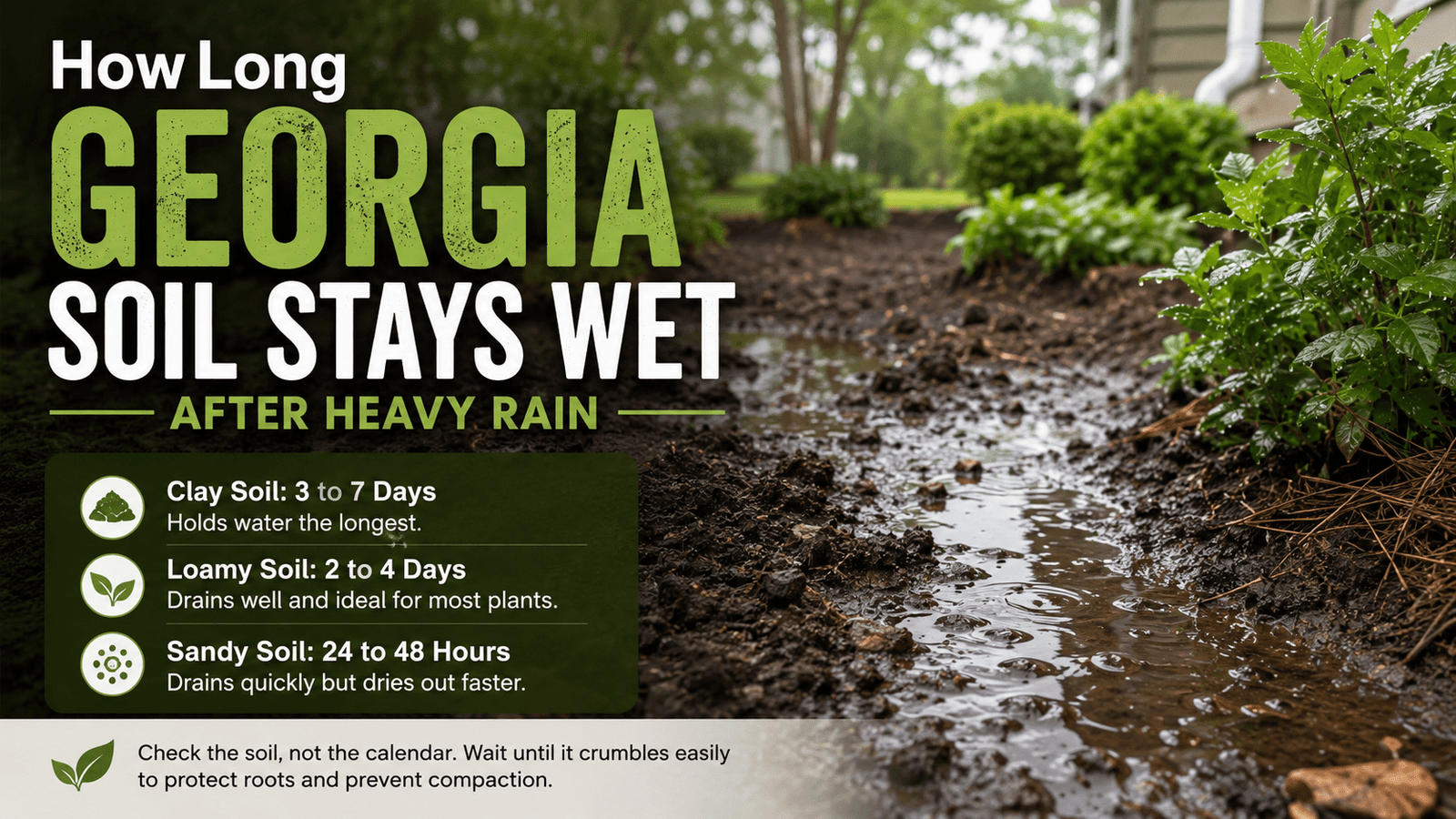
Georgia Clay Soil: About 3 to 7 Days
Much of Georgia is known for dense red clay soil. Clay is made of very small particles that hold water tightly and leave less open space for air and drainage.
After one to two inches of rain, undisturbed clay soil may remain noticeably wet for approximately three to seven days. Compacted clay, low areas, and places receiving runoff may stay saturated even longer.
Clay soil can also be misleading. The surface may appear dry while the soil several inches below remains wet and sticky.
Loamy Soil: About 2 to 4 Days
Loamy soil contains a more balanced mixture of sand, silt, clay, and organic matter. It generally holds enough moisture for plants while allowing excess water to drain.
After heavy rain, loamy soil may become workable again within two to four days. Well-structured soil with plenty of pore space may drain even faster.
Sandy Soil: About 24 to 48 Hours
Sandy soil has larger particles and wider spaces between them, allowing water to move through quickly.
After a soaking rain, sandy soil may dry enough to work within 24 to 48 hours. The disadvantage is that sandy soil also loses moisture quickly during Georgia’s hot summer weather and may require more frequent watering.
What We’ve Seen at Our Plant Farm
Here at Bobby & Lynn’s Plant Farm in Dallas, Georgia, we’ve learned that wet soil rarely dries on a predictable schedule.
After a short summer storm, some sunny areas may be ready to work within a day or two. After several inches of rain, however, our heavier clay areas can remain sticky and saturated for most of a week.
We’ve also seen how much location matters. Soil near a slope, beneath shade trees, or where water runs off a roof can stay wet much longer than an open area only a few feet away.
The surface may look dry, but digging down several inches often reveals that the root zone is still holding plenty of moisture.
That experience is why we don’t water plants simply because another day has passed. We check the soil around the root ball first. We’ve found that checking the actual moisture level is far more reliable than following the same watering schedule after every rain.
What Makes Soil Stay Wet Longer?
Soil type is only part of the story. Two areas with similar soil can dry at completely different rates.
Heavy or Repeated Rain
A quick afternoon thunderstorm may only wet the upper few inches of soil. Several days of rain can saturate the entire root zone.
If another storm arrives before the soil has drained, the drying process starts over.
Shade
Areas beneath mature trees, on the north side of a house, or behind a fence may receive little direct sunlight.
Lower temperatures and reduced evaporation allow the soil to remain wet longer.
Tree roots absorb water, but a heavily shaded and poorly ventilated area may still dry slowly.
Compacted Soil
Construction equipment, parked vehicles, repeated foot traffic, and mowing wet ground can compress soil particles.
Compacted soil has less open space for water, air, and roots. Water may sit on the surface instead of soaking evenly into the ground.
Low Areas and Slopes
Water naturally flows downhill. The bottom of a slope may receive rain from the surrounding yard in addition to the water falling directly on it.
A depression only a few inches lower than the surrounding ground can remain muddy long after the rest of the landscape has dried.
Roofs and Downspouts
A downspout can direct a surprising amount of water into a small planting area during a major storm.
Watch for constantly wet soil near:
- Roof valleys
- Downspout outlets
- Splash blocks
- Patios
- Driveways
- Retaining walls
- Air-conditioning condensate drains
In these situations, the soil may not be the only problem. Too much water may simply be entering the area.
Thick Mulch
Mulch helps regulate soil temperature, reduce erosion, and conserve moisture. However, a thick layer can also make already-wet soil dry more slowly.
In most shrub beds, a layer approximately two to three inches deep is enough. Keep mulch a few inches away from trunks and main stems rather than piling it against the plant.
How to Tell Whether the Soil Is Still Too Wet
Don’t rely only on the appearance of the surface. Check the soil several inches down where the roots are growing.
Try the Handful Test
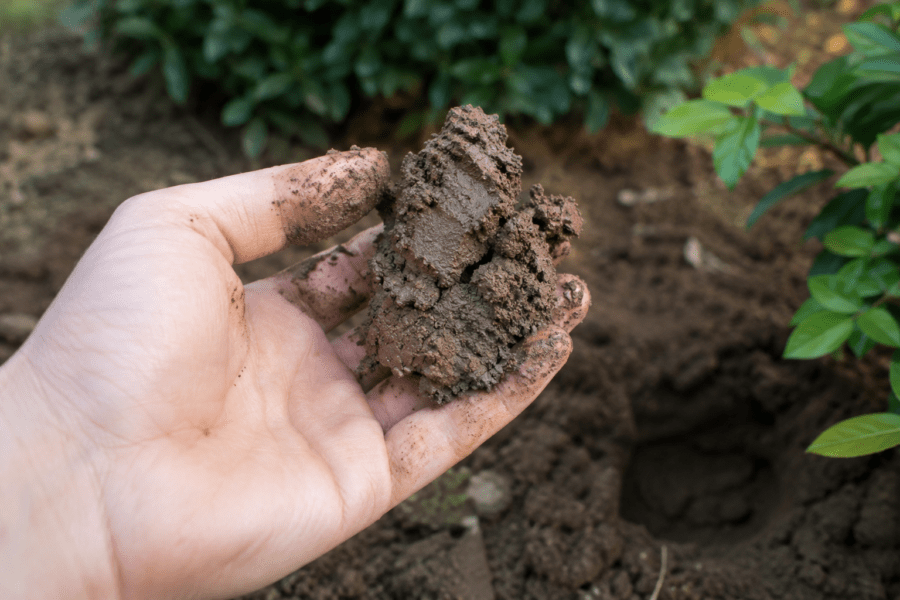
Dig approximately four to six inches below the surface and pick up a small handful of soil.
Squeeze it gently.
- Too wet: The soil feels slick or muddy, forms a sticky ball, and smears on your hand.
- Still damp: It forms a loose ball but breaks apart when lightly pressed.
- Ready to work: It feels slightly moist but crumbles easily instead of sticking together.
- Too dry: It is dusty, hard, or difficult to press into a ball.
Clay soil doesn’t have to be completely dry before you work near it, but it shouldn’t be sticky enough to smear or form a dense lump.
Check More Than One Location
The soil beside a sidewalk may be dry while the center of a planting bed is still saturated.
Check both the surface and the root zone in several locations before deciding to water or begin digging.
Why You Shouldn’t Work Wet Clay Soil
It can be tempting to begin planting as soon as the rain stops, especially when you finally have time to work outside.
Unfortunately, wet soil is especially vulnerable to compaction. Walking, digging, tilling, or driving equipment across saturated ground can push soil particles closer together and reduce the air spaces roots need.
Compaction can:
- Restrict root growth
- Reduce oxygen around the roots
- Slow water infiltration
- Increase surface runoff
- Create standing water
- Make future digging more difficult
- Stress plants during wet and dry weather
You may only work in the area for an afternoon, but the damage to the soil structure can last much longer.
Waiting another day or two is usually easier than trying to repair compacted clay later.
Should You Water Newly Planted Shrubs After Rain?
Not automatically.
New shrubs require consistent moisture while they establish, but constantly saturated soil can be just as damaging as soil that becomes too dry.
Before watering, check the original root ball and the surrounding soil. These two areas can hold moisture differently.
A nursery root ball may begin drying while the surrounding clay remains wet. In other cases, the planting hole may collect water and keep the root ball saturated.
This difference is one reason it’s important to check the soil rather than follow a fixed watering schedule.
After heavy rain:
- Pause automatic irrigation if the soil is already wet.
- Check moisture four to six inches below the surface.
- Inspect both the root ball and the surrounding soil.
- Look for water standing around the planting hole.
- Make sure downspouts aren’t emptying near the plant.
- Don’t add more water simply because the leaves wilt during a hot afternoon.
Hydrangeas and many other flowering shrubs prefer consistent moisture, but that doesn’t mean their roots should remain underwater.
Signs That a Planting Area Is Staying Too Wet
Occasional soggy soil after an unusually heavy storm isn’t always a serious problem. An area that stays wet after nearly every rain deserves closer attention.
Possible warning signs include:
- Standing water that remains for more than a day
- A sour or swampy smell
- Green algae on the soil surface
- Persistent moss in an otherwise sunny location
- Yellowing leaves
- Drooping plants even though the soil is wet
- Thinning grass
- Dark, soft, or stunted roots
- Shrubs that decline months after planting
- Water repeatedly collecting inside planting holes
Poorly drained soil can limit oxygen around the roots. Above ground symptoms may include wilting, yellowing, leaf drop, thinning growth, or dieback even though the plant appears to have plenty of water.
UGA Extension recommends checking soil moisture below the surface because clay soil may look dry on top while still holding too much water around plant roots.
A Simple Drainage Test
When a location repeatedly stays wet, you can perform a basic drainage test before planting.
- Dig a hole approximately 12 inches wide and 12 inches deep.
- Fill it with water and allow it to drain completely. This first filling moistens the surrounding soil.
- Fill the hole again.
- Observe how quickly the water level drops.
This test works best when the ground isn’t already saturated from several days of rain.
If water remains in the hole for a full day or longer, the site may have slow drainage, compacted soil, an underground hard layer, or another issue that should be corrected before installing a shrub that requires well-drained soil.
Testing several locations can also show whether the problem affects the entire yard or only one low area.
If your soil stays heavy and slow to drain, our guide to Best Shrubs and Trees for Planting in Clay Soil can help you choose plants that are better suited to those conditions.
What to Do When Georgia Soil Drains Slowly
The best solution depends on why the soil is staying wet.
Redirect the Water
Begin by checking where the water is coming from.
You may need to:
- Extend downspouts farther from the house
- Redirect runoff from a driveway or patio
- Correct a low spot
- Clear a blocked drainage path
- Install a swale or French drain
- Prevent nearby areas from draining into the bed
Moving the water away may be more effective than repeatedly amending the soil.
Avoid Planting Too Deeply
The top of a shrub’s root ball should generally sit level with or slightly above the surrounding soil.
Planting deeply in heavy clay can place the roots in a bowl that collects water. Never bury the root flare or cover the top of the root ball with several inches of soil.
Create a Raised Planting Area
In locations with naturally slow drainage, raising the planting area can keep roots above the wettest part of the soil.
A broad raised bed or gently mounded planting area is usually better than placing one shrub on a narrow mound. A wider raised area gives roots more room to spread while allowing water to move away from the crown.
Build Soil Gradually With Organic Matter
Compost and leaf mold can improve soil structure when used appropriately across an entire bed.
Organic matter helps create pore space and supports beneficial soil organisms.
Avoid placing a large amount of rich amendment only inside one planting hole. This can create a sharp difference between the hole and the surrounding clay and may discourage roots from spreading into the native soil.
For established beds, adding organic matter to the surface over time is often more practical than deeply tilling around existing roots.
Don’t Add Sand as a Quick Fix
Adding a small amount of sand to Georgia clay doesn’t automatically create well-drained soil.
Unless sand is incorporated in the correct proportion across a large area, the mixture may become dense and even more difficult to work.
Organic matter and proper drainage corrections are usually better choices.
Choose Plants That Match the Site
Sometimes the best solution isn’t forcing the soil to behave differently. It’s choosing a plant suited to the conditions.
Plants that may tolerate periodically damp soil include:
- River birch
- Sweetbay magnolia
- Oakleaf hydrangea
- Swamp milkweed
- Some native asters
Plant tolerance varies, and even moisture-loving plants generally don’t want their crowns buried in stagnant water.
When Is It Safe to Mow After Heavy Rain?
Wait until the soil is firm enough that your shoes and mower wheels don’t sink or leave deep tracks.
Mowing saturated ground can:
- Compact the soil
- Create ruts
- Tear grass from the ground
- Cause wet clippings to clump
- Damage the lawn’s surface
If footprints remain visible after you walk across the lawn, it’s probably too wet to mow.
The Bottom Line
After heavy rain, Georgia clay soil may stay wet for several days, while sandy soil may drain within a day or two. The calendar should only be used as a rough guide.
Before watering, planting, digging, or mowing, check the soil several inches below the surface. If it’s sticky, muddy, or easily compressed, give it more time.
A yard that stays wet after one unusually large storm may simply need a few sunny days. A yard that develops standing water after every rain may have compacted soil, poor grading, downspout runoff, or another drainage problem that should be addressed.
From our experience growing plants in Georgia clay, checking the soil by hand is still the most reliable way to know whether it’s ready for watering, planting, mowing, or working again.
When in doubt, check the soil—not the calendar. A little patience after heavy rain can prevent root problems and soil damage that are much harder to correct later.
Discover more from Bobby and Lynn’s Plant Farm
Subscribe to get the latest posts sent to your email.