
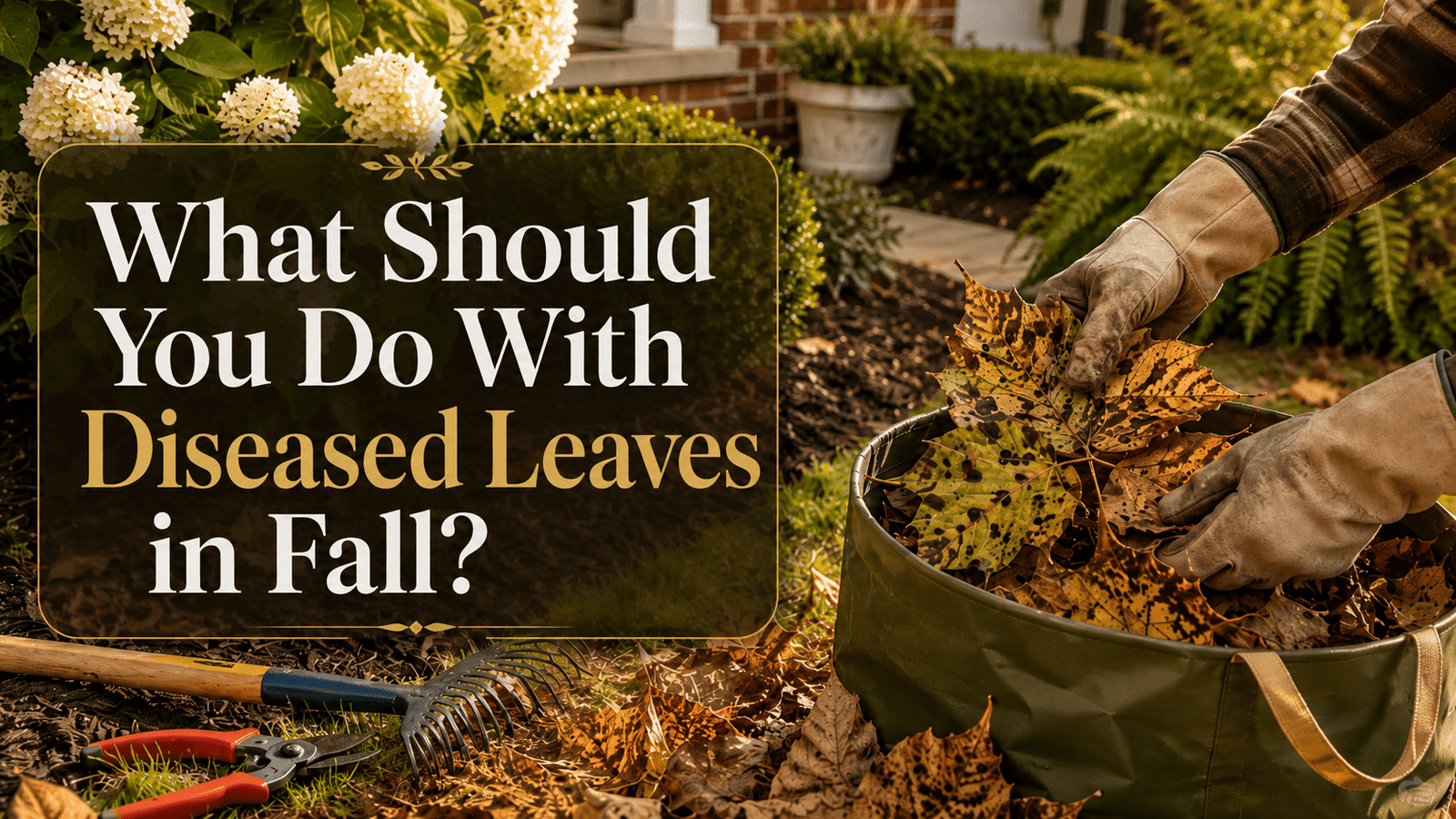
As leaves begin to drop, you may notice black spots, powdery patches, brown edges, or other signs of disease. That raises an important question: What should you do with diseased leaves in fall?
The safest choice is usually to collect them and place them in the household trash. Do not leave diseased leaves beneath the plant, mix them into your mulch, or add them to a typical backyard compost pile.
A little fall cleanup can reduce the amount of infected plant material waiting to cause trouble next spring.
Quick Answer: What Should You Do With Diseased Leaves in Fall?
Rake or pick up diseased leaves and place them in a sturdy trash bag. Clean up the soil beneath the affected plant, remove badly infected stems when appropriate, and disinfect your tools before using them elsewhere.
Healthy leaves can often be composted or used as mulch. Diseased leaves need to be handled differently.
- Quick Answer: What Should You Do With Diseased Leaves in Fall?
- Remove Diseased Leaves from the Garden Bed
- Do Not Put Diseased Leaves in a Backyard Compost Pile
- Place Diseased Leaves in the Trash
- Clean the Ground Beneath the Plant
- Disinfect Pruners and Garden Tools
- Do Not Remove Every Leaf Just Because It Looks Bad
- Know When to Remove Diseased Stems
- Replace Contaminated Mulch Only When Necessary
- Healthy Leaves and Diseased Leaves Are Not the Same
- What We Notice During Fall Plant Cleanup
- Quick Fall Cleanup Checklist
- Frequently Asked Questions
- What to Do Next
| Type of Plant Material | What to Do |
|---|---|
| Healthy fallen leaves | Shred and compost or use as mulch |
| Leaves with spots, mildew, or other disease | Bag and place in household trash |
| Diseased stems or branches | Remove and dispose of them |
| Healthy perennial growth | Compost when appropriate |
| Plant material with a serious pest problem | Bag and discard |
Remove Diseased Leaves from the Garden Bed
Start by picking up leaves that have fallen beneath the affected shrub, perennial, rose, or tree.
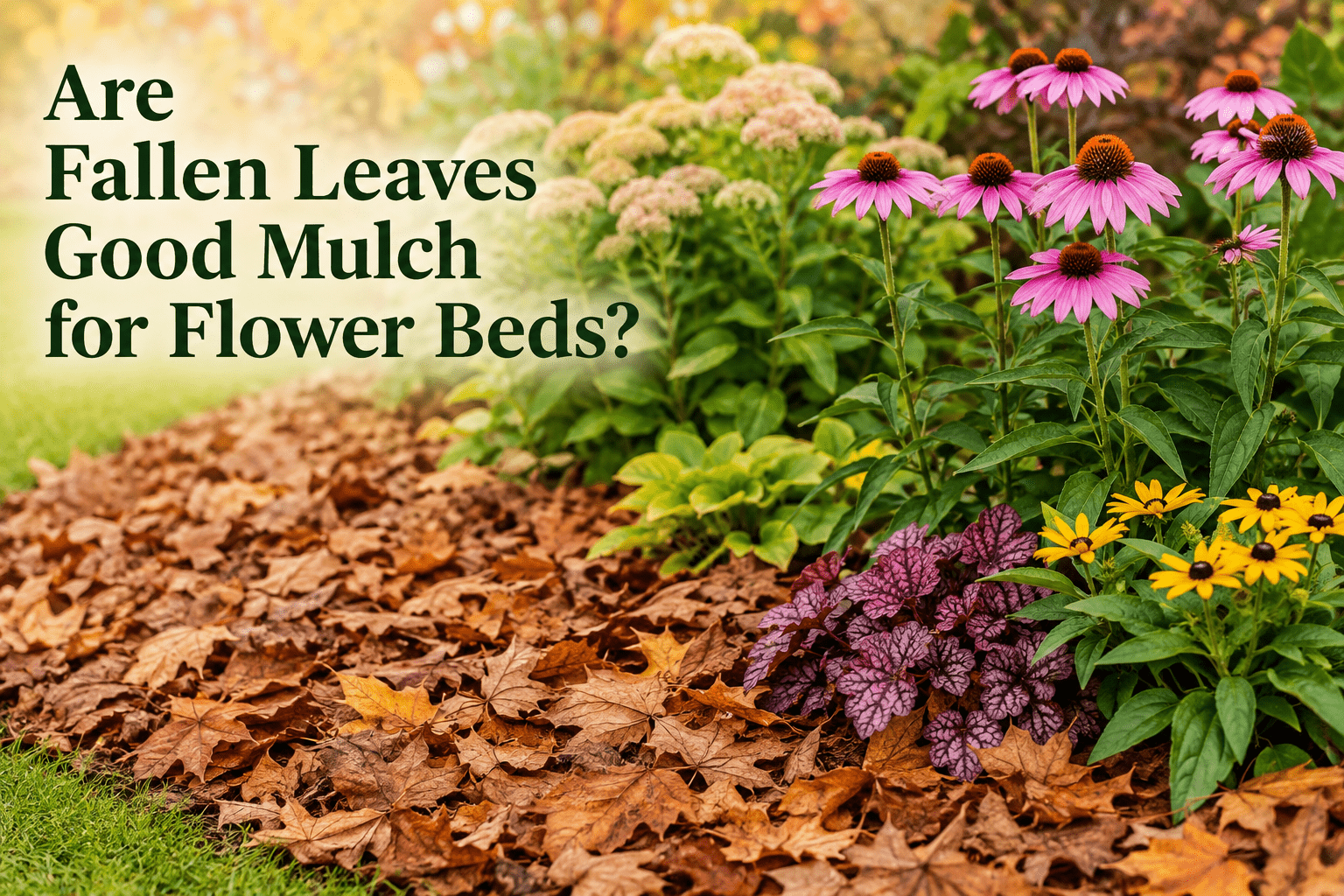
Do not simply rake them into a nearby corner. Wind and rain can move infected material back into the garden. Some disease-causing organisms can also survive on fallen leaves through winter.
The University of Georgia recommends removing and discarding fallen leaves, diseased branches, and other infected plant material to reduce the chance of diseases and insects overwintering in the garden. You can find more seasonal advice in UGA Extension’s fall garden chore guide.
Pay special attention to:
- Leaves caught beneath the center of a shrub
- Debris resting against plant stems
- Leaves trapped beneath mulch
- Infected growth lying near healthy plants
- Fallen fruit or flowers showing rot
You do not have to make the flower bed perfectly spotless. Focus on removing material that appears diseased.
Do Not Put Diseased Leaves in a Backyard Compost Pile
A well-managed commercial composting system may become hot enough to destroy certain pathogens. Most backyard compost piles do not maintain a high, even temperature long enough to do that reliably.
For that reason, avoid adding diseased leaves to your home compost pile.
UGA Extension also advises gardeners not to compost plants with disease or pest problems because those problems may survive in the pile. Their fall composting guide explains which materials are better suited for home composting.
Keep these materials out of a typical backyard compost pile:
- Leaves with fungal spots
- Powdery mildew-covered foliage
- Rust-infected leaves
- Blighted stems
- Rotting plant crowns
- Plants with severe insect infestations
- Material from a plant with an unidentified but widespread problem
When you are uncertain whether the problem is a disease, bagging the material is the cautious choice.
Place Diseased Leaves in the Trash
Put diseased leaves in a sturdy bag and place them with your household trash, as local collection rules allow.
Tie the bag securely so leaves do not blow back across the yard. Avoid carrying loose infected leaves through healthy garden beds.
Burning yard debris is not recommended unless it is legal in your area and you have confirmed current local regulations. Trash disposal is usually the simpler and safer option for homeowners.
Clean the Ground Beneath the Plant
After removing the leaves, lightly rake the soil or mulch beneath the affected plant.
Do not dig deeply around shallow roots. The goal is to remove infected debris, not disturb the plant.
Once the area is clean, check the mulch. Matted leaves and thick, compacted mulch can trap moisture near the plant. That creates conditions in which certain diseases may spread more easily.
A proper mulch layer can protect the soil and help manage moisture. However, it should not be piled against stems or trunks. Our guide, Mulch Matters: Best Types, Costs and How to Apply It, explains how to apply mulch without smothering your plants.
Disinfect Pruners and Garden Tools
If you use pruners to remove diseased stems, clean them before moving to another plant.
Plant sap and small pieces of infected tissue can remain on pruning blades. Using the same dirty tool on several plants may spread certain problems around the garden.
A simple tool-cleaning routine can include:
- Removing soil and plant residue from the blades.
- Cleaning the blades with an appropriate disinfecting product.
- Following the product’s contact-time instructions.
- Drying the tool before storing it.
- Applying a light lubricant if recommended by the manufacturer.
Wear gloves when handling diseased material, especially if the plant has thorns or irritating sap.
Good bypass pruners make cleaner cuts than dull or crushing tools. You can see the tools we regularly find useful in Best Garden Tools and Supplies for Beginners.
Do Not Remove Every Leaf Just Because It Looks Bad
Not every spotted, curled, or brown leaf is diseased.
Leaves may change appearance because of:
- Drought stress
- Excess water
- Heat
- Sunscald
- Insect feeding
- Herbicide exposure
- Nutrient problems
- Natural fall color
- Normal end-of-season decline
Before removing large amounts of foliage, look at the entire plant.
Are the symptoms spreading? Do several leaves have the same type of spot? Is there a powdery coating? Are stems becoming black or soft? Those clues may point toward a disease problem.
A few brown leaf edges at the end of a hot Georgia summer do not always mean the plant is sick.
Know When to Remove Diseased Stems
Leaves are not always the only infected material. Some diseases can affect stems, flowers, or branches.
Remove stems that are clearly:
- Dead
- Blackened
- Soft or rotting
- Covered with unusual growth
- Heavily spotted
- Damaged beyond recovery
Make pruning cuts in healthy tissue when possible. Avoid aggressive fall pruning unless the plant requires it. Some flowering shrubs form next year’s flower buds on older wood, and heavy pruning can remove those blooms.
Hydrangeas deserve particular care because pruning needs vary by type. Before making major cuts, review our Hydrangea Care Guide.
Replace Contaminated Mulch Only When Necessary
You usually do not need to remove every bit of mulch from a garden bed.
Start by removing the diseased leaves and loose debris from the surface. If the mulch is heavily mixed with infected leaves, badly matted, or moldy against the plant, remove the affected portion.
Replace it with a clean layer of mulch, keeping the mulch several inches away from trunks, crowns, and main stems.
Fresh mulch can also help cover small pieces of debris that are difficult to collect. However, adding mulch should not replace proper cleanup when a large amount of diseased material is present.
Healthy Leaves and Diseased Leaves Are Not the Same
Healthy leaves can be useful in the garden. Once shredded, they can add organic matter, protect the soil, and reduce weeds.
Diseased leaves should not be used around plants.
Do not shred infected leaves with healthy ones and then spread the mixture through your flower beds. That can distribute contaminated material over a much larger area.
When sorting fall leaves, use two separate piles:
- One for clean, healthy leaves
- One for diseased or pest-infested material
Keeping them separated from the beginning makes cleanup much easier.
What We Notice During Fall Plant Cleanup
By fall, many plants naturally look tired. Heat, changing temperatures, insects, and normal leaf aging can leave foliage looking rough.
The important thing is to look for patterns.
A few damaged leaves scattered around a shrub may not be a serious concern. However, repeated spotting, widespread mildew, rotting tissue, or the same symptoms returning every year deserve more attention.
Fall cleanup will not cure every plant disease. It can, however, remove some of the material that allows a problem to remain close to the plant through winter.
Quick Fall Cleanup Checklist
Before finishing your fall garden cleanup, check the following:
- Pick up visibly diseased leaves.
- Remove badly infected stems when appropriate.
- Bag diseased material.
- Keep infected leaves out of backyard compost.
- Clean pruning tools between affected plants.
- Remove leaves trapped against stems or trunks.
- Loosen compacted mulch.
- Keep fresh mulch away from plant crowns.
- Make a note of recurring disease problems.
- Recheck affected plants when growth begins in spring.
Frequently Asked Questions
Can I compost leaves with black spots?
It is safer not to compost them in a typical backyard pile. Many home compost systems do not become hot enough throughout the entire pile to destroy plant pathogens reliably.
Can diseased leaves be used as mulch?
No. Using diseased leaves as mulch may keep infected material close to susceptible plants and could spread it into other parts of the landscape.
Should I remove diseased leaves that are still attached?
Remove heavily infected leaves when doing so will not strip most of the foliage from an actively growing plant. During late fall, many deciduous plants will drop their leaves naturally, making cleanup easier.
Will removing diseased leaves cure the plant?
Not necessarily. Cleanup is one part of disease management. The plant may also need better airflow, improved watering habits, correct spacing, or an accurate diagnosis.
Should I remove every fallen leaf from my flower beds?
No. Healthy leaves may provide organic matter and shelter for beneficial insects. Focus on removing leaves that show clear signs of disease or serious pest activity.
Can I blow diseased leaves into the woods?
That is not a good solution. Wind, water, wildlife, and yard equipment can move the leaves again. Bagging and disposing of them keeps the material contained.
What to Do Next
When you find diseased leaves in fall, do not panic and do not feel like you must strip the entire garden bare.
Remove the clearly affected material, bag it, clean your tools, and check the mulch beneath the plant. Keep healthy leaves separate so they can still be composted or used in other parts of the garden.
Fall cleanup is not about making every bed look perfectly tidy. It is about removing the material most likely to carry problems into the next growing season.
A few careful minutes now may mean fewer disease problems when your plants begin growing again next spring.
Discover more from Bobby and Lynn’s Plant Farm
Subscribe to get the latest posts sent to your email.