If you’re wondering how to stop winter weeds before they start, fall is the time to act. In Georgia, winter weeds often begin germinating while the weather still feels warm, so applying pre-emergent before that happens can make a big difference in how your lawn looks through winter and early spring.
For most of Georgia, the best time to apply pre-emergent for winter weeds in Georgia is from late August through September. Here in North Georgia, including Dallas and Paulding County, we like to have it down before the end of September. Waiting until weeds are already popping up is a little like locking the barn after the horse is gone.
Quick Answer: When to Apply Pre-Emergent for Winter Weeds in Georgia
Apply pre-emergent for winter weeds in Georgia in late August through September, before cool-season weeds begin germinating. In North Georgia, try to have the application finished by the end of September.
Timing matters more than the calendar alone. Pre-emergent works best when it is in place before weed seeds start to sprout, so don’t wait until you can already see weeds coming up.
About Bobby & Lynn


Pre-emergent works before weeds become visible. Once annual bluegrass, chickweed, or lawn burweed has already emerged, the opportunity to prevent that particular weed has passed.
This post contains affiliate links. As an Amazon Associate I earn from qualifying purchases.
North Georgia Fall Pre-Emergent Checklist
For most established North Georgia lawns:
- Begin watching the weather in late August.
- Apply pre-emergent between late August and mid-September when possible.
- Try to finish the application before the end of September.
- Water the product into the soil according to its label.
- Do not apply it where you plan to sow grass seed soon.
UGA Extension recommends applying pre-emergent for winter weeds in North Georgia as early as late August and before the end of September.
Need supplies?
What Does Pre-Emergent Actually Do
Pre-emergent herbicide does not kill weed seeds that are lying in the soil. Instead, it interferes with the development of young weed seedlings as they germinate.
That difference is important.
When weeds are already growing above the soil, a pre-emergent application will not make them disappear. At that point, you may need a post-emergent product that is labeled for the weed and your particular type of lawn.
Think of pre-emergent as prevention rather than cleanup. It needs to be in place before the weeds begin growing.
Choose a pre-emergent that is specifically labeled for your type of lawn and the weeds you are trying to prevent. Always follow the product label for application rate, timing, watering, and turfgrass restrictions.
Why Timing Pre-Emergent for Winter Weeds in Georgia Matters
Winter annual weeds usually begin germinating in late summer and fall. They remain small during colder weather and then become much more noticeable as temperatures warm in late winter and early spring.
Common winter lawn weeds in Georgia include:
- Annual bluegrass, also called poa annua
- Henbit
- Chickweed
- Lawn burweed
- Speedwell
- Common dandelion
By the time these weeds are blooming or producing stickers, they have already been growing for quite a while.
Lawn burweed is a good example. Many homeowners do not notice it until the sharp seedheads begin sticking to bare feet, pet paws, shoes, and lawn mower tires. Once those stickers have formed, killing the plant will not remove the stickers already present.
That is why a well-timed fall application can save you quite a bit of trouble the following spring.
The Best Fall Window for North Georgia Lawns
For North Georgia, a useful target is September 1 through September 15. Applications can begin in late August, especially when cooler weather arrives early.
UGA Extension recommends September 1 through September 15 as the main North Georgia window for applying pre-emergent to prevent winter annual weeds.
These dates are guidelines rather than an absolute rule. Georgia weather does not always follow the calendar.
A warm September may delay some germination. An early stretch of cool nights may move it forward. The important thing is to apply the product before the weed seeds begin germinating.
Here at Bobby & Lynn’s Plant Farm in Dallas, Georgia, we have learned not to wait for fall to feel cold. By the time jackets come out and leaves are dropping everywhere, some winter weeds may already be growing.
Should You Wait Until You See Winter Weeds?
No. Seeing weeds means the pre-emergent window for those particular plants has already passed.
This is one of the most common misunderstandings about pre-emergent products. People often wait until weeds appear and then spread a weed preventer over the lawn. Unfortunately, pre-emergent will not control weeds that are already established.
If weeds are visible, identify them first. Then select a post-emergent herbicide that is labeled for:
- The weed you are treating
- Your lawn’s grass type
- The current temperature and growing conditions
Bermudagrass, zoysiagrass, centipedegrass, St. Augustine grass, and tall fescue do not all tolerate the same products. Never assume that a product labeled for lawns is safe for every type of lawn.
How to Apply Pre-Emergent for Winter Weeds in Georgia
1. Identify Your Grass Type
Before buying any lawn product, know what kind of grass you have.
The product label will tell you which turfgrasses can safely be treated. Applying the wrong herbicide can damage the lawn you are trying to improve.
2. Measure the Lawn
Measure the approximate square footage of the treatment area. Applying too little may leave gaps in weed control. Applying too much can injure turfgrass, nearby plants, or the surrounding soil.
More product does not mean better control.
3. Apply It Evenly
Granular pre-emergents are commonly applied with a broadcast spreader. Calibrate the spreader according to the product label and walk at a steady pace.
Avoid overlapping passes too heavily. Also keep the product out of flower beds, vegetable gardens, drainage areas, and anywhere it is not specifically labeled for use.
4. Water It In
Many pre-emergent products need rainfall or irrigation to move the active ingredient into the upper layer of soil where weed seeds germinate.
Read the label carefully. It will explain how much water is needed and how soon watering should occur after application.
Do not simply spread the product and assume morning dew will handle the rest.
5. Avoid Disturbing the Soil
Heavy raking, digging, aerating, or other soil disturbance after application may break the protective herbicide barrier.
Complete major lawn work first whenever possible. Then apply the pre-emergent as the final step.
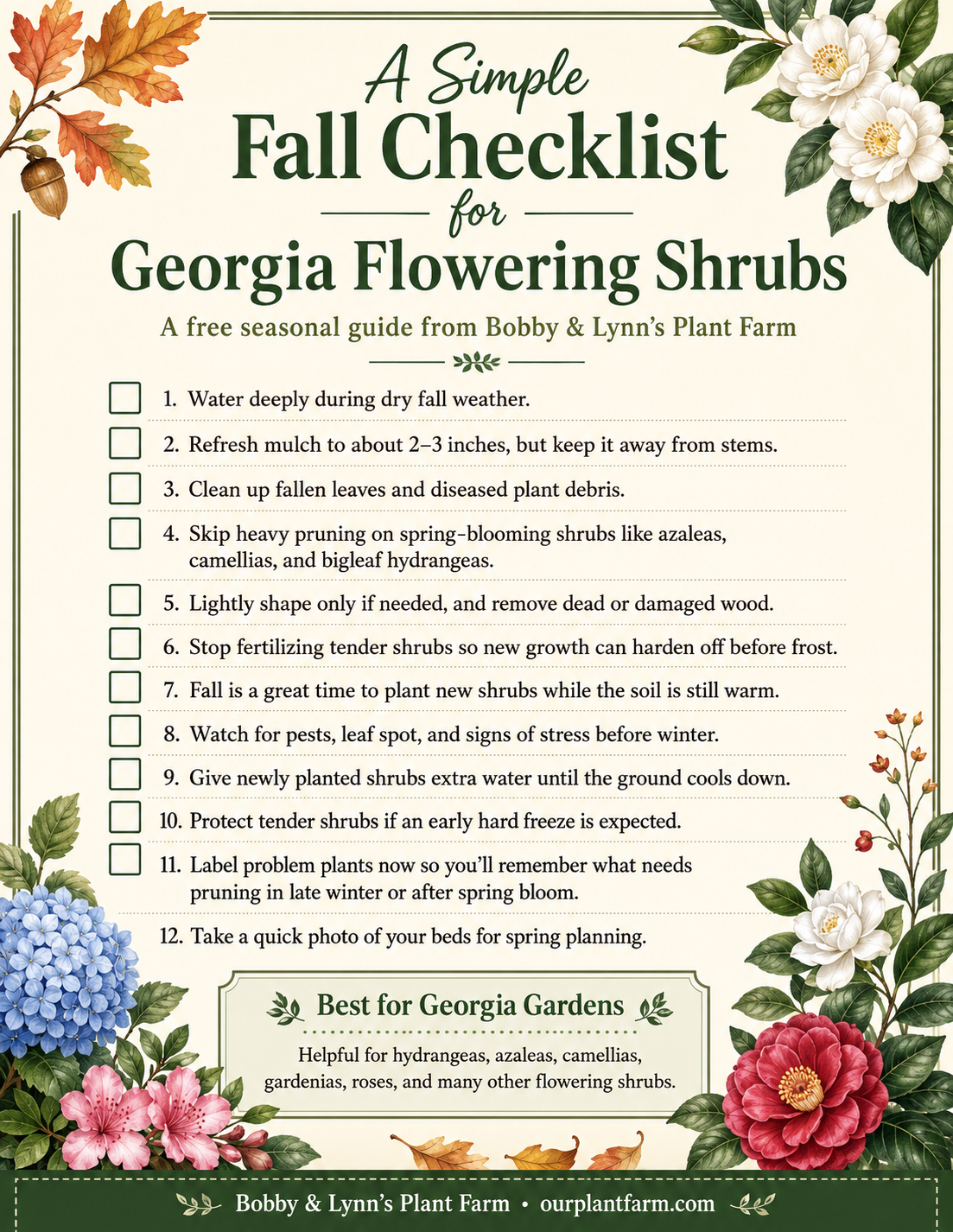
For other seasonal jobs around the landscape, our Simple Fall Checklist for Georgia Flowering Shrubs can help you organize the rest of your fall garden work.
Do Not Apply Pre-Emergent Before Seeding
This is one of the most important cautions.
Pre-emergent products interfere with seedling development. They cannot tell the difference between an unwanted weed seed and the grass seed you intentionally planted.
Do not apply a standard pre-emergent where you plan to:
- Overseed a fescue lawn
- Establish a new lawn from seed
- Repair bare areas with grass seed
- Sow wildflowers or other desirable seeds
Check the product label for the required waiting period between applying the herbicide and planting seed. That waiting period can vary considerably by product.
Newly seeded, sprigged, plugged, or sodded lawns may also be sensitive to herbicides. UGA Extension notes that many labels require waiting until a lawn is fully established, sometimes for several months.
Can You Use Pre-Emergent Around Shrubs and Flower Beds?
Some products are labeled for use around certain established ornamental plants. Others are intended only for lawns.
Never spread leftover lawn herbicide through a flower bed unless the label specifically allows it.
Pre-emergent can also affect desirable seeds. That matters if you allow flowers to reseed naturally or plan to sow annual flowers in the treated area.
Healthy plants, proper spacing, mulch, and regular cleanup can help reduce weeds in landscape beds without relying entirely on herbicides. Our guide to 7 Signs Your Yard Has a Problem and How to Fix It explains how weeds, bare soil, drainage, and plant stress can point to larger yard problems.
You can also use our Plant Directory to find shrubs and perennials suited to different areas of your landscape.
Does Pre-Emergent Need a Second Application?
Possibly.
Pre-emergent herbicides do not remain active forever. Their effective period varies with the active ingredient, application rate, rainfall, soil conditions, and label directions.
Some products allow or recommend a second application several weeks after the first. UGA Extension notes that certain pre-emergent products may permit another application approximately eight to ten weeks later.
Never automatically reapply simply because several weeks have passed. Check the label for:
- Maximum yearly application rates
- Minimum time between applications
- Turfgrass restrictions
- Temperature limitations
- Watering requirements
The label is not a suggestion. It is the instruction manual for using the product safely and effectively.
What We See Most Often at Our Plant Farm
The biggest issue we see is not necessarily choosing the wrong product. It is applying the right type of product at the wrong time.
Gardeners notice a lawn full of winter weeds in February or March and decide they need pre-emergent. At that point, the weeds are already established.
The better approach is to work backward.
If winter weeds were a problem this past spring, make a note now. Put a reminder on your calendar for late August or early September. That gives you time to identify the lawn grass, measure the area, buy the correct product, and apply it before germination begins.
We also encourage homeowners to look beyond the weeds themselves. Thin turf, compacted soil, excessive shade, poor drainage, improper mowing, and weak grass can all make it easier for weeds to take over.
A Simple Pre-Emergent Checklist
Before applying pre-emergent for winter weeds in Georgia, ask:
- Do I know my lawn’s grass type?
- Is the product labeled for that grass?
- Am I applying before the weeds germinate?
- Do I plan to seed or overseed soon?
- Have I measured the treatment area?
- Is the spreader properly adjusted?
- Does the product need to be watered in?
- Is rain expected to wash the product away?
- Am I avoiding flower beds and vegetable gardens?
- Have I read the entire label?
A few minutes of preparation can prevent damage and improve the results.
Frequently Asked Questions About Pre-Emergent for Winter Weeds in Georgia
Is October too late to apply pre-emergent in Georgia?
It may be too late for dependable prevention of many winter weeds in North Georgia. Some seeds may already have germinated by October. Applying late could still suppress later-germinating weeds, depending on the product and weather, but it will not control weeds that are already growing.
Can I apply pre-emergent and fertilizer together?
Some products combine fertilizer with a pre-emergent herbicide. However, the correct weed-control timing may not always match the best fertilization schedule for your grass type.
Warm-season lawns generally should not be encouraged to produce tender new growth as they approach dormancy. Follow a Georgia lawn-care schedule for your particular turfgrass rather than fertilizing simply because it is included in a weed-control product.
Will heavy rain ruin a pre-emergent application?
Most pre-emergents need some water to become active, but a heavy downpour may cause runoff or uneven movement. Apply when moderate rain or controlled irrigation can water the product into the soil without washing it into drains, streets, ponds, flower beds, or neighboring properties.
Can pre-emergent kill weeds already growing?
No. Pre-emergent is intended to prevent young seedlings from becoming established. Existing weeds usually require hand removal or an appropriate post-emergent treatment.
How often should Georgia lawns receive pre-emergent?
Many established Georgia lawns receive one application in late winter or early spring for summer weeds and another in late summer or early fall for winter weeds. The exact schedule depends on location, grass type, target weeds, and the product label.
Final Thoughts on Pre-Emergent for Winter Weeds in Georgia
The best time to apply pre-emergent for winter weeds in Georgia is before the weeds have a chance to germinate. In North Georgia, that generally means applying it from late August through September, with early to mid-September being a dependable target.
Do not wait until winter weeds cover the lawn. By then, prevention has turned into treatment.
Identify your grass, choose a properly labeled product, measure carefully, apply it evenly, and water it in as directed. Most importantly, avoid using pre-emergent where you plan to sow grass or flower seeds.
A little work in early fall can mean fewer weeds, fewer stickers, and a much cleaner lawn when spring returns.
For additional guidance, read the UGA Extension article Winter Application of Pre-Emergence Herbicide Reduces Spring Lawn Weeds.