Choosing the right mulch for shrubs can make a bigger difference than you might think. A good layer of mulch helps hold moisture in the soil, keeps roots cooler during hot weather, reduces weeds, and gives a landscape bed a clean, finished look.
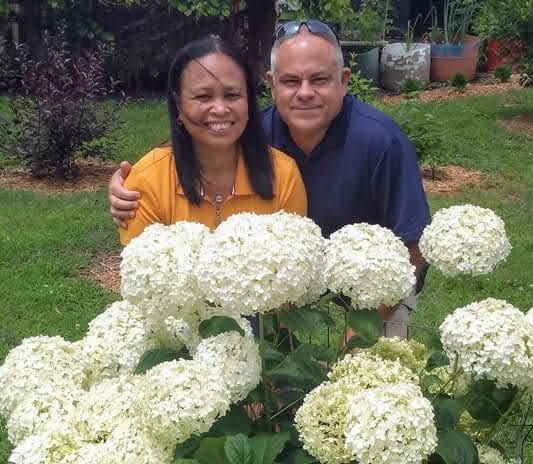
Here at Bobby & Lynn’s Plant Farm in Dallas, Georgia, mulch is especially useful around our hydrangeas and flowering shrubs. Our summers get hot, and our Georgia red clay can dry hard on the surface while still holding moisture deeper down.
The type of mulch matters, but how you apply it matters just as much.
Quick Answer: What Is the Best Mulch for Shrubs?
For most flowering shrubs, we prefer organic mulch such as shredded hardwood, pine bark, wood chips, or pine straw.
Shredded hardwood is a good all-around choice because it looks neat, stays in place fairly well, and gradually breaks down. Pine bark lasts longer, while pine straw works especially well in Southern landscapes and on slopes.
Apply mulch in a wide layer around the root zone, usually about 2 to 3 inches deep, and keep it several inches away from the main stems or trunk.
Never pile mulch against the base of a shrub.
About Bobby & Lynn


Why Mulch Helps Flowering Shrubs
Mulch does more than make a flower bed look finished.
It covers the soil and helps slow moisture loss during hot and dry weather. That can be especially helpful around hydrangeas, which tend to appreciate consistent soil moisture.
Mulch can also:
- Reduce weed growth
- Help moderate soil temperature
- Protect the soil surface from heavy rain
- Reduce competition from grass
- Add organic matter as natural mulch breaks down
- Keep lawn mowers and string trimmers farther away from shrub stems
UGA Cooperative Extension also recommends organic mulches around ornamental plants because they help conserve moisture and gradually decompose.
One thing mulch cannot do is correct a bad planting location.
A shrub sitting in constantly wet soil can still struggle even if the mulch looks perfect. If you garden in heavy soil like we do, our guide to the best shrubs and trees for clay soil explains what we look for before planting.
What We Use Around Our Shrubs
We don’t believe there is one mulch that everybody has to use.
Different beds call for different solutions.
For ornamental beds around flowering shrubs, we like natural materials that allow water to reach the soil and eventually break down.
We also use pine products quite a bit because they’re easy to find in Georgia and look natural in our landscape.
The biggest thing we pay attention to isn’t the brand name on the bag.
It’s the depth.
We would much rather have a reasonable layer of inexpensive mulch applied correctly than an expensive mulch piled six inches deep against a shrub.
That pretty mulch volcano may look tidy from the road, but your plant probably isn’t nearly as impressed.
Best Mulch for Shrubs by Type
Shredded Hardwood Mulch
Shredded hardwood is probably the best all-around choice for many home landscapes.
It works well around:
- Hydrangeas
- Gardenias
- Butterfly bushes
- Weigela
- Spirea
- Roses
- Rose of Sharon
- Most other flowering shrubs
It has a neat appearance and usually stays in place better than large bark nuggets.
As it breaks down, it also adds organic matter to the soil.
For someone who wants one mulch that works in most shrub beds, shredded hardwood is hard to beat.
Cost: Moderate
Best for: General landscape beds and flowering shrubs
Main advantage: Good balance of appearance, price, and usefulness
Pine Bark Mulch
Pine bark comes in several sizes, from small pieces to large nuggets.
It tends to break down more slowly than finely shredded hardwood, which means you may not have to replace it as often.
We like smaller pine bark products better around shrubs because large nuggets can move during heavy rain.
That can be particularly noticeable on slopes.
Cost: Moderate to higher
Best for: Established shrub beds
Main advantage: Clean appearance and slower breakdown
Pine Straw
Pine straw is common here in the South, and there’s a reason for that.
It’s lightweight, easy to spread, and works well around shrubs and underneath trees.
The needles tend to lock together, which can help pine straw stay in place on slopes.
Pine straw also gives beds a softer, more natural Southern look.
Some people love that look.
Others want the darker appearance of hardwood mulch.
Neither one is automatically right or wrong.
Cost: Low to moderate
Best for: Large beds, slopes, trees, hydrangeas, and natural landscapes
Main advantage: Easy to spread and good on uneven ground
Wood Chips
Wood chips can be one of the least expensive mulch options.
In some areas, tree companies or arborists may even offer chipped material for little or no cost.
They’re especially useful when you need to cover a large area.
Wood chips work well around larger shrubs, trees, woodland gardens, and informal beds.
Their biggest disadvantage is appearance.
Fresh arborist chips may contain different sizes of wood, small twigs, and leaves. They usually look more natural than polished.
Use wood chips on top of the soil.
Don’t dig fresh wood chips into the soil around your shrubs.
Cost: Low and sometimes free
Best for: Large areas and informal beds
Main advantage: Economical
Leaves as Mulch
Leaves are another inexpensive option, especially if they’re already falling in your yard.
Shredded leaves can work well underneath trees and around established shrubs.
Running leaves through a mower first can keep them from forming a thick mat.
They won’t give you the polished look of fresh hardwood mulch, but they can be useful in natural areas.
And the price is pretty hard to argue with.
Cost: Free if you already have them
Best for: Natural areas and established shrubs
Main advantage: Uses material you already have
What About Rubber Mulch?
We don’t recommend rubber mulch around our flowering shrubs.
Rubber lasts a long time, but that doesn’t automatically make it better for plants.
It doesn’t break down and add organic matter to the soil like natural mulch.
In hot sunny beds, dark rubber can also become very warm.
There may be situations where rubber mulch makes sense around playground equipment or in non-growing areas, but we prefer organic mulch around hydrangeas and other flowering shrubs.
Which Mulch Is Cheapest?
The cheapest option depends on what’s available where you live.
In general:
| Mulch Type | Relative Cost | How Often It May Need Refreshing |
|---|---|---|
| Arborist wood chips | $ | Less often |
| Shredded leaves | $ | More often |
| Pine straw | $–$$ | Usually yearly |
| Shredded hardwood | $$ | Usually yearly or as needed |
| Pine bark | $$–$$$ | Often lasts longer |
| Rubber mulch | $$$ | Long lasting, but not our choice for shrub beds |
Local prices vary quite a bit.
A bag of mulch may look cheaper at first, but buying in bulk can cost less if you’re covering several large beds.
Don’t forget delivery fees when comparing prices.
Sometimes the “cheaper” mulch becomes the expensive one after somebody has to haul five cubic yards across town.
How Much Mulch Do You Need?
First, measure the length and width of the bed.
Multiply those numbers to get the square footage.
For example:
20 feet × 10 feet = 200 square feet
If you’re buying mulch in bulk, Clemson Cooperative Extension gives a useful formula:
Square feet × mulch depth in inches ÷ 324 = cubic yards needed
For a 200-square-foot bed with mulch 3 inches deep:
200 × 3 ÷ 324 = about 1.85 cubic yards
That calculation can save you from guessing and either running short or ending up with a small mountain of mulch sitting in your driveway.
How Deep Should Mulch Be Around Shrubs?
For our shrub beds, we generally aim for about 2 to 3 inches of mulch.
You want enough to cover the soil without burying the plant.
A very thin layer may not do much to control weeds or reduce moisture loss.
Too much mulch can create another set of problems.
A thick layer can keep the area around the plant overly wet and reduce airflow near the base.
More mulch isn’t always better.
Keep Mulch Away From Shrub Stems
This is probably the most important rule in this entire article.
Don’t pile mulch against the stems or trunk.
Leave a few inches of open space around the base of the shrub.
Mulch should spread outward across the root zone rather than upward around the plant.
Think donut, not volcano.
Clemson Cooperative Extension also recommends keeping mulch several inches away from shrub trunks and stems.
Mulch piled against woody stems can keep them constantly damp and increase the chance of decay.
We see the same mistake with newly planted shrubs.
If you’re planting something new, our guide to how to plant a shrub in fall shows how we handle planting depth, Georgia red clay, watering, and the area around the root ball.
How to Apply Mulch the Right Way
You don’t need any fancy equipment.
1. Pull the Weeds First
Remove larger weeds before spreading mulch.
Mulch can reduce future weed growth, but dropping three inches of mulch over a healthy patch of established weeds doesn’t magically make them surrender.
Some will come right back through.
2. Check the Existing Mulch
If mulch is already in the bed, don’t automatically dump another thick layer over it.
Use a rake to loosen the old material and see how deep it actually is.
You may only need an inch of fresh mulch to bring the total depth back where you want it.
3. Spread It Evenly
Spread mulch across as much of the shrub’s root area as practical.
A wide layer is more useful than a narrow pile right around the stems.
4. Pull It Away From the Plant
When you finish spreading, use your hands or a rake to pull mulch a few inches away from the stems.
You should be able to see where the shrub comes out of the soil.
5. Water When Needed
Mulch slows moisture loss, but it doesn’t eliminate the need to check the soil.
That’s particularly important with newly planted shrubs.
A wet mulch surface doesn’t necessarily mean the root ball underneath is wet.
Our article on why new landscape plants die explains why checking the actual root ball is so important during the first year.
Should You Put Landscape Fabric Under Mulch?
We generally don’t think landscape fabric is necessary in every shrub bed.
It can reduce weeds when it’s installed correctly, but soil and decomposed mulch eventually collect on top. Once that happens, weed seeds can germinate in the material above the fabric anyway.
Fabric can also become aggravating later when you want to move plants, divide perennials, add shrubs, or change the bed.
For permanent areas where weed control is the main goal, it can have a place.
For beds we regularly plant and work in, we prefer keeping things simpler.
Is Mulch Good for Hydrangeas?
Yes.
Mulch is one of the things we like using around hydrangeas, particularly during our hot Georgia summers.
A good mulch layer can help keep the root area from drying as quickly between watering.
That doesn’t mean hydrangeas should stay soggy.
They still need soil that drains.
This becomes especially important in Georgia red clay, where the top of the ground can look dry while the soil around the roots remains wet.
Our guide to growing hydrangeas in Georgia goes deeper into sunlight, watering, planting depth, mulch, and our heavy clay soil.
For beds where watering becomes a chore, we also installed our own system and documented the entire process in How to Install Drip Irrigation for Hydrangeas.
Do You Need to Remove Old Mulch Every Year?
Usually, no.
If the old mulch has simply faded or partially decomposed, loosen it with a rake and check the depth.
Then add only enough fresh mulch to bring the bed back to the depth you want.
There’s no reason to remove perfectly good mulch just because the calendar says spring.
You may want to remove some if it has become:
- Extremely thick
- Badly compacted
- Sour smelling
- Constantly wet
- Piled against stems or trunks
The goal isn’t to keep adding layer after layer forever.
When Should You Refresh Mulch?
We normally look at mulch in spring when we’re cleaning up beds and getting ready for the growing season.
You may also need to touch it up after:
- Heavy rain
- Major pruning
- Leaf cleanup
- Planting new shrubs
- Moving plants
- A long growing season
Don’t worry if the color fades.
Mulch doesn’t have to look brand new every month to do its job.
Common Mulching Mistakes
Most mulch problems come from how it’s applied rather than which type you bought.
Avoid these common mistakes:
- Piling mulch against shrub stems
- Creating mulch volcanoes around trees
- Applying a new thick layer every year without checking the old mulch
- Using only a dusting that’s too thin to help
- Burying the crown of the plant
- Mixing fresh wood chips deeply into the soil
- Assuming mulch means you no longer need to check soil moisture
Proper mulch should protect the soil without burying the plant.
Final Thoughts
The best mulch for shrubs doesn’t have to be expensive.
For most flowering shrub beds, shredded hardwood, pine bark, pine straw, wood chips, or other natural mulch can all work well.
What matters most is applying it correctly.
Spread it wide.
Keep the depth reasonable.
Keep it away from the stems.
And check what’s already there before adding another load.
Here at Bobby & Lynn’s Plant Farm, we think of mulch as one part of the bigger picture. Good planting depth, proper sunlight, drainage, watering, and choosing the right plant for the location still matter more than having the prettiest mulch in the neighborhood.
Get those basics right, and a good layer of mulch can help make taking care of your flowering shrubs a whole lot easier.
If you have a hydrangea or flowering-shrub question, come find Bobby & Lynn’s Plant Farm on Facebook. We’re always happy to talk plants.
Discover more from Bobby and Lynn’s Plant Farm
Subscribe to get the latest posts sent to your email.