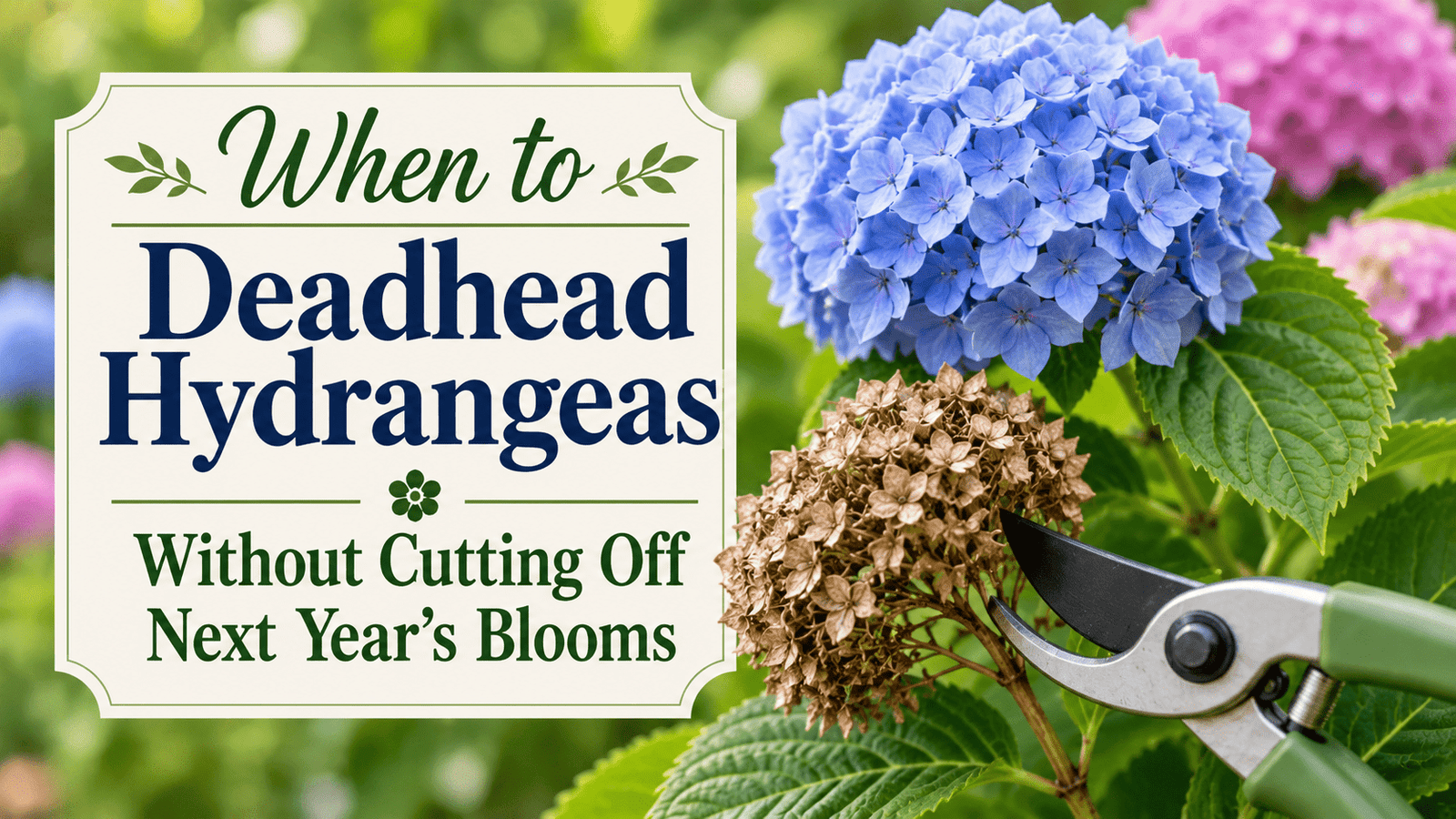
Knowing when to deadhead hydrangeas helps keep the shrubs looking tidy without accidentally removing next year’s flower buds. Hydrangea blooms can stay beautiful for weeks, but eventually those large flowers begin to fade, turn brown, or look a little tired.
Quick Answer: You can deadhead hydrangeas during the growing season by cutting each faded flower just above the first healthy pair of leaves. Stop deadheading old-wood hydrangeas by late summer so you don’t accidentally remove next year’s flower buds. Deadheading is optional, and faded blooms can safely remain on the shrub through fall and winter.
Deadheading itself is fairly simple. The trouble starts when a quick snip turns into a full pruning job and next year’s flower buds accidentally end up in the yard-waste pile.
This post may contain affiliate links. If you buy through one of our links, we may earn a small commission at no extra cost to you. We only share products we think may be helpful for gardeners.
If you’re still learning about watering, sunlight, fertilizing, and general hydrangea care, visit our complete hydrangea care guide for more help.
Let’s look at when you should deadhead your hydrangeas, when you should stop, and how to make the right cut without sacrificing next year’s blooms.
We recently deadheaded several of our panicle hydrangeas here at the plant farm. In the video below, you can see exactly how we remove the faded blooms and where we make the cuts.
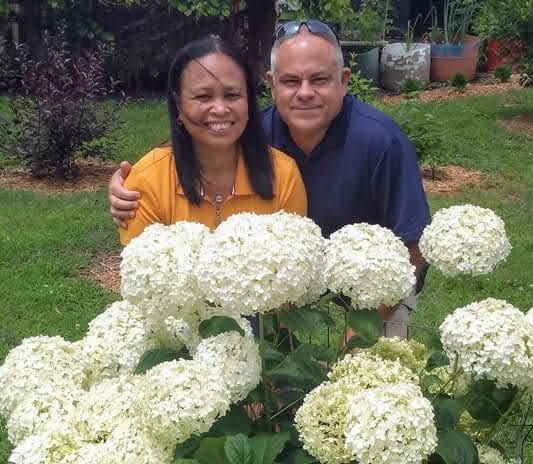
About Bobby & Lynn

The 5 Simple Rules for Deadheading Hydrangeas
- Wait until the flower is faded, damaged, or completely brown.
- Cut only the flower and a short section of stem.
- Make the cut above the first healthy pair of leaves.
- Stop deadheading old-wood hydrangeas by late summer.
- Leave fall and winter blooms in place unless they’re damaged or diseased.
What Does Deadheading a Hydrangea Mean?
Deadheading simply means removing a flower after it has faded.
You’re cutting off the old flower head and only a short section of stem. You are not cutting back long branches or reshaping the entire shrub. That would be pruning, and pruning rules depend heavily on the type of hydrangea you’re growing.
If you need to remove more than the faded flower, read our guide to pruning hydrangeas by type before making any deeper cuts.
Proper deadheading usually removes only the spent bloom and a very short section of stem. It can make the shrub look neater, remove heavy flowers that are pulling branches downward, and may help reblooming varieties produce their next round of flowers a little sooner.
Deadheading is not required for the health of most hydrangeas. Leaving the old flowers in place will not hurt the plant.
Old Wood vs. New Wood: A Quick Deadheading Guide
Old wood hydrangeas: Deadhead lightly during the growing season and avoid cutting far down the stem, especially later in summer when next year’s flower buds may already be forming.
New wood hydrangeas: Deadheading is more forgiving because they bloom on growth produced that same season, but deadheading and heavy pruning are still two different jobs.
Not sure which type you have? Remove only the faded flower and a very small amount of stem just above a healthy set of leaves.
When Should You Deadhead Hydrangeas?
You can begin deadheading once individual flower heads have clearly started to fade, dry out, or become damaged.
A bloom does not need to be removed the moment its color begins changing. Many hydrangeas naturally develop attractive shades of green, dusty pink, burgundy, tan, or antique blue as the flowers age. Sometimes those older blooms are just as pretty as the fresh ones.
Go ahead and deadhead a flower when it:
- Has turned completely brown
- Looks dry, damaged, or ragged
- Has collapsed after heavy rain
- Is weighing down or bending the branch
- No longer looks attractive to you
During spring and summer, check your hydrangeas every week or two and remove any flowers that have finished blooming.
There is no need to cut every fading bloom at once. Hydrangeas rarely bloom on a perfectly organized schedule, so one flower may be finished while the bloom beside it still looks beautiful.
How to Deadhead a Hydrangea Correctly
Before cutting, use a clean, sharp pair of Corona hand pruners. Dull blades can crush the stem, while dirty tools may spread plant diseases from one shrub to another.
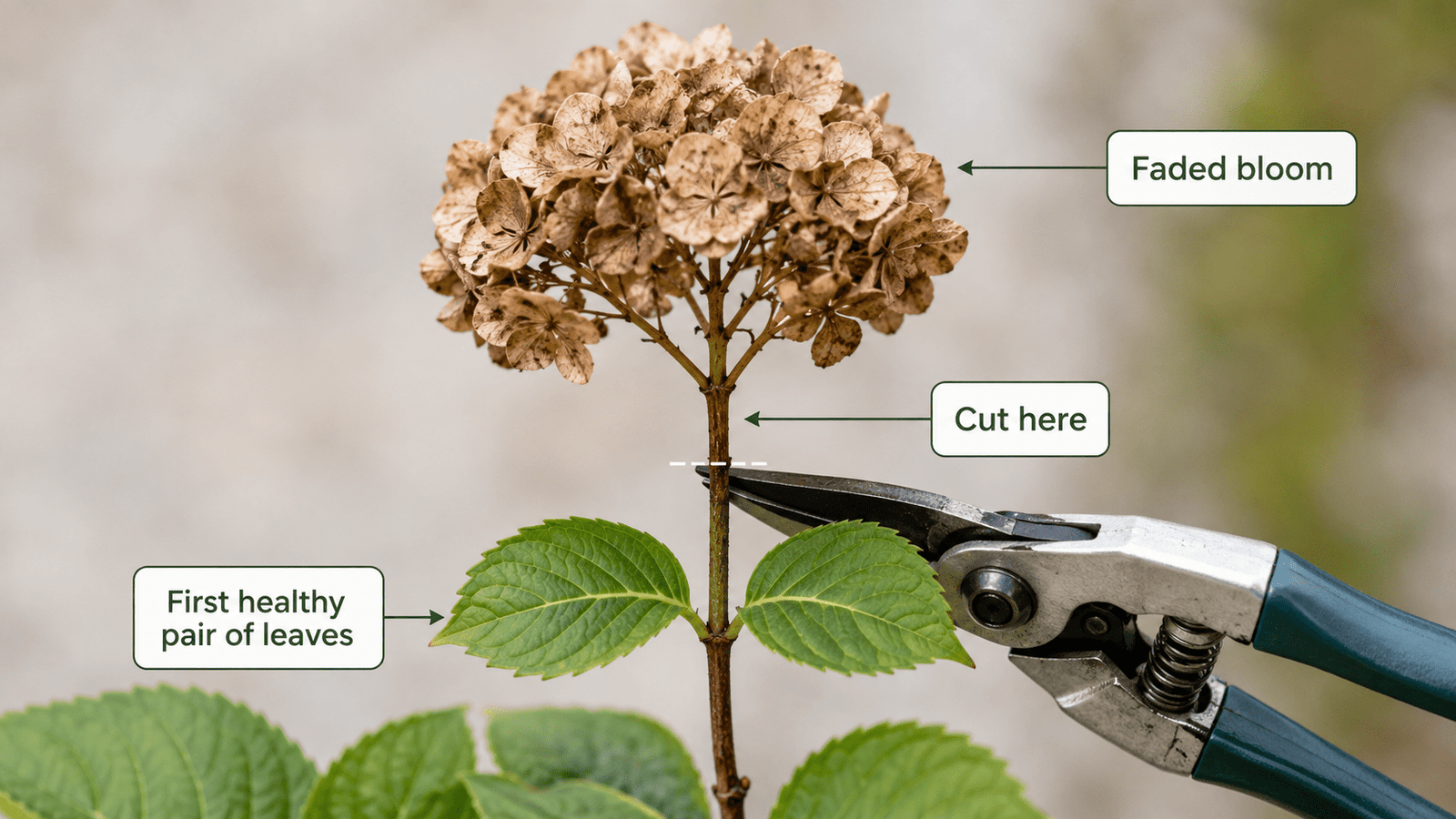
Follow the stem down from the faded flower until you reach the first healthy pair of full-sized leaves. Make your cut just above that pair of leaves.
Do not continue cutting farther down into the plant unless you are intentionally pruning the shrub and know which type of hydrangea you have. Our guide to pruning hydrangeas by type explains where and when deeper cuts are safe.
A shallow cut is especially important with bigleaf and oakleaf hydrangeas because they may form future flower buds on older stems. Cutting too far down can remove buds that were supposed to bloom next year.
A good rule to remember is:
When you’re deadheading, remove the flower—not half the branch.
Deadheading or Pruning?
Deadheading: Removes the faded flower and a very short piece of stem.
Pruning: Removes longer stems or branches to control the plant’s shape, size, or growth.
When you only want to remove an old bloom, stop at the first healthy pair of leaves.
When Should You Stop Deadheading Hydrangeas?
For the safest approach, stop deadheading hydrangeas by late summer or early fall.
Here in Georgia, I recommend becoming much more cautious by August, especially with hydrangeas that bloom on old wood.
Bigleaf, mountain, oakleaf, and climbing hydrangeas may already be developing the buds that will produce next year’s flowers. The farther down the stem you cut, the greater the chance of removing some of those developing buds.
Not sure whether your hydrangea blooms on old wood or new wood? Visit our Hydrangea Care Guide for help identifying the type you’re growing and finding the correct care information.
For old-wood hydrangeas, the safest choice is to stop deadheading by late summer. Once fall arrives, put the pruners away and leave the remaining blooms in place until late winter or spring.
The dried flowers can add winter interest, catch frost beautifully, and provide a little protection around tender buds. They may also offer shelter for beneficial insects during colder weather.
Does Deadheading Make Hydrangeas Bloom Again?
This depends on the hydrangea.
A traditional hydrangea that blooms only once per year usually won’t produce an entirely new round of flowers simply because you removed the old ones. Deadheading may tidy the plant, but it can’t change the shrub’s natural blooming schedule.
Reblooming bigleaf hydrangeas, including varieties sold as repeat bloomers, may benefit from having their first faded flowers removed promptly. These shrubs produce flowers from more than one round of growth, so removing old blooms can help keep the plant neat while later buds develop.
However, deadheading isn’t a guarantee of more flowers. Sunlight, winter damage, pruning, water, plant maturity, heat, and overall health also affect how well a hydrangea reblooms.
Think of deadheading as helpful housekeeping—not a magic trick.
Not Sure What Type of Hydrangea You Have to Deadhead?
Look at the flower shape and leaves before making any deep cuts.
- Round blue, pink, or purple flowers are often bigleaf hydrangeas.
- Large cone-shaped flowers are commonly panicle hydrangeas.
- White round flowers may be smooth hydrangeas.
- Cone-shaped flowers with large oak-shaped leaves indicate an oakleaf hydrangea.
When you aren’t certain, make only a shallow deadheading cut and avoid reshaping the shrub. You can also visit our guide to the different types of hydrangeas for help identifying your plant.
Should You Deadhead Panicle Hydrangeas?
Panicle hydrangeas include popular varieties such as Limelight, Little Lime, Phantom, Pink Diamond, Bobo, and Strawberry Sundae. These are some of the most dependable hydrangeas for Southern gardens. See our complete panicle hydrangea care guide for planting, watering, pruning, and bloom tips.
These hydrangeas bloom on new wood, meaning they produce their flowers on stems grown during the current season.
You can deadhead them during the summer by cutting just below the faded flower. Since they bloom on new wood, they’re generally more forgiving than old-wood varieties.
Still, I wouldn’t spend fall repeatedly cutting them back. Once their flowers begin developing those pretty pink, burgundy, and tan shades, I usually leave them alone.
Panicle hydrangea flowers often provide some of the best winter interest in the entire garden.
Their main pruning can be done while the plants are dormant in late winter or early spring, before new growth begins.
Should You Deadhead Smooth Hydrangeas?
Smooth hydrangeas include Annabelle and several newer varieties developed from Hydrangea arborescens.
Like panicle hydrangeas, smooth hydrangeas bloom on new wood. You can remove faded flowers during the growing season without worrying as much about cutting off old-wood flower buds.
Keep your cuts light during summer. Remove the old flower just above a healthy pair of leaves rather than cutting the entire stem close to the ground.
Save major pruning for the dormant season.
Should You Deadhead Bigleaf Hydrangeas?
Bigleaf hydrangeas include many of the familiar blue, purple, and pink mophead and lacecap varieties.
These are the hydrangeas that make gardeners nervous—and with good reason.
Many bigleaf hydrangeas bloom primarily on old wood. That means their flower buds begin developing on stems produced during the previous growing season.
You can deadhead them after the flowers fade, but keep the cut directly beneath the old bloom and above the first healthy set of leaves.
Don’t cut deeply into the shrub just because a stem looks long or awkward. That “awkward” stem may be holding next year’s flowers.
For bigleaf hydrangeas, finish your deadheading during summer and leave the plant alone once late summer arrives.
What About Reblooming Hydrangeas Should You Deadhead Now?
Reblooming varieties may flower on both old and new wood. Endless Summer is one familiar example. You can learn more about its watering, sunlight, pruning, and repeat-blooming habits in our Endless Summer hydrangea care guide.
Removing the first faded flowers can keep the shrub tidy and may help it focus on developing later blooms. Deadhead these flowers promptly, making your cut just above the first strong pair of leaves.
Even though reblooming hydrangeas are more forgiving, don’t treat them like a hedge. Repeatedly cutting long stems can still reduce the number of flowers you receive.
Reblooming doesn’t mean unprunable. It simply means the plant has another opportunity to produce flowers from newer growth.
Should You Deadhead Oakleaf Hydrangeas?
Oakleaf hydrangeas generally bloom on old wood, so they should be handled carefully.
Their flowers also age beautifully, often changing from creamy white to pink, rose, or tan. I’d enjoy those blooms as long as possible before thinking about removing them.
You can deadhead after flowering, but make only a shallow cut directly beneath the bloom. Once late summer arrives, stop cutting and allow the shrub to prepare for dormancy.
Oakleaf hydrangeas offer peeling bark, dried flower heads, and strong branch structure during winter, so leaving the old blooms usually adds more to the landscape than removing them. Learn more about their pruning, mature size, sunlight needs, and seasonal color in our Oakleaf Hydrangea Care Guide.
Can You Leave Dead Hydrangea Flowers on the Plant?
Absolutely.
You don’t have to deadhead hydrangeas at all.
Leaving the flowers in place won’t damage the shrub. Many gardeners purposely leave them because dried hydrangea blooms provide winter color and texture when much of the garden is bare.
Old blooms can also make it easier to identify which stems flowered, especially when you’re learning how your particular hydrangea grows.
If you enjoy the dried flowers, leave them until spring. Once new growth begins and you can clearly see healthy buds, remove the old flower just above the first strong set of live buds.
Is a Brown Hydrangea Bloom Really Dead?
Not always.
Hydrangea flowers naturally change color as they age. A bloom may turn green, pink, purple, burgundy, or tan before becoming completely dry.
Heat can also cause flowers to brown early, especially when the shrub receives strong afternoon sun or doesn’t have enough moisture around its roots. If the leaves and flowers are drooping along with the browning blooms, read why hydrangeas wilt and how to help them recover before cutting the plant back.
Before blaming the flower itself, check the soil a few inches below the surface. If the soil is dry, give the plant a slow, deep watering around the root zone.
Don’t assume every brown bloom means the entire hydrangea is dying. Sometimes the flower is simply finished, and sometimes the plant is telling you that July has been a little too enthusiastic.
Common Hydrangea Deadheading Mistakes
Cutting Too Far Down the Stem
This is the most common mistake.
You start by removing one brown flower and then notice that the stem looks uneven. Before long, you’ve cut away a foot of growth and possibly next year’s flower buds.
Keep deadheading cuts shallow.
Confusing Deadheading With Pruning
Deadheading removes a flower. Pruning removes stems, branches, or a larger portion of the shrub.
They aren’t the same job, and they don’t always happen at the same time.
What if You Deadhead Too Late?
Late-season cutting can be risky on hydrangeas that bloom on old wood.
When you reach late summer, especially August, stop cutting bigleaf, mountain, oakleaf, and climbing hydrangeas unless you’re removing a broken or diseased branch.
Assuming Deadheading Guarantees More Blooms
It may help reblooming varieties, but it won’t force every hydrangea to flower again.
A once-blooming hydrangea is still a once-blooming hydrangea, no matter how nicely you ask. If your shrub hasn’t produced flowers at all, deadheading isn’t the solution. Start with these seven common reasons hydrangeas don’t bloom.
Using Dirty or Dull Pruners
Clean your pruners before moving between plants, particularly if you’ve been cutting diseased or damaged growth.
A clean cut heals more easily and causes less damage to the stem.
What Should You Do With the Old Blooms?
Healthy faded blooms can go into your compost pile, be added to a yard waste bin, or be saved for dried arrangements.
Hydrangea flowers are usually best for drying after they’ve begun to feel slightly papery. Flowers cut too early may wilt instead of drying properly.
If the blooms show signs of disease, such as unusual spotting, mold, or widespread fungal damage, don’t add them to a home compost pile unless you know your compost becomes hot enough to destroy plant pathogens.
Bag and dispose of diseased material instead.
A Simple Hydrangea Deadheading Schedule
Here’s an easy way to remember the timing:
Spring
Remove old blooms left from winter once you can clearly see healthy new buds. Cut just above the first strong pair of live buds.
Early to Midsummer
Remove faded or damaged flowers as needed. This is the best time to deadhead reblooming hydrangeas after their first round of flowers.
Late Summer
Slow down and become much more cautious. Stop deadheading old-wood hydrangeas by August to reduce the risk of removing next year’s buds.
Fall and Winter
Leave the remaining flowers in place for winter interest and added protection around developing buds.
What We Do at Our Plant Farm
At Bobby & Lynn’s Plant Farm, we usually leave hydrangea blooms in place until they are clearly finished or becoming damaged. Many varieties develop attractive green, pink, burgundy, or tan shades as the flowers age, so there is no need to rush.
When we do deadhead, we keep the cut shallow and stop at the first healthy pair of leaves. We are especially careful with bigleaf and oakleaf hydrangeas because cutting too far down the stem can remove buds for the next flowering season.
We also become much more cautious by late summer. At that point, leaving the remaining blooms in place is usually safer than continuing to cut.
Credible Sources
Our deadheading and pruning guidance is based on what we do with our own hydrangeas here at Bobby & Lynn’s Plant Farm, along with recommendations from university Extension resources.
The University of Georgia Cooperative Extension notes that bigleaf and oakleaf hydrangeas bloom on old wood, while panicle and smooth hydrangeas bloom on new wood. UGA also recommends removing spent flowers after blooming and being more cautious when pruning old-wood hydrangeas.
The Bottom Line
You can deadhead hydrangeas throughout the active blooming season whenever the flowers become brown, damaged, or unattractive.
Use clean pruners and make a shallow cut just above the first healthy pair of leaves beneath the flower.
For bigleaf, mountain, oakleaf, and climbing hydrangeas, stop deadheading by late summer because those shrubs may already be developing next year’s flower buds.
Panicle and smooth hydrangeas are more forgiving because they bloom on new wood, but there’s still no reason to keep cutting them throughout fall.
And remember, deadheading is optional. If you enjoy the faded flowers—or simply have something better to do that afternoon—you can leave them right where they are.
Sometimes the best thing you can do for a hydrangea is put down the pruners and let it handle its own business.
Keep Learning About Hydrangeas
Deadheading is only one part of keeping your hydrangeas healthy and blooming. These guides can help with your next step:
- How to Prune Hydrangeas by Type
- Why Isn’t My Hydrangea Blooming?
- Why Hydrangeas Wilt in Summer
- Complete Hydrangea Care Guide
Discover more from Bobby and Lynn’s Plant Farm
Subscribe to get the latest posts sent to your email.