Is Holly-tone good for hydrangeas? It can be a suitable fertilizer for many hydrangeas, especially those growing in acidic soil, but it also benefits other acid-loving plants such as azaleas, rhododendrons, camellias, blueberries, and certain evergreens. That does not mean every plant needs it. Using Holly-tone without considering the soil, plant type, application rate, and time of year can lead to excessive leafy growth, disappointing flowers, or soil that becomes more acidic than intended.
This post may contain affiliate links. If you purchase through one of these links, we may earn a small commission at no additional cost to you.
Quick Answer: Is Holly-Tone Good for Hydrangeas?
Yes, Holly-Tone can be good for hydrangeas, especially when the plant needs nutrients and the soil conditions are right. It’s made for acid-loving plants and can work well for many hydrangeas, but it shouldn’t be used just to force more blooms or automatically turn flowers blue.
Holly-Tone is a slow-release organic fertilizer formulated for acid-loving plants. Hydrangeas are included on the manufacturer’s list of plants that can be fed with it, along with several other acid-loving shrubs and ornamentals. The best fertilizer, though, is not always the one with the most familiar name. It’s the one that matches what your soil and plant actually need.
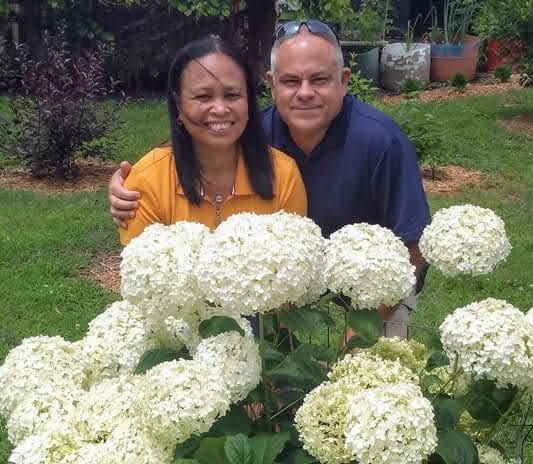
What We’ve Seen: We use Holly-Tone on our hydrangeas every year, and we believe it helps support healthy growth and overall plant performance. One thing we’ve learned, though, is that fertilizer works best when the plant is being watered properly. A hydrangea that is stressed from dry soil isn’t going to respond the same way as one that has steady moisture.
What Holly-Tone Can and Can’t Do
Holly-Tone can: help supply nutrients to hydrangeas when the soil and plant actually need them.
Holly-Tone can’t: fix poor watering, bad drainage, too much sun, root problems, or other growing issues by itself.
It also won’t automatically turn every hydrangea blue. Flower color depends on the type of hydrangea, soil chemistry, and whether that variety is capable of changing color in the first place.
About Bobby & Lynn

Is Holly-tone Good for Hydrangeas?
Holly-tone can be good for hydrangeas when it is applied at the correct rate and the soil conditions make it appropriate.
Espoma Organic Holly-tone has an analysis of 4-3-4, meaning it contains 4% nitrogen, 3% available phosphate, and 4% soluble potash. It also contains calcium, magnesium, sulfur, slow-release nitrogen, and beneficial microbes. The relatively moderate nutrient levels and slow-release formula make it less aggressive than many fast-acting synthetic fertilizers.
That does not make it impossible to misuse. Applying too much, feeding too frequently, or using an acidifying product where the soil is already sufficiently acidic can create problems.
What we use – Check Holly Tone on Amazon
What Does Holly-tone Do for Hydrangeas?
Holly-tone supplies nutrients that support roots, foliage, stems, and flower production. Its nitrogen helps support green growth, phosphorus contributes to root and flower development, and potassium supports overall plant strength.
The product also contains elemental sulfur. Sulfur can gradually contribute to more acidic soil conditions as soil microorganisms process it. That may be helpful for certain acid-loving plants, but it is not something every hydrangea automatically needs.
Holly-tone does not directly force a hydrangea to bloom. A plant may still fail to flower because of:
- Incorrect pruning
- Winter-damaged flower buds
- Too much shade
- Drought stress
- Excess nitrogen
- Deer browsing
- A newly developing root system
- A variety that blooms later in the season
Fertilizer cannot correct all of those problems.
Which Hydrangeas Can Be Fed With Holly-tone?
Holly-tone may be used around bigleaf, mountain, smooth, panicle, and oakleaf hydrangeas when additional nutrients are needed. The product label specifically lists hydrangeas among its suitable acid-loving plants.
However, different hydrangea types respond differently to soil acidity.
Bigleaf and mountain hydrangeas
Bigleaf and mountain hydrangeas are the types most closely associated with pH-dependent flower color. In suitable cultivars, acidic soil with available aluminum can encourage blue or purple blooms. More alkaline conditions commonly encourage pink or red-pink flowers.
Holly-tone may support acidic conditions, but it should not be treated as a precise flower-color product. Flower color also depends on aluminum availability, cultivar genetics, existing soil chemistry, and time. UGA Extension explains that soil pH influences hydrangea color indirectly by changing how available aluminum is to the plant.
Panicle hydrangeas
Panicle hydrangeas usually begin with white, cream, or green flowers that may age to pink, red, or burgundy. Soil pH does not turn their flowers blue.
Holly-tone can provide nutrients to a panicle hydrangea, but using more of it will not create stronger pink or red flower color. Those changes are influenced mainly by the variety, flower age, temperature, and weather.
Smooth hydrangeas
Smooth hydrangeas can also be fertilized when the soil lacks nutrients. However, excessive nitrogen may encourage long stems and oversized flower heads that are more likely to bend after heavy rain.
Oakleaf hydrangeas
Oakleaf hydrangeas generally perform well in moderately fertile, well-drained soil. An established plant growing and flowering well may need little supplemental fertilizer.
Test the Soil Before You Fertilize
A soil test is the best way to decide whether Holly-tone for hydrangeas is truly necessary.
The test can reveal:
- Soil pH
- Phosphorus levels
- Potassium levels
- Calcium and magnesium
- Whether lime is needed
- Which nutrients should be added
- How much fertilizer should be applied
Fertilizing by habit can waste money and contribute to nutrient runoff. UGA Extension recommends testing rather than guessing because soil conditions can vary significantly, even in different areas of the same property.
This is particularly important when you care about bigleaf hydrangea color. Adding an acidifying fertilizer to soil that is already strongly acidic may not be helpful. Applying lime and Holly-tone around the same plant may also work against two different goals.
Learn how to collect and submit a soil sample through UGA Extension.
Gardeners outside Georgia can contact their state or county Cooperative Extension office for local soil-testing instructions.
Mistake: Assuming Every Hydrangea Needs Fertilizer
An established hydrangea with healthy leaves, normal growth, and dependable flowers may not need fertilizer every year.
Organic matter, decomposing mulch, former fertilizer applications, and naturally fertile soil may already provide adequate nutrients. Adding more fertilizer simply because spring has arrived can encourage unnecessary foliage.
Look at the plant before feeding it.
Possible signs that further investigation is needed include:
- Weak annual growth
- Unusually pale leaves
- Smaller-than-expected foliage
- Poor development despite proper light and water
- A soil test showing nutrient deficiencies
Poor flowering alone does not prove that the plant needs fertilizer. Pruning mistakes and winter damage are far more common causes of bloom failure in old-wood hydrangeas.
Mistake: Using Holly-tone to Force More Flowers
Holly-tone is a fertilizer, not a bloom switch.
Nitrogen encourages stem and leaf growth. When a hydrangea receives more nitrogen than it needs, it may become large and green while producing fewer flowers. This can happen when Holly-tone is combined with lawn fertilizer, composted manure, another shrub fertilizer, or repeated liquid feeding.
Before applying anything, consider all the nutrients reaching the root zone. Lawn fertilizer spread close to a hydrangea can affect the shrub even when you never intentionally feed it.
For a hydrangea with healthy foliage but few flowers, examine sunlight and pruning history before adding fertilizer.
Mistake: Expecting Holly-tone to Turn Every Hydrangea Blue
Holly-tone may help maintain acidic conditions, but it does not guarantee blue blooms.
Only certain bigleaf and mountain hydrangeas can change meaningfully between pink and blue. White hydrangeas generally remain white, while panicle and smooth hydrangeas do not become blue because of soil acidity.
Blue flowers require both suitable genetics and aluminum that the roots can absorb. UGA Extension notes that aluminum becomes more available under acidic conditions, while reduced availability under neutral or alkaline conditions favors pink flowers.
Do not repeatedly add Holly-tone, sulfur, and aluminum sulfate at the same time in an attempt to speed up the process. Excessive soil amendments can damage roots and interfere with nutrient availability.
Mistake: Applying More Than the Label Recommends
Organic fertilizer can still be overapplied.
The current Holly-tone product directions provide different rates for new plantings, established shrubs, trees, and garden beds. For established shrubs, the manufacturer bases the amount on the diameter of the plant’s drip line and recommends watering thoroughly after application. Always follow the directions printed on the package you purchase, since labels and formulations can change.
Do not estimate the amount by grabbing several handfuls. Measure it.
Also account for other fertilizers already used in the area. A half-rate of Holly-tone combined with another complete fertilizer can still result in excessive feeding.
Review Espoma’s official Holly-tone product directions before applying it.
Mistake: Piling Fertilizer Against the Stems
Holly-tone should be spread over the root area rather than piled directly around the hydrangea’s crown.
Most of the fine roots that absorb water and nutrients are distributed through the surrounding soil. Spread the fertilizer evenly beneath and around the shrub’s canopy, following the package directions.
Keep concentrated fertilizer away from the main stems. Water the area thoroughly after feeding so moisture can begin moving nutrients into the soil.
When mulch is present, follow the current product directions. Do not dig aggressively around shallow hydrangea roots merely to mix in fertilizer.
Mistake: Fertilizing a Dry, Stressed Hydrangea
Do not fertilize a hydrangea that is severely wilted, drought-stressed, newly damaged, or sitting in bone-dry soil.
Fertilizer does not replace water. A stressed root system may be unable to use the nutrients effectively, and pushing new growth during difficult conditions can place even more demand on the plant.
Correct the immediate problem first:
- Water a dry root ball slowly and deeply.
- Improve drainage if the soil remains saturated.
- Protect a recently planted shrub from extreme heat.
- Allow a damaged plant time to recover.
- Check for root problems or stem injury.
Once the plant is stable and actively growing, decide whether feeding is appropriate.
For more help evaluating moisture, read Do Hydrangeas Need a Lot of Water? Avoid These Mistakes.
Mistake: Fertilizing Immediately After Planting
A newly planted hydrangea needs healthy root contact, dependable moisture, and time to adjust.
UGA Extension recommends waiting approximately four to eight weeks before fertilizing a newly planted bigleaf hydrangea. Feeding immediately is not necessary when the shrub was already fertilized at the nursery or the soil was properly prepared.
Watch the plant for signs of new growth. Establishment is more important than forcing rapid top growth.
Avoid placing concentrated fertilizer directly inside the planting hole unless the specific product label instructs you to do so. Always follow the package directions rather than combining several different planting recommendations.
Mistake: Fertilizing Too Late in the Season
Late fertilizer applications can encourage tender new growth when the shrub should be preparing for dormancy.
That fresh growth may not harden properly before cold weather. This is especially important for bigleaf hydrangeas, which may carry next year’s flower buds on older stems through the winter.
A spring application is usually the most useful when fertilizer is needed. The current Holly-tone directions also describe a lighter fall application for established acid-loving plants, but climate and plant condition matter. Follow the package label and local Extension recommendations rather than assuming every plant needs two annual feedings.
In hot climates, avoid pushing soft growth during the most stressful part of summer.
When Should You Apply Holly-tone?
For most hydrangeas that need feeding, early spring is the most logical time. Apply it as growth begins and water thoroughly afterward.
A second application should not be automatic. Consider:
- The product label
- Soil-test recommendations
- Plant growth
- Local climate
- Whether another fertilizer has been used
- The hydrangea type
- How late it is in the growing season
UGA’s bigleaf hydrangea guidance discusses several light fertilizer applications during the growing season when using a general-purpose fertilizer. Holly-tone is a different, slow-release product, so do not combine the UGA rates with the Holly-tone rates. Choose one approach based on your soil test and follow the selected product’s label.
How to Apply Holly-tone Around an Established Hydrangea
Read the package first because the label is the controlling instruction.
The basic process is:
- Check that the soil is not extremely dry or waterlogged.
- Measure the shrub’s drip-line area as directed by the label.
- Measure the correct amount of product.
- Spread it evenly over the root zone.
- Keep concentrated fertilizer away from the stems.
- Water the area thoroughly.
- Record the date and amount so it is not accidentally reapplied.
Do not use the fertilizer scoop for food, and wear gardening gloves as recommended by the manufacturer.

Can Holly-tone Burn Hydrangeas?
Holly-tone is marketed as a slow-release fertilizer that is less likely to burn plants when used as directed. However, no fertilizer should be treated as risk-free when excessive amounts are used.
Problems are more likely when:
- Too much is applied
- Several fertilizers are combined
- Product is piled against stems
- The soil is extremely dry
- Drainage is poor
- The plant is already stressed
- The package directions are ignored
More is not better. A hydrangea cannot use unlimited nutrients simply because the fertilizer is organic.
Is Holly-tone Better Than a General-Purpose Fertilizer?
Neither product is automatically better in every garden.
Holly-tone may be a practical choice when:
- You want a slow-release organic fertilizer
- The hydrangea grows in soil suitable for acid-loving plants
- A soil test shows that feeding is appropriate
- You prefer one product for hydrangeas, azaleas, hollies, and similar shrubs
A general-purpose fertilizer may be more appropriate when:
- Your soil test recommends a different nutrient balance
- You do not want to encourage greater acidity
- Your local Extension service provides a specific rate for your conditions
- Other plants in the same bed have different requirements
The product name matters less than its nutrient analysis, application rate, and suitability for the soil.
Frequently Asked Questions
Do hydrangeas like Holly-Tone?
Many hydrangeas can benefit from Holly-Tone when they actually need fertilizer and the soil conditions are right. We use it on our hydrangeas every year and believe it helps, but we also make sure the plants are watered properly. Fertilizer won’t make up for a hydrangea that’s struggling from dry soil or another growing problem.
When should I apply Holly-Tone to hydrangeas?
Early spring is usually a good time to apply Holly-Tone as new growth begins. Always follow the current directions on the package, and water the plant thoroughly after applying it.
Will Holly-Tone turn my hydrangeas blue?
Not necessarily. Only certain bigleaf and mountain hydrangeas can change between pink and blue. Soil pH and available aluminum both play a role, and panicle, smooth, and white hydrangeas won’t turn blue simply because you use Holly-Tone.
Credible Sources
We use Holly-Tone on our hydrangeas every year, but we also check our own experience against reliable horticultural and manufacturer information.
University of Georgia Extension – Don’t Fertilize by Habit: Run a Soil Test explains why soil testing is a better starting point than automatically adding fertilizer. UGA notes that soil tests can show pH and nutrient levels and help determine what a plant actually needs.
Espoma – Holly-Tone Product Directions lists hydrangeas among the plants Holly-Tone can be used on and provides the current application and watering directions.
What We Recommend at the Plant Farm
Holly-tone can be useful, but we would not apply it to every hydrangea simply because hydrangeas appear on the package.
Start with the plant and the soil.
A hydrangea that is growing well may need nothing more than mulch, consistent water, and proper sunlight. A shrub with weak growth may benefit from fertilizer, but only after drainage, root health, and soil conditions have been considered.
We also avoid using fertilizer as the first response to missing flowers. When a hydrangea has healthy leaves but does not bloom, the cause is often pruning, cold damage, shade, or variety-specific bloom timing.
The Honest Answer
Is Holly-tone good for hydrangeas? Yes, it can be a suitable slow-release fertilizer when your hydrangea needs nutrients and the product matches your soil conditions.
The biggest mistakes are applying it without testing the soil, using too much, expecting it to force flowers, and assuming it will turn every hydrangea blue.
Follow the current package label, measure carefully, water after applying it, and avoid combining it with several other fertilizers. A well-placed hydrangea with healthy roots, proper light, and dependable moisture will benefit more from thoughtful care than from repeated feeding.
For broader growing advice, read our complete guide to growing hydrangeas and learn how long hydrangeas bloom and how to extend the season.
Discover more from Bobby and Lynn’s Plant Farm
Subscribe to get the latest posts sent to your email.